Wedgwood, King County
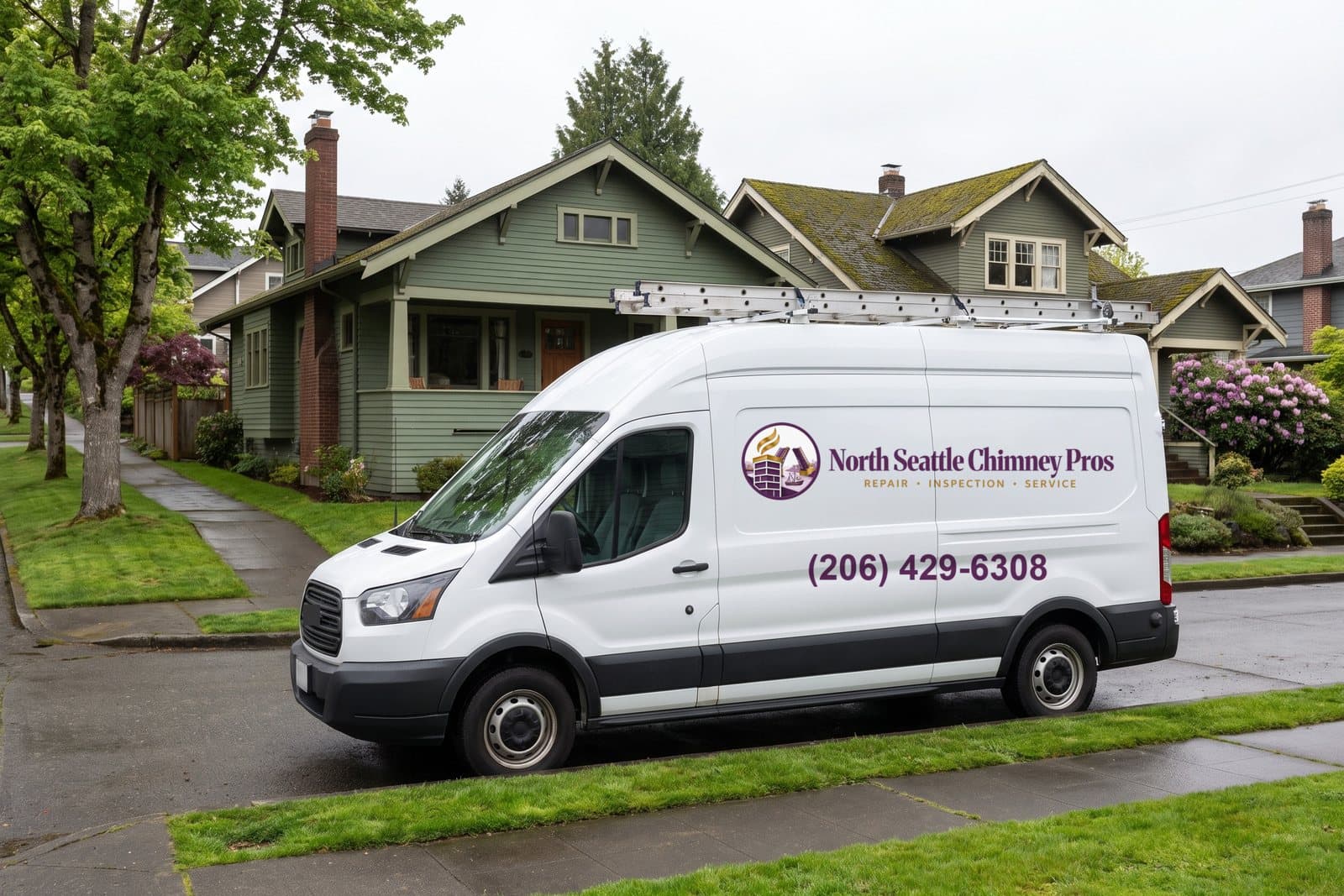
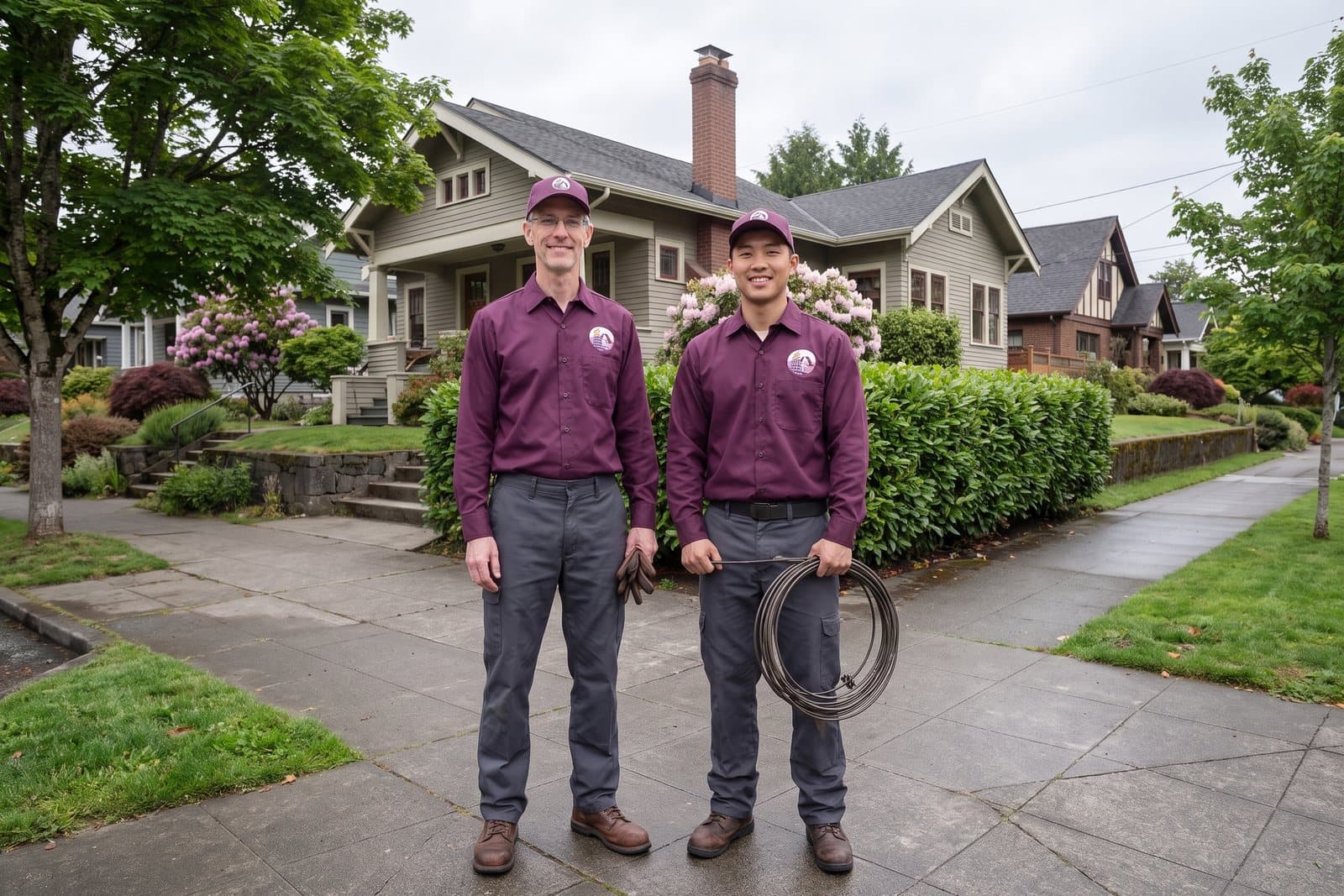
A chimney in Wedgwood belongs to one of two stories. Either it stands on a Craftsman lot platted before the Depression, or it came with the planned neighborhood that Albert Balch began in 1941. Which story a house belongs to tells us where to look first. This page sets out what public records say about the neighborhood's houses, weather and rules, so that anything we later put in a quote can be checked against it.
Book an inspection
Book your $99 inspection
$99 plus tax, deducted when you approve the repair
Not sure where to start
Pick what you're seeing at your Wedgwood home — we'll point you to the right fix.
What we do
The same crew, the same written quote — for Wedgwood homes.
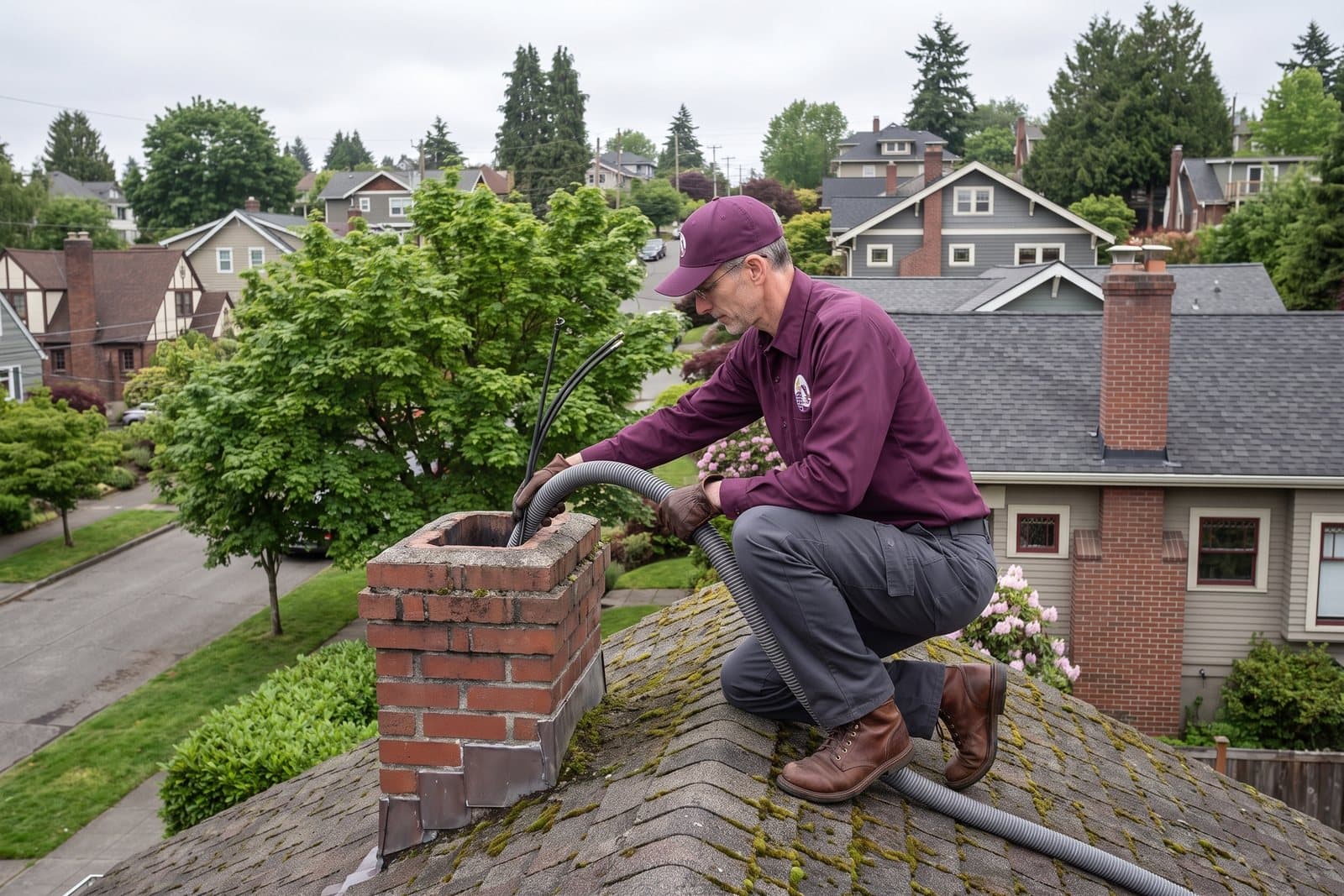
The whole flue brushed, using heads picked for the liner's size and shape
Learn more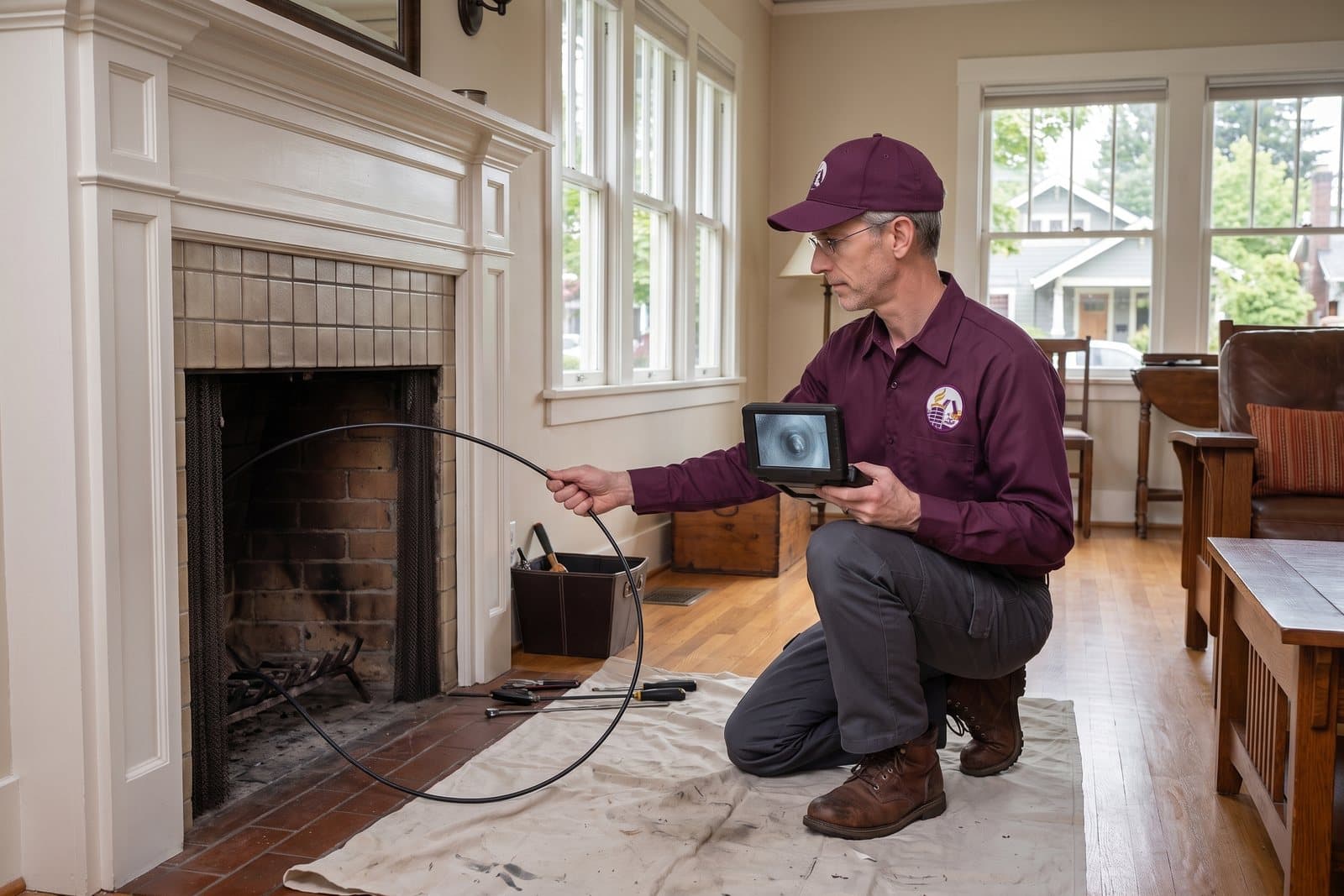
A Level 1 review of everything reachable, raised to a Level 2 camera scan when a question stays open
Learn more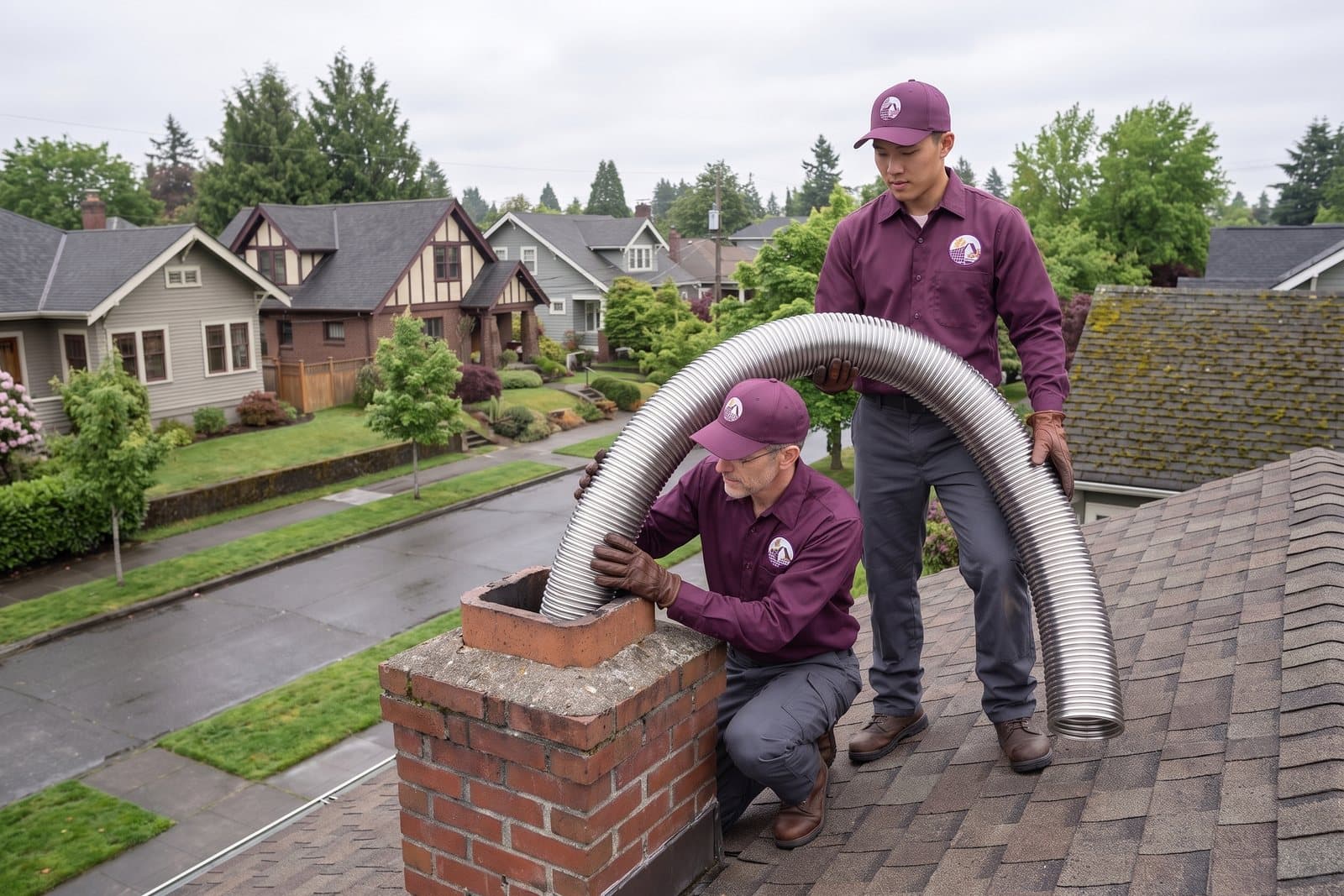
Camera survey and measurements taken before any liner is chosen
Learn more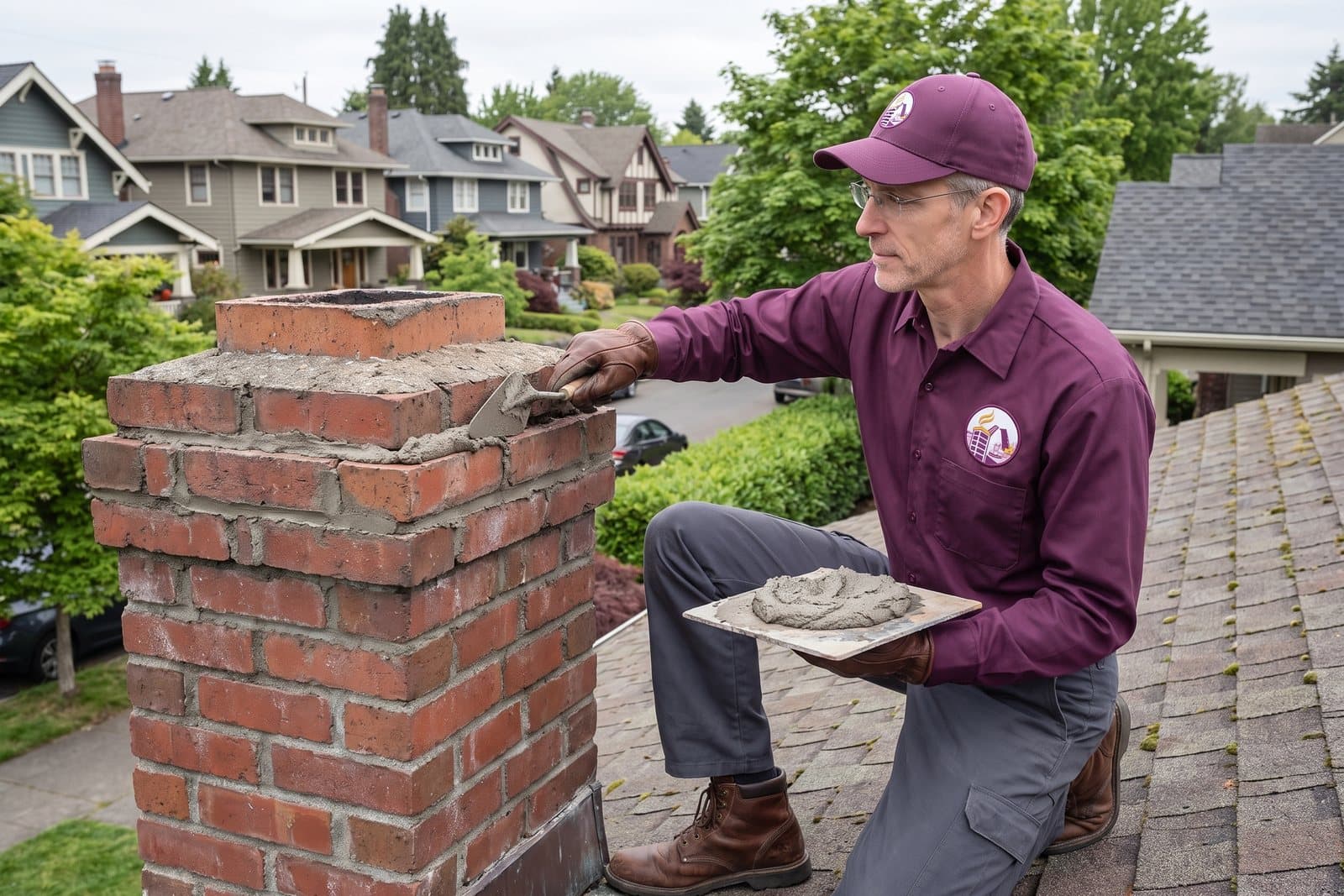
A photo assessment that distinguishes surface wear from structural damage
Learn more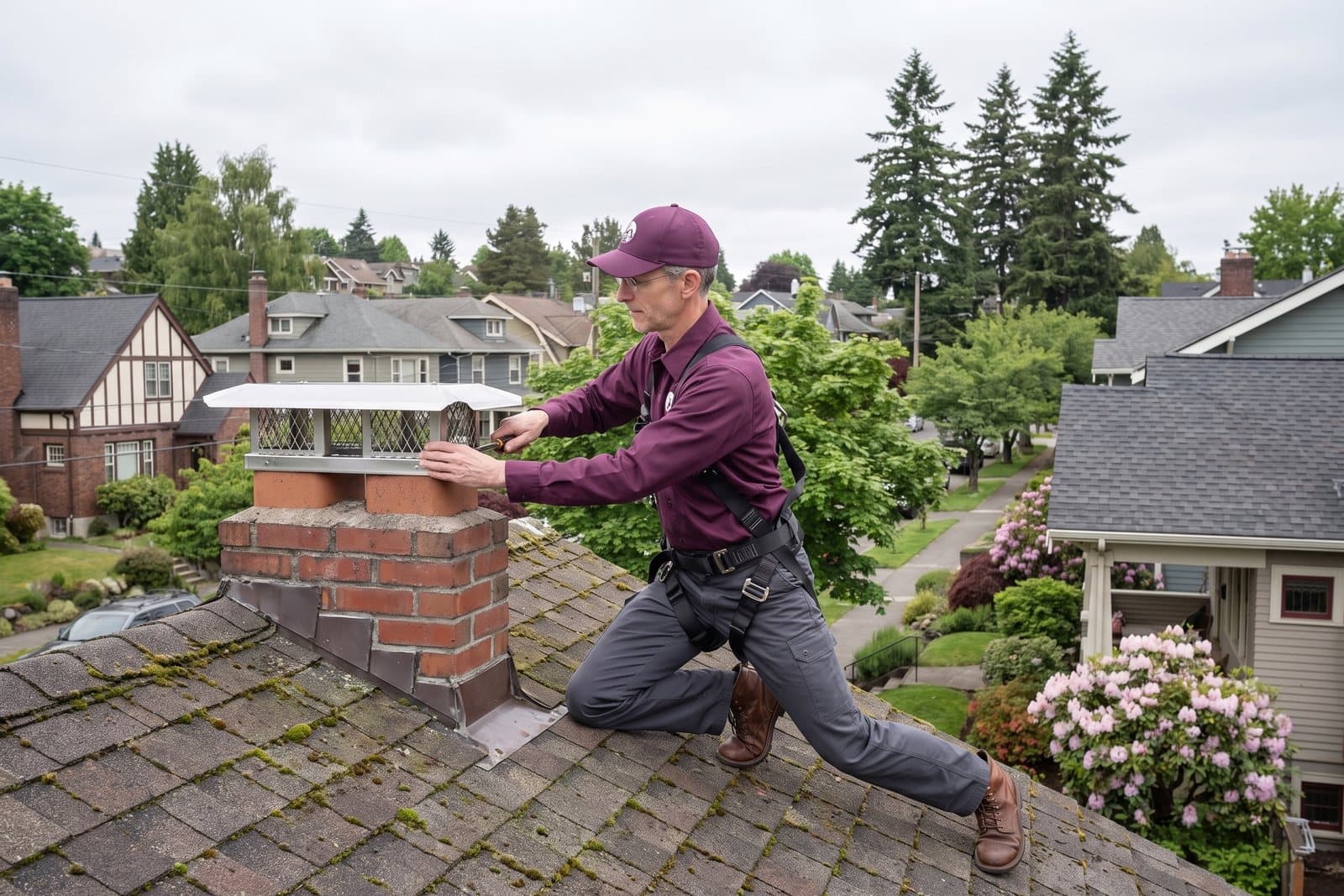
Measurement of each flue, or of the crown when a single cap will span several
Learn more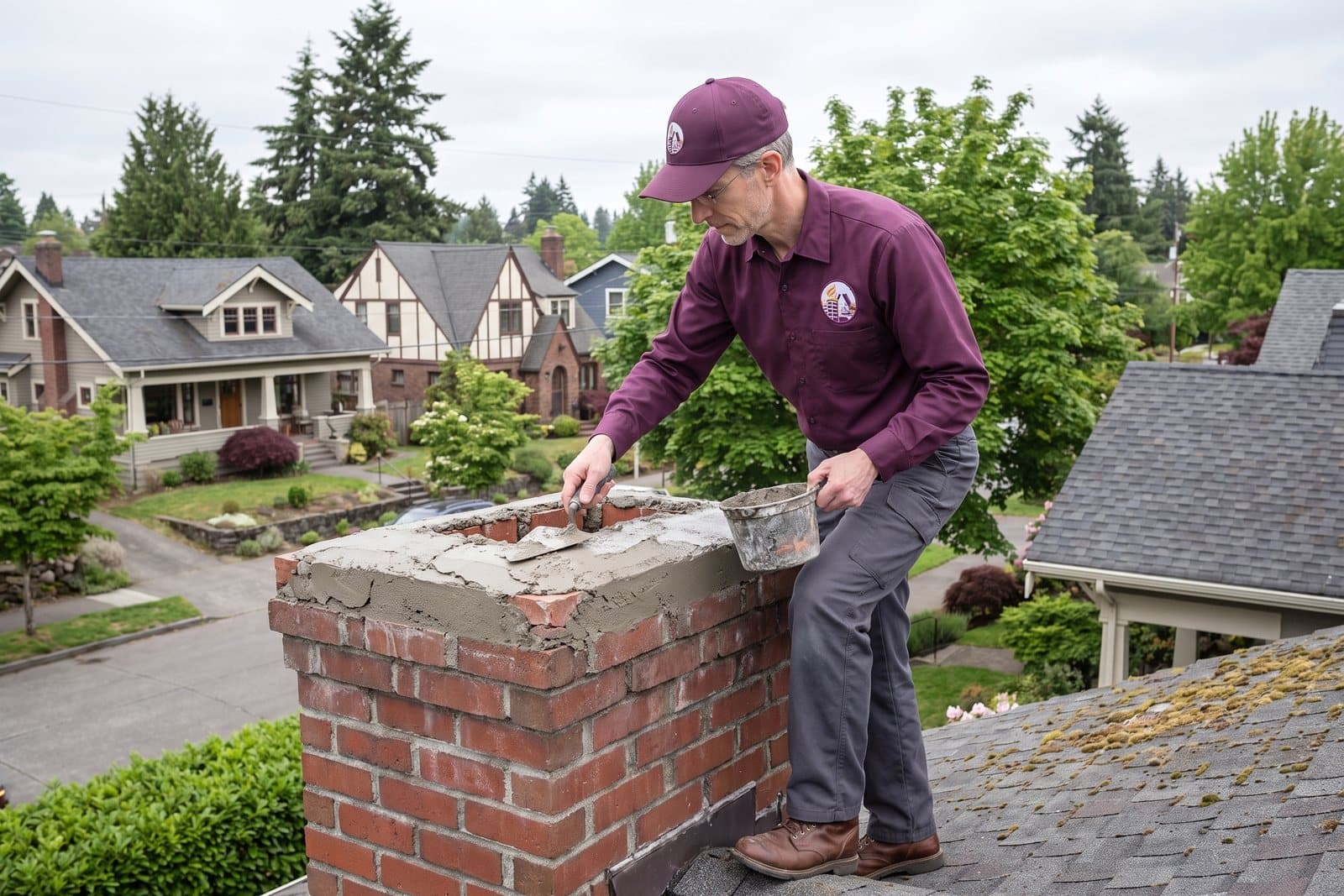
Crown and all four sides photographed before any work
Learn more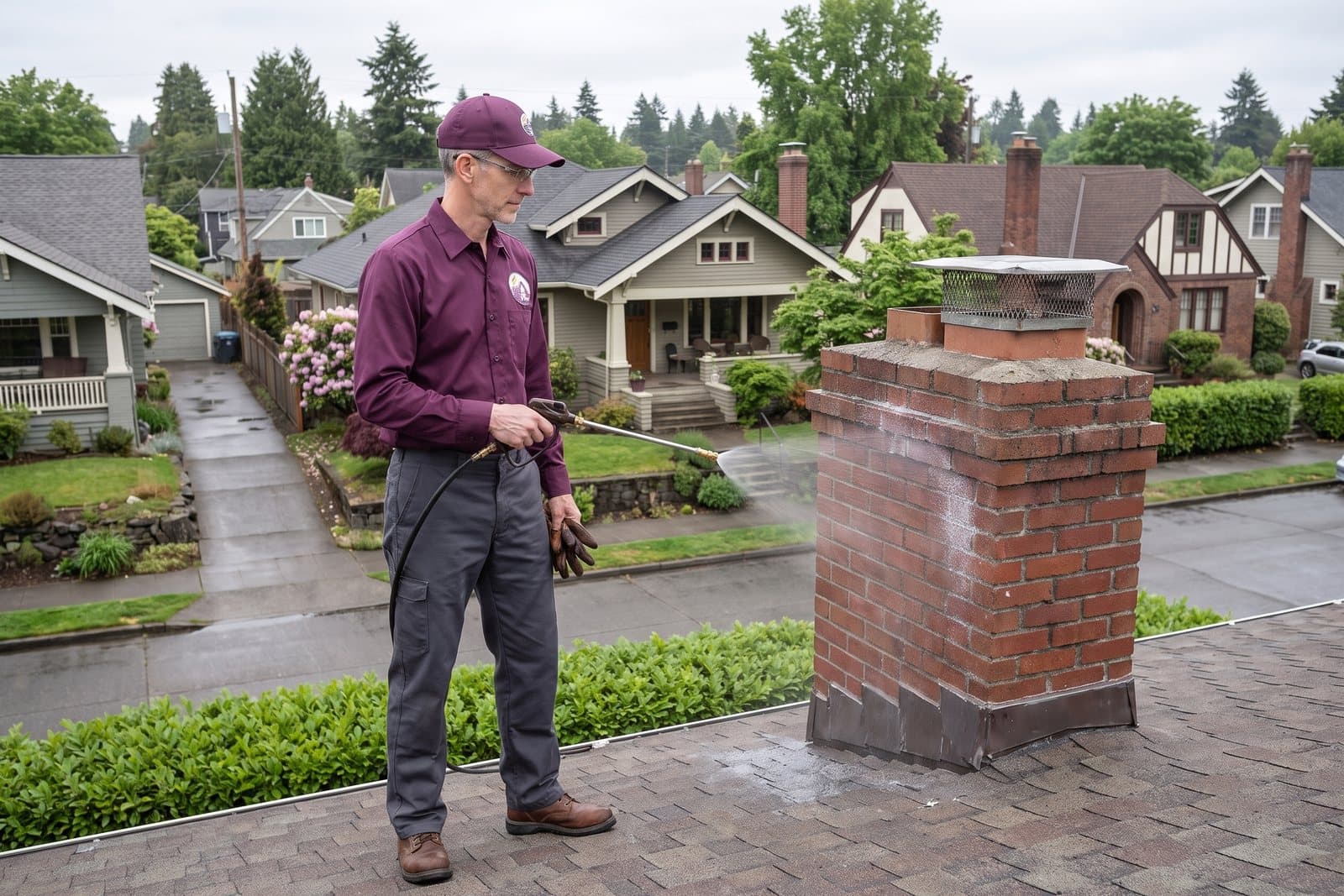
Inspection of crown, joints and flashing before anything is applied
Learn more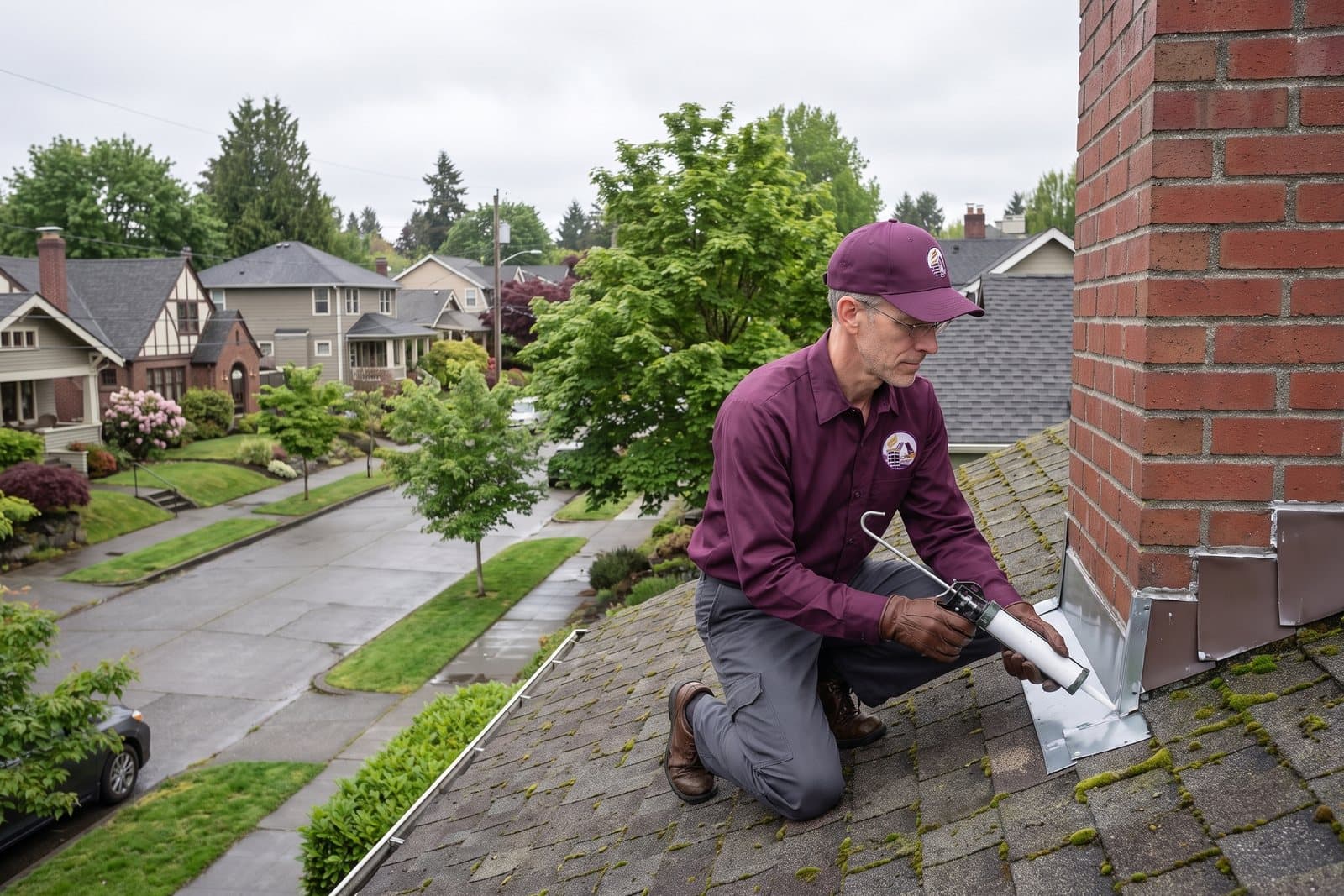
Leak tracing from the stain indoors to the entry point on the roof
Learn more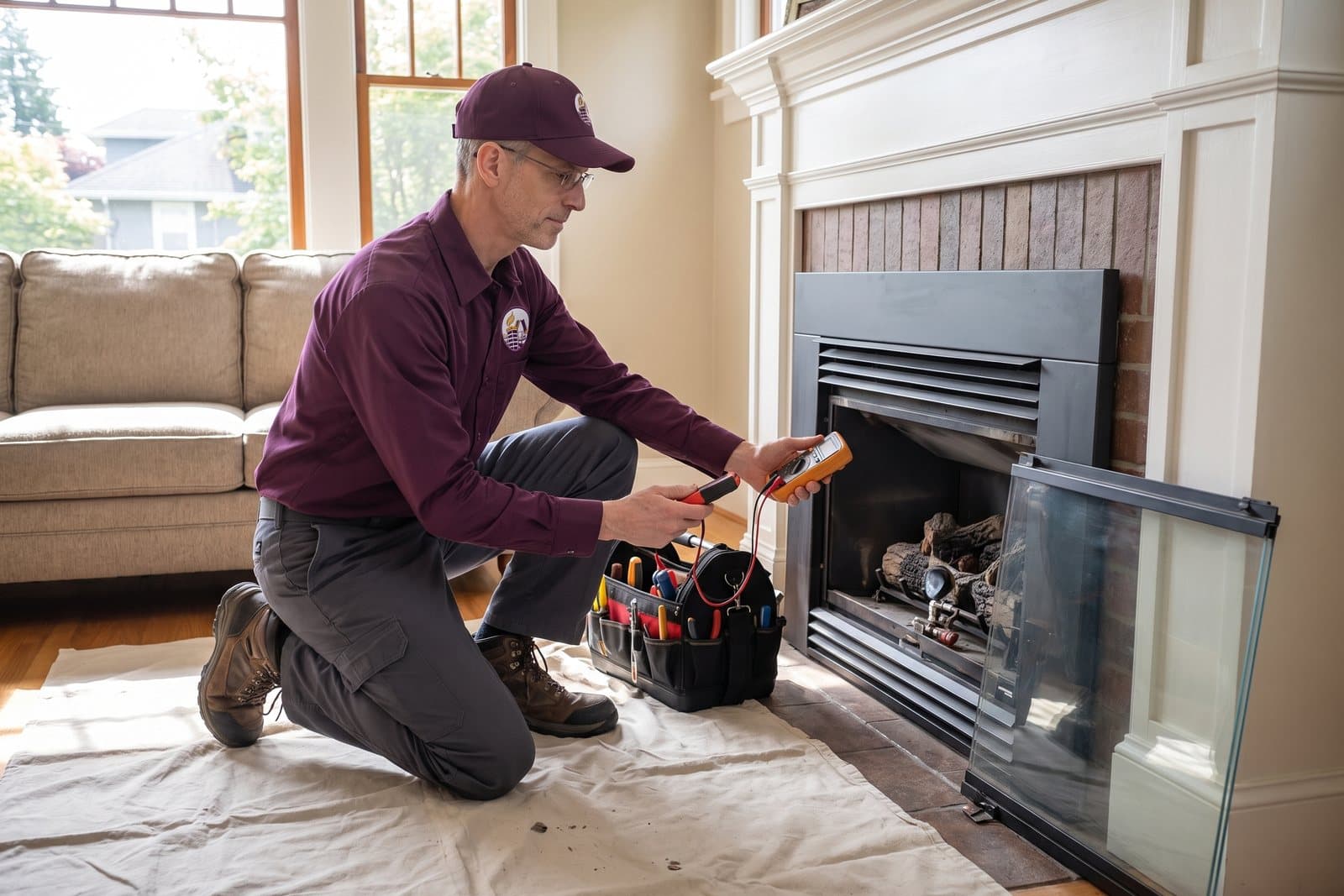
Glass removed, cleaned and checked for a sound gasket
Learn more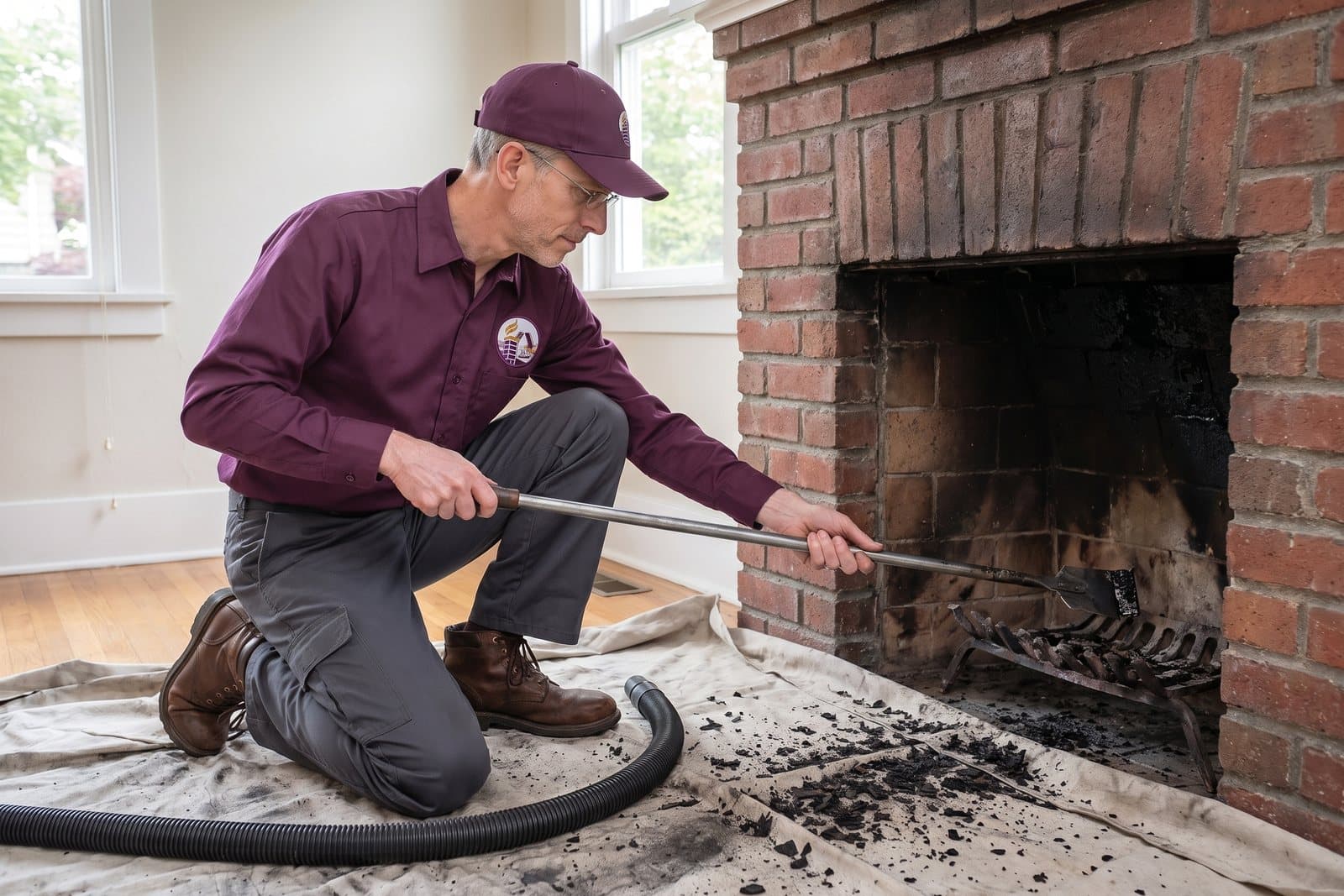
A camera scan to identify the type and extent of the deposit
Learn more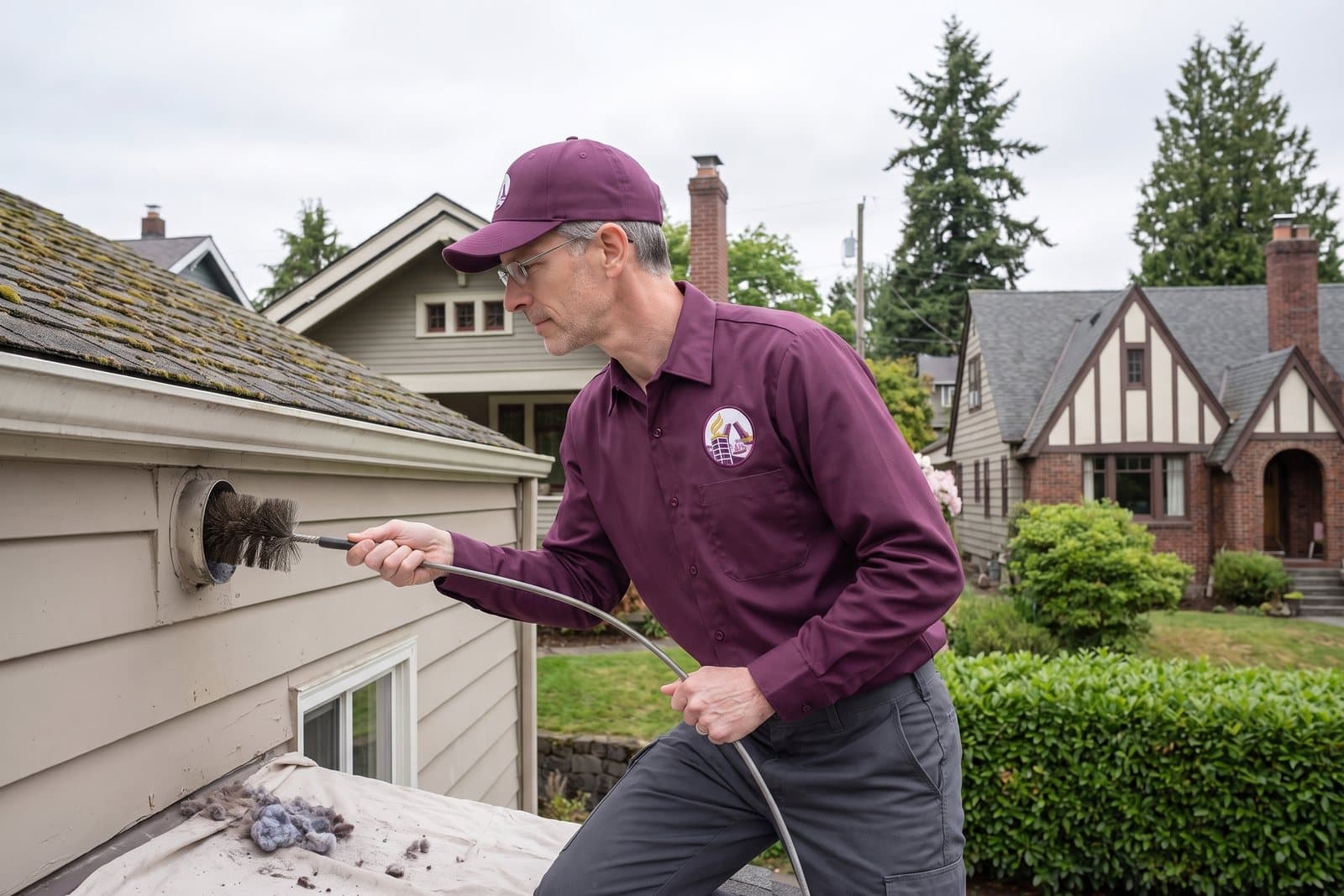
The duct brushed along its entire run, dryer end to outside hood
Learn more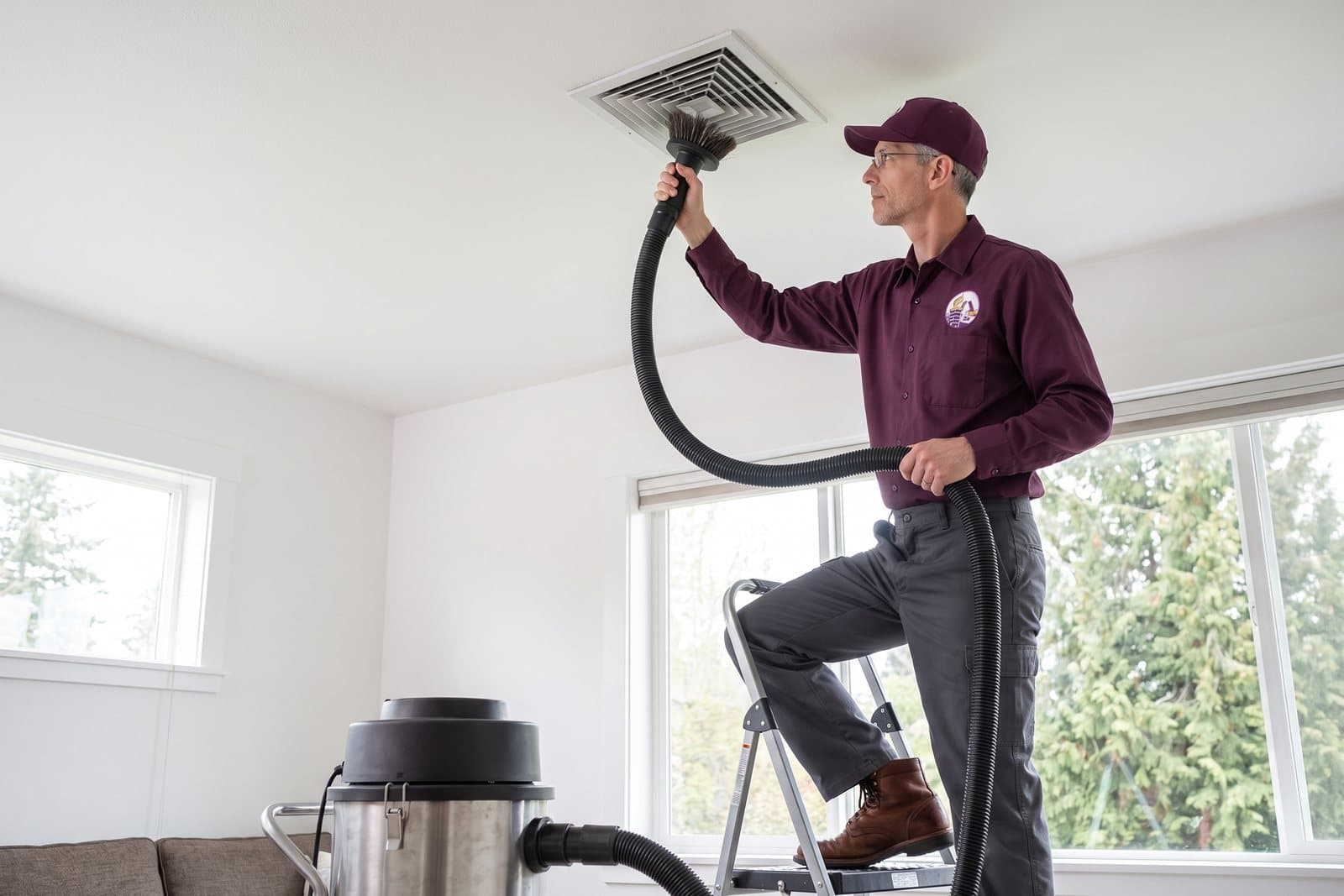
Interior photos of several duct runs before cleaning
Learn moreRanges shown for orientation — the exact figure is written up on-site, after the inspection.
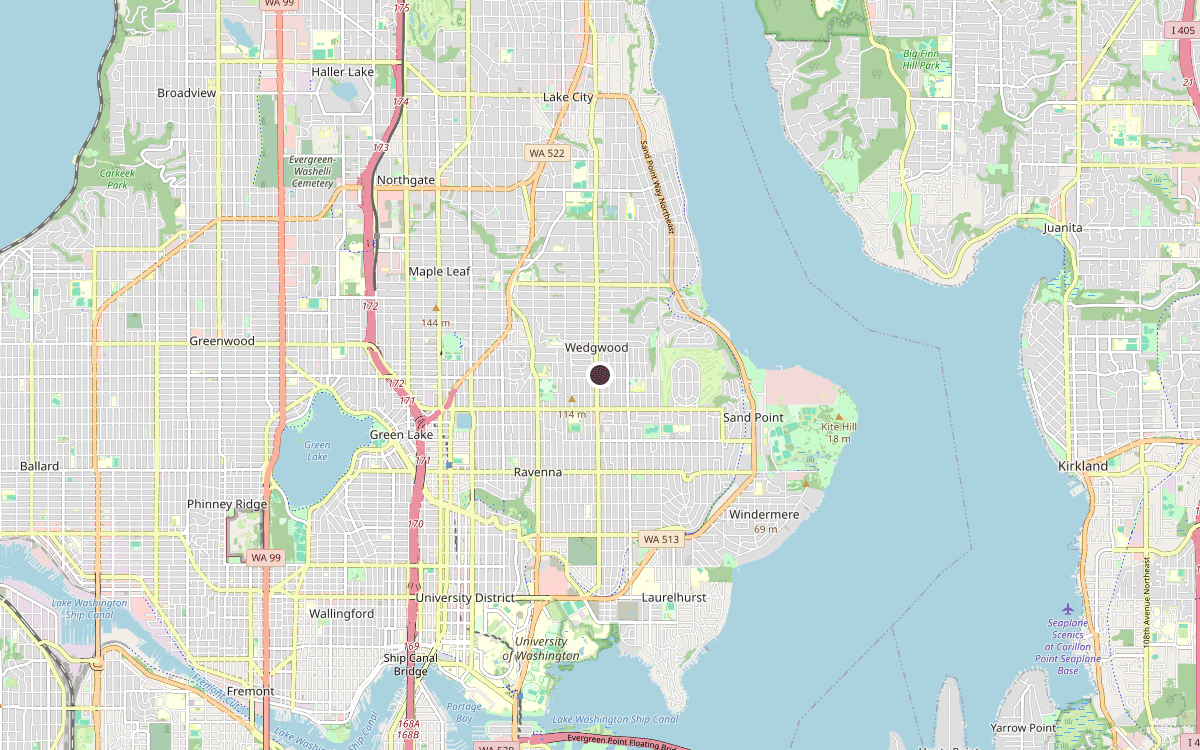
Service-area map — Wedgwood, Seattle. Map data © OpenStreetMap contributors.
Wedgwood lies in northeast Seattle and is generally taken to run from NE 75th Street to NE 95th Street, between 25th Avenue NE and 45th Avenue NE. Combined with neighboring View Ridge it had 6,978 residents in 2023. The Census does not publish figures for the neighborhood itself; the closest unit is ZIP area 98115, which also covers Ravenna and Maple Leaf. There, 59.7 percent of housing units are detached houses and the median home was built in 1962. The name is older than most of the houses: Balch's first plat was filed in July 1941.
Albert Balch started in real estate in 1935 with ten acres above Sand Point that he named View Ridge. His next project lay to the northwest: forty wooded acres that the Jesuits of Seattle University had held since 1929. He bought them in 1940 and filed the Wedgwood plat a year later, covering NE 80th to NE 85th Street between 30th and 35th Avenue NE.
The plan was unusual for its day. Streets curve with the slope, native trees were left standing, and sidewalks, curbs and streetlights came with the lots. The firm of Thomas, Grainger and Thomas drew the first houses in Cape Cod and Colonial styles. HistoryLink credits Balch and his partner Maury Setzer with 500 homes on the tract, while a newspaper report from the July 1941 launch spoke of a 200-home project. We leave both figures as the sources give them.
Not everything here dates from Balch. Wedgwood Rock, a glacial boulder 19 feet tall and 75 feet around, was dropped by the Vashon glacier more than 14,000 years ago and was deliberately kept out of the housing plats in 1941. North of it, the Morningside Heights plat between NE 90th and NE 95th Street had been built up with Craftsman-style homes in the 1920s and 1930s.
The ground has its own history as well. A peat bog fire in 1952, at the site of today's Dahl Playfield, lowered the surface by as much as five feet, and about 75,000 cubic yards of peat were excavated and replaced. For chimney work the lesson is modest but real: houses a few blocks apart can differ by a generation in age and stand on quite different soil.
No weather station sits in Wedgwood. The nearest long record was kept at Sand Point, in northeast Seattle, by the National Weather Service. Over 1986-2016 its yearly precipitation averaged 35.50 inches, and its wettest single day, December 3, 2007, brought 4.15 inches. The driest year on the record, 2002, received 28.42 inches and the wettest, 2006, received 45.05.
Frost is frequent but shallow. The station's log works out to 24 days in an average year at or under freezing, yet only about one day a year stayed frozen from morning to night, and snowfall averaged 3.6 inches. Masonry here is worn down by months of damp punctuated by short frosts, not by deep cold.
The 25,486 housing units of ZIP area 98115 divide almost evenly among three early periods: a fifth (20.2 percent) predate 1940, the 1940s supply 14.2 percent and the 1950s 14.3 percent. Wedgwood's Craftsman blocks and its Balch plats fall in the first two. Heating has moved on since they were built. Electricity now leads at 48.8 percent and utility gas follows at 43.5 percent, with fuel oil holding at 5.8 percent and wood as a main fuel estimated at zero.
Every change of fuel or appliance raises the same code question. The lining of a chimney must be appropriate to the appliance (Seattle Residential Code, R1003.11), and the Seattle Mechanical Code requires fireplace inserts to be listed and installed to their manufacturer's instructions. A factory-built chimney, where a house has one, must itself be listed and labeled under R1005.1. So in Wedgwood the useful question is seldom the age of the chimney alone. It is what the flue was built for, what it serves today, and whether the two still agree.
Air quality bans for Seattle come from a four-county regulator, the Clean Air Agency serving the Puget Sound area, not from the city itself. A fire-safety burn ban is something else, issued by the fire marshal. The agency's two stages differ in reach. The first stage idles the wood fireplace and any uncertified stove or insert. The second extends the shutdown to certified wood devices and to pellet stoves.
Both stages allow a single exception, for the household that cannot heat adequately without its wood device and has applied for, and been granted, the agency's exemption. Adequate has a definition, a system that keeps occupied rooms at 70 degrees Fahrenheit when measured three feet up from the floor. High running costs for an otherwise working furnace are not grounds for one. Even an exempt household may not show visible smoke during a ban.
The grid we quote from for Wedgwood homes — the $99 inspection comes first, the written quote before any work.
| Service | Price in Wedgwood | What that covers |
|---|---|---|
| Chimney Sweep | $209–$459 | Full flue swept, Level 1 inspection included |
| Chimney Inspection | $99 plus tax | Level 1 visual; Level 2 adds a full camera scan |
| Chimney Relining | From $1,900 | Full-length stainless liner, sized to the appliance |
| Chimney Repair | From $425 | Masonry repair — brick and mortar, scoped after diagnosis |
| Chimney Cap Installation | $265–$850 | Stainless cap fitted; multi-flue and custom at the top |
| Masonry Repair (Crown / Repointing) | From $475 | Crown work, repointing and tuckpointing by surface area |
| Chimney Waterproofing | $320–$795 | Breathable sealer — reapplied every 3–5 years in this climate |
| Chimney Flashing Repair | $375–$1,495 | Reseal at the low end, full flashing replacement at the high |
| Gas Fireplace Service | $189–$479 | Annual service and tune-up; repairs quoted after diagnosis |
| Creosote Removal | From $245 | Priced by creosote stage — glazed stage 3 is the heavy end |
| Dryer Vent Cleaning | $105–$295 | Full run cleaned; roof or upper-floor terminations at the top |
| Air Duct Cleaning | From $525 | Whole HVAC system — trunks, branches and every register |
Ranges are what these jobs are quoted at in Wedgwood. The exact figure is set on site after a $99 inspection (credited toward the job if you go ahead), and you approve it before any work starts.
Before and after
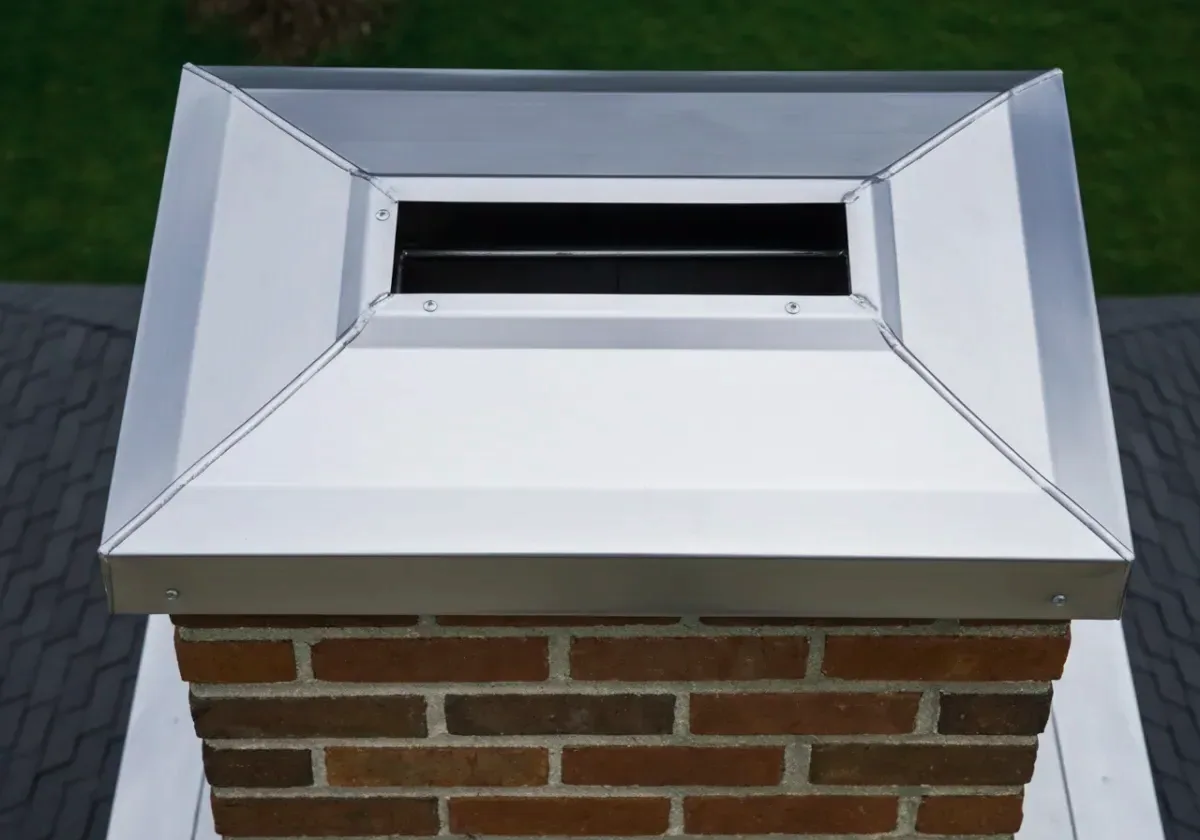
Illustrations of what each repair changes on a typical chimney — not photos of a specific job.
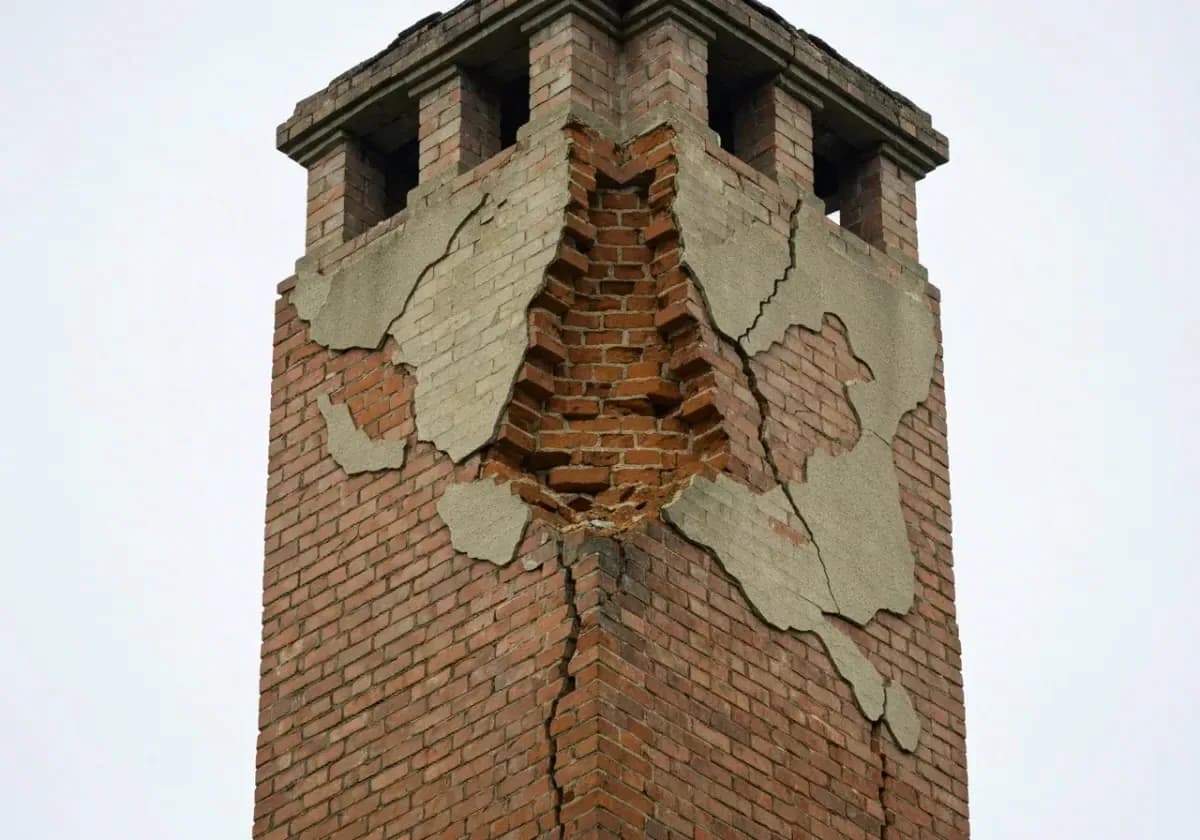 Before
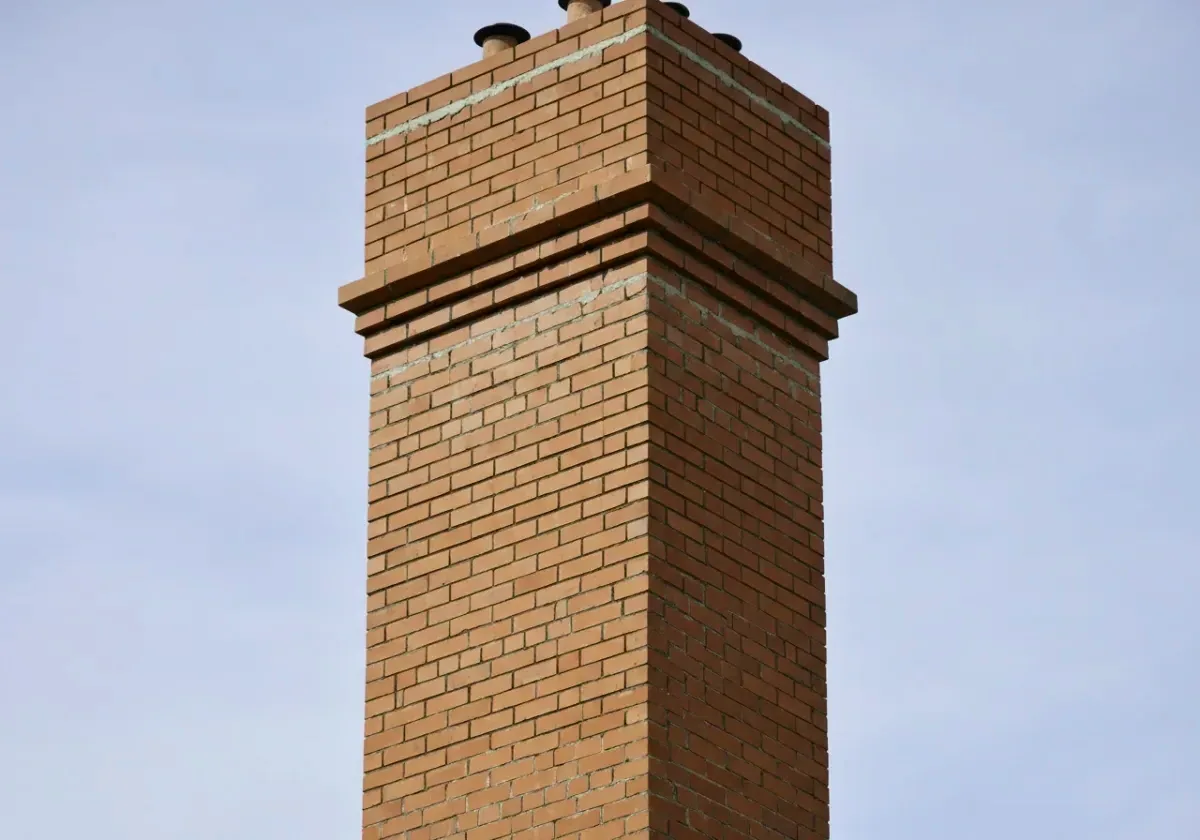 After
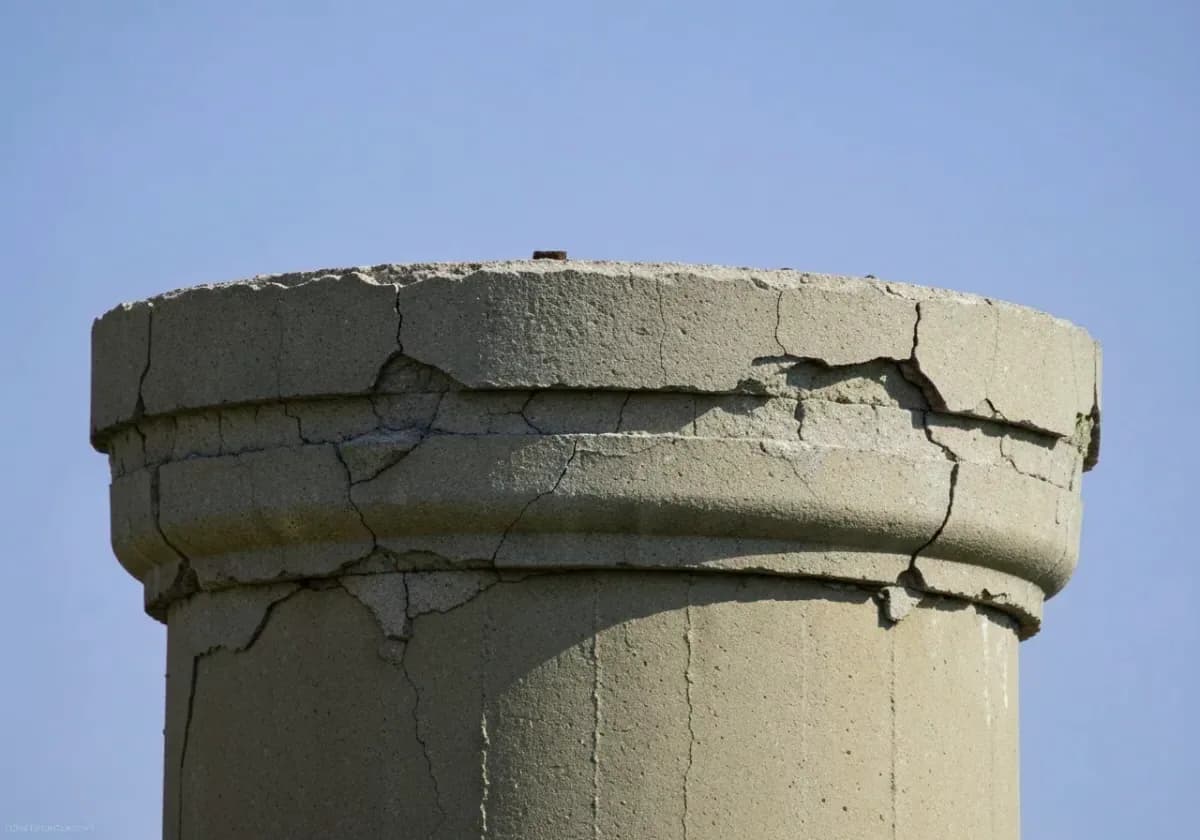 Before
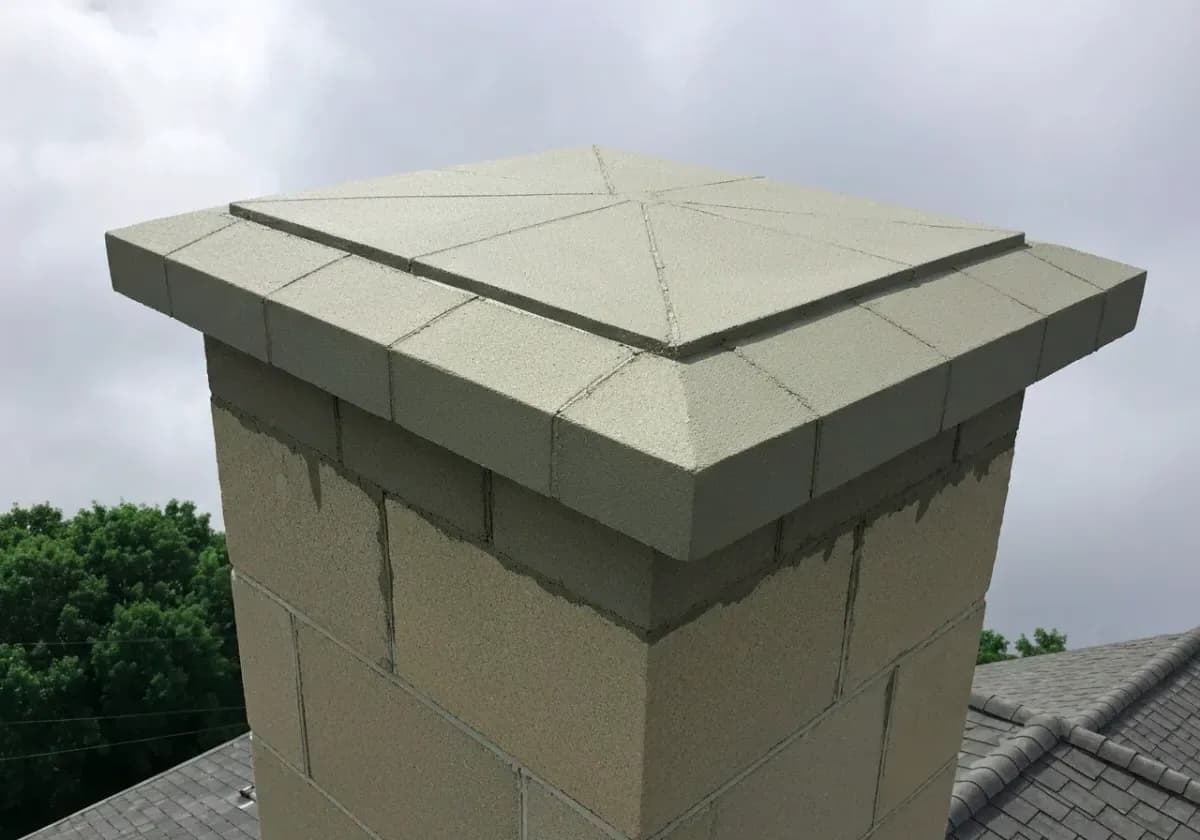 After
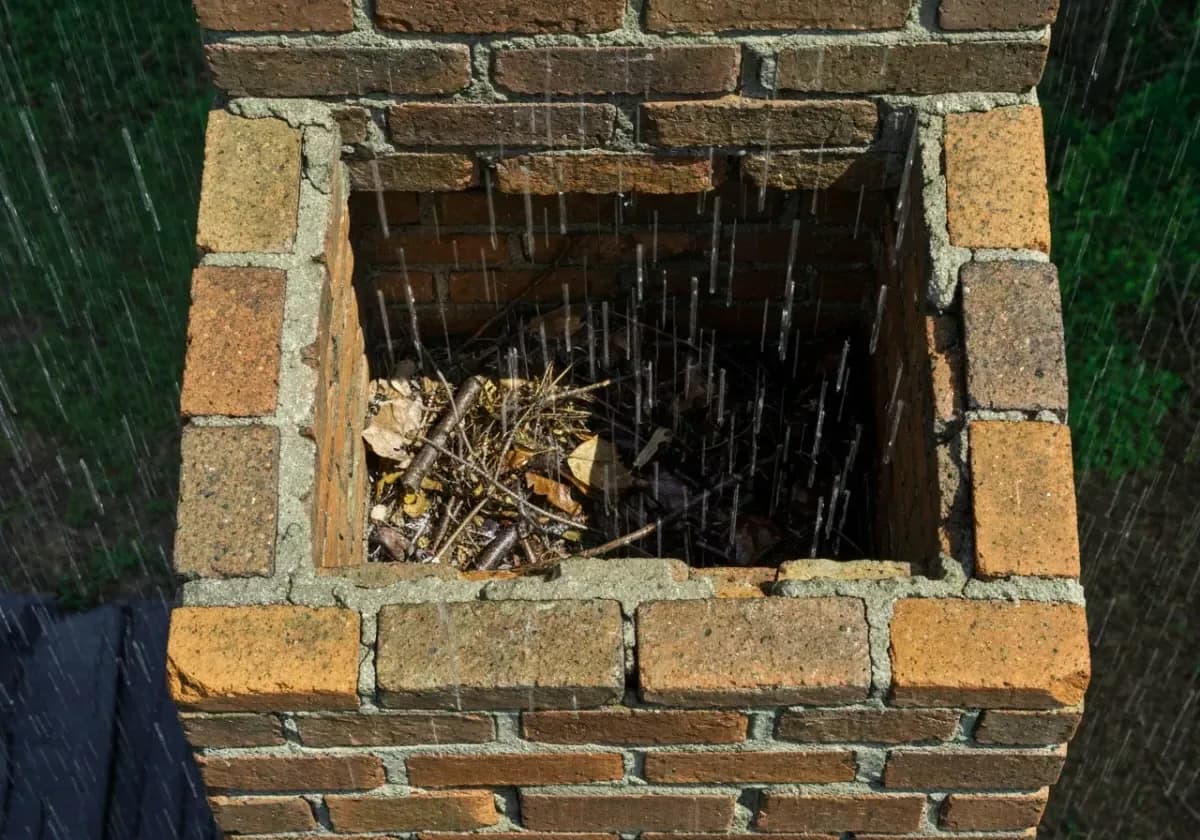 Before
 After
Four steps, each one on paper — so you always know what happens next.
Choose a genuine opening on the crew's calendar. Confirmation is immediate.
Liner, crown, cap, flashing and masonry examined in order — each finding photographed.
One document, plain numbers, covering only the work your chimney genuinely needs.
The repair is completed, then handed over with before-and-after photos of every item.
None of the histories we consulted says one way or the other, so we do not claim it. Each house is checked on its own, and the visit establishes whether it has a masonry chimney, a metal factory-built flue or a gas appliance.
It depends on the scope. Repointing a chimney and certain minor repairs are exempt under the Seattle Residential Code, and SDCI's own guide counts mechanical, furnace, gas and fireplace jobs among those that normally require a permit when no exemption applies. Our practice is to put the question to SDCI ahead of the job and report its answer to you.
Each chimney inspected costs $99 plus tax, and the visit produces photos plus a written report. Whatever work you then approve from our quote has that amount taken off.
Choose a genuine opening on the crew's calendar. We inspect, quote in writing, and hand over a photo record of every repair.