Ravenna, King County
Ravenna is built along a ravine, and its chimneys span three generations of Seattle housing. That combination decides what we find on a roof here: prewar brick next door to postwar brick, tree litter on roofs near the ravine, and long wet winters measured by two weather stations close at hand. The notes below set out the documented facts about the neighborhood, with their sources, so you can judge our advice against the record. Work always begins on site with an inspection. It costs $99 plus tax a chimney, and accepting the written quote turns that payment into a deduction from the job.
Book an inspection
Book your $99 inspection
$99 plus tax, deducted when you approve the repair
Not sure where to start
Pick what you're seeing at your Ravenna home — we'll point you to the right fix.
What we do
The same crew, the same written quote — for Ravenna homes.
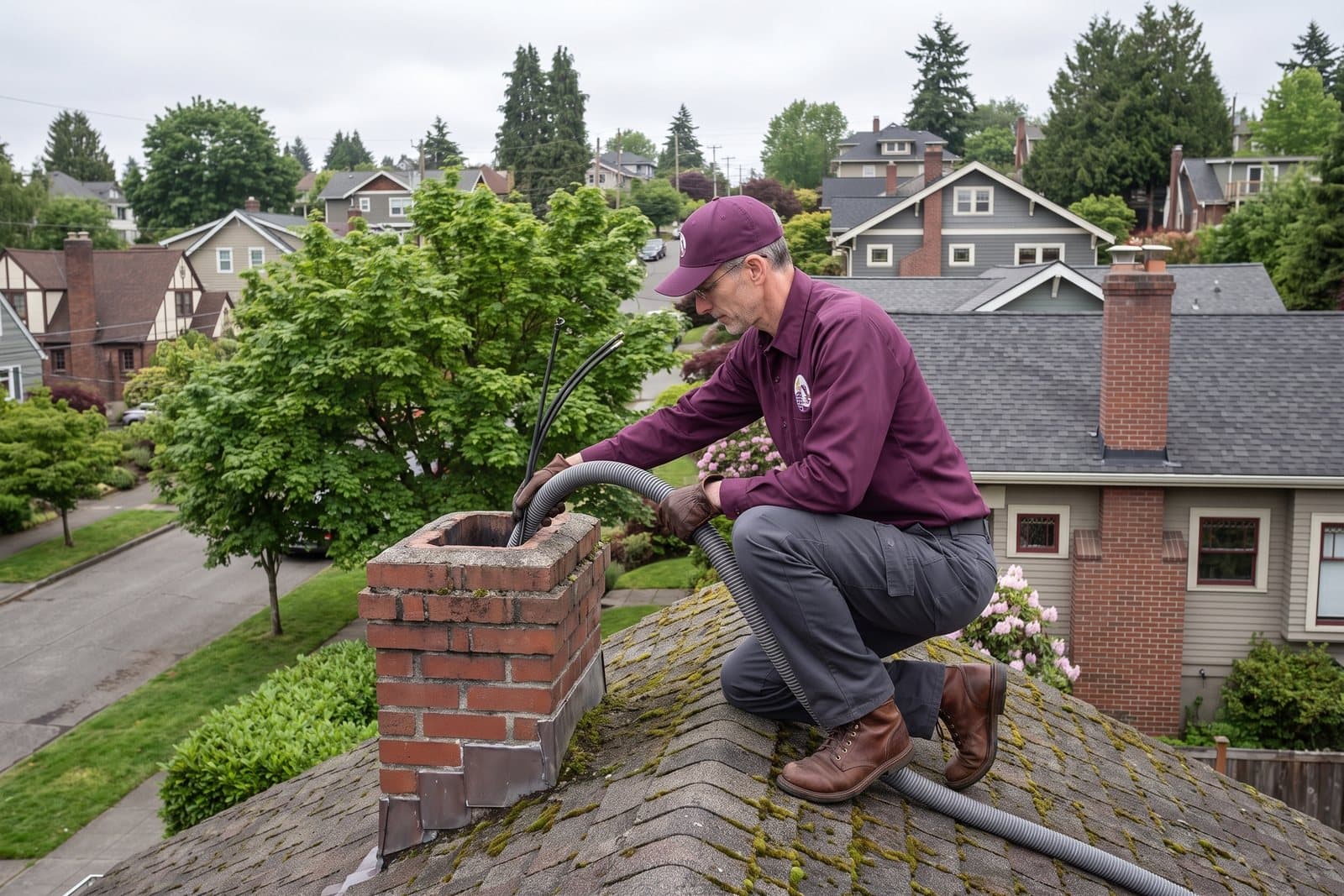
The whole flue brushed, using heads picked for the liner's size and shape
Learn more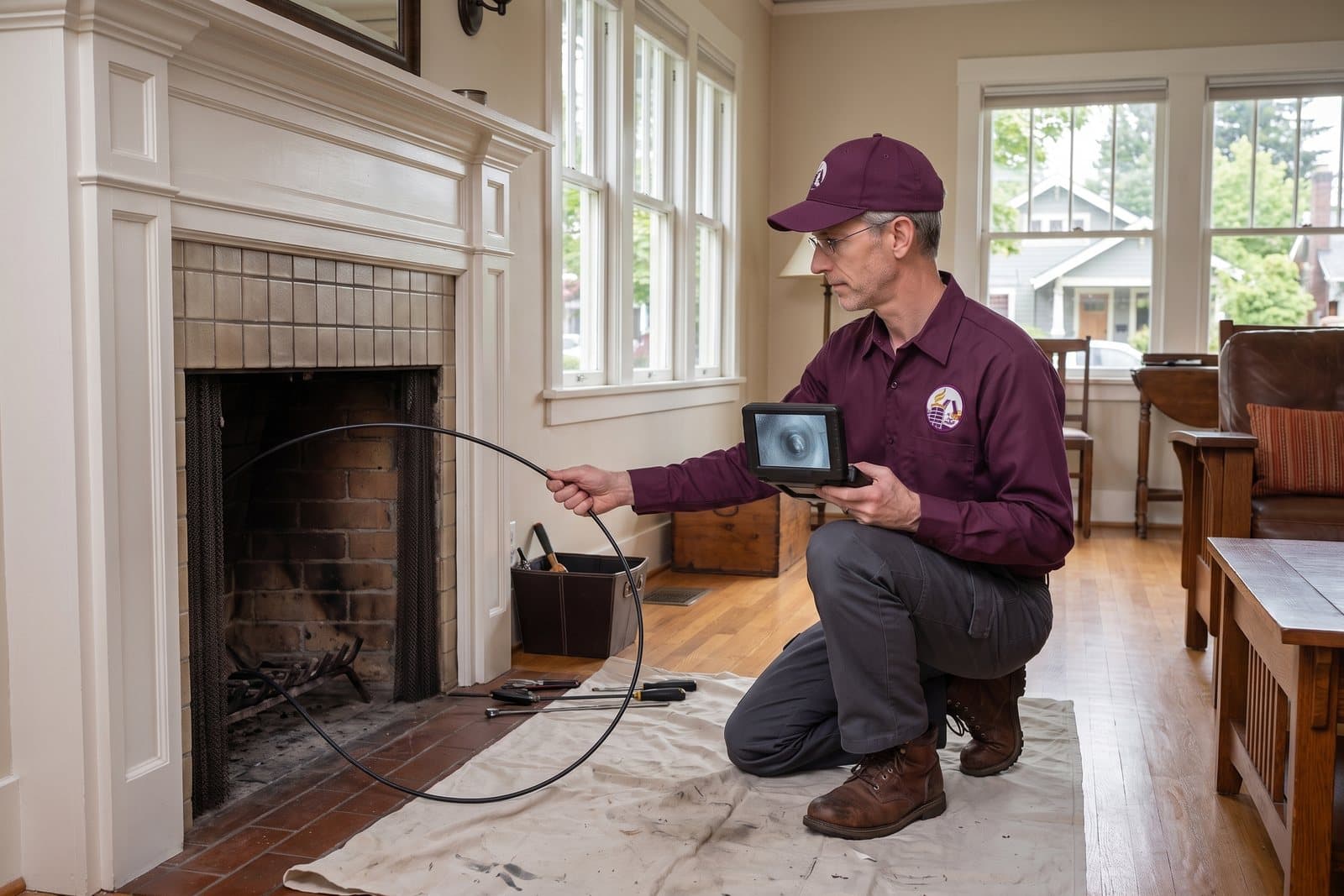
A Level 1 review of everything reachable, raised to a Level 2 camera scan when a question stays open
Learn more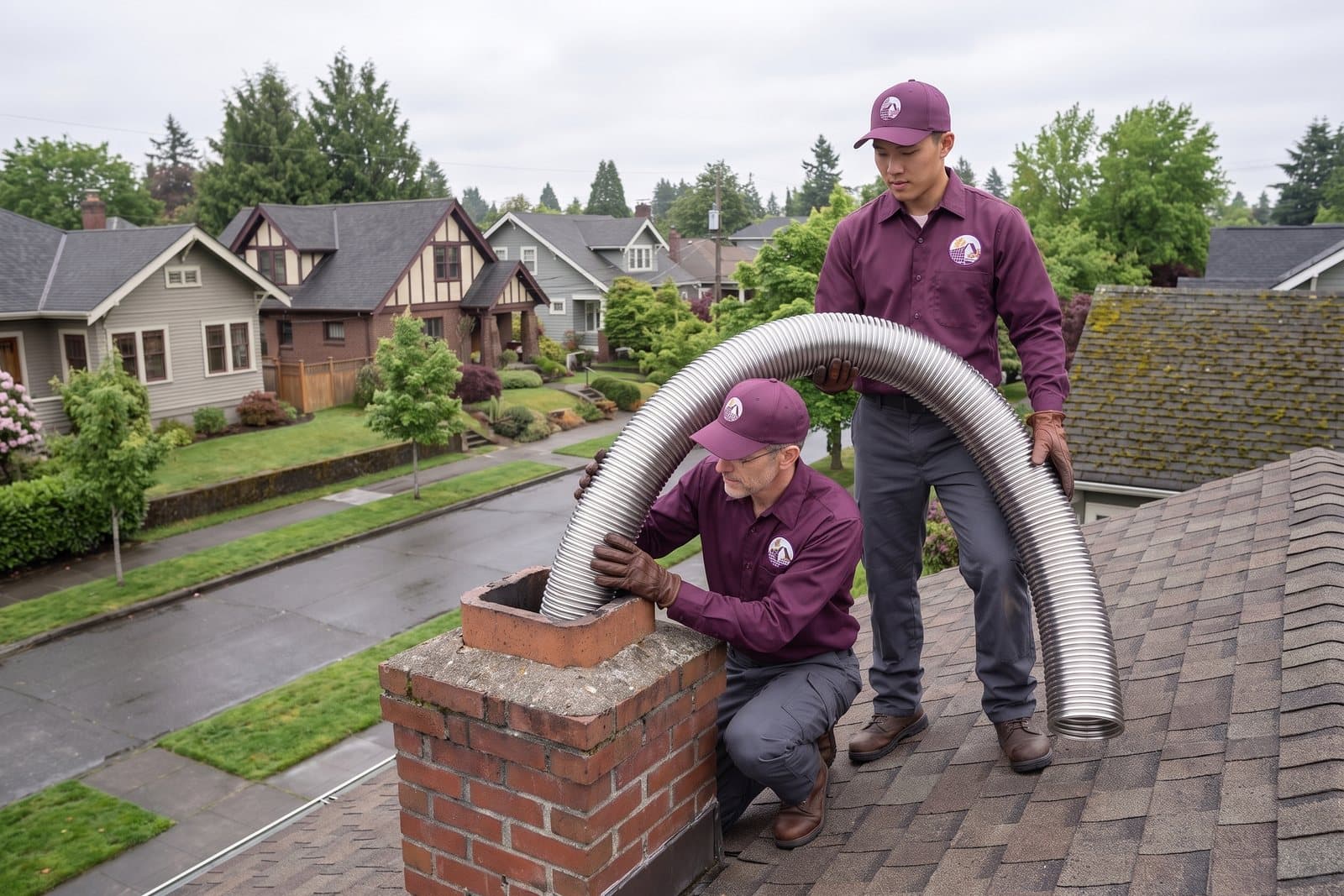
Camera survey and measurements taken before any liner is chosen
Learn more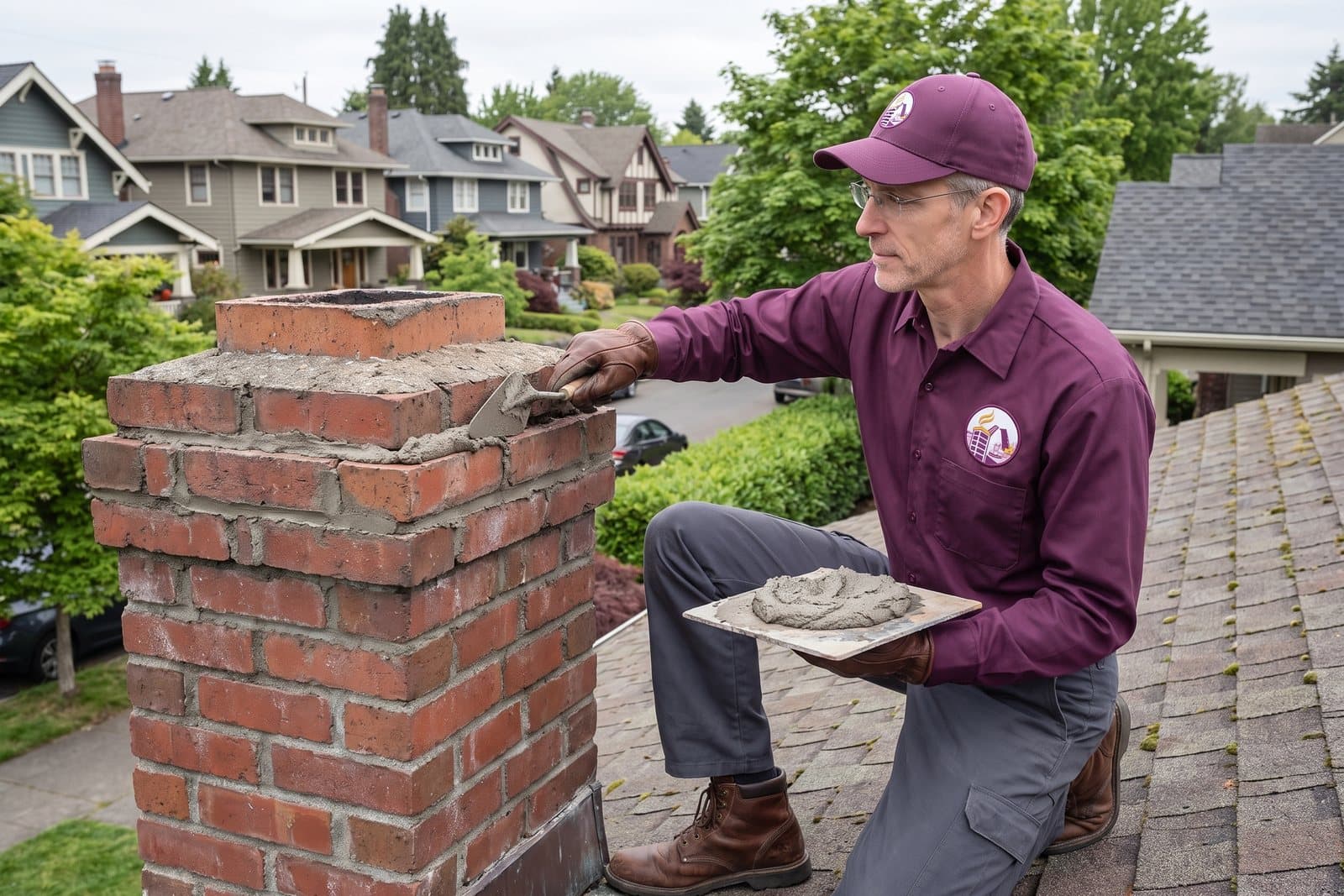
A photo assessment that distinguishes surface wear from structural damage
Learn more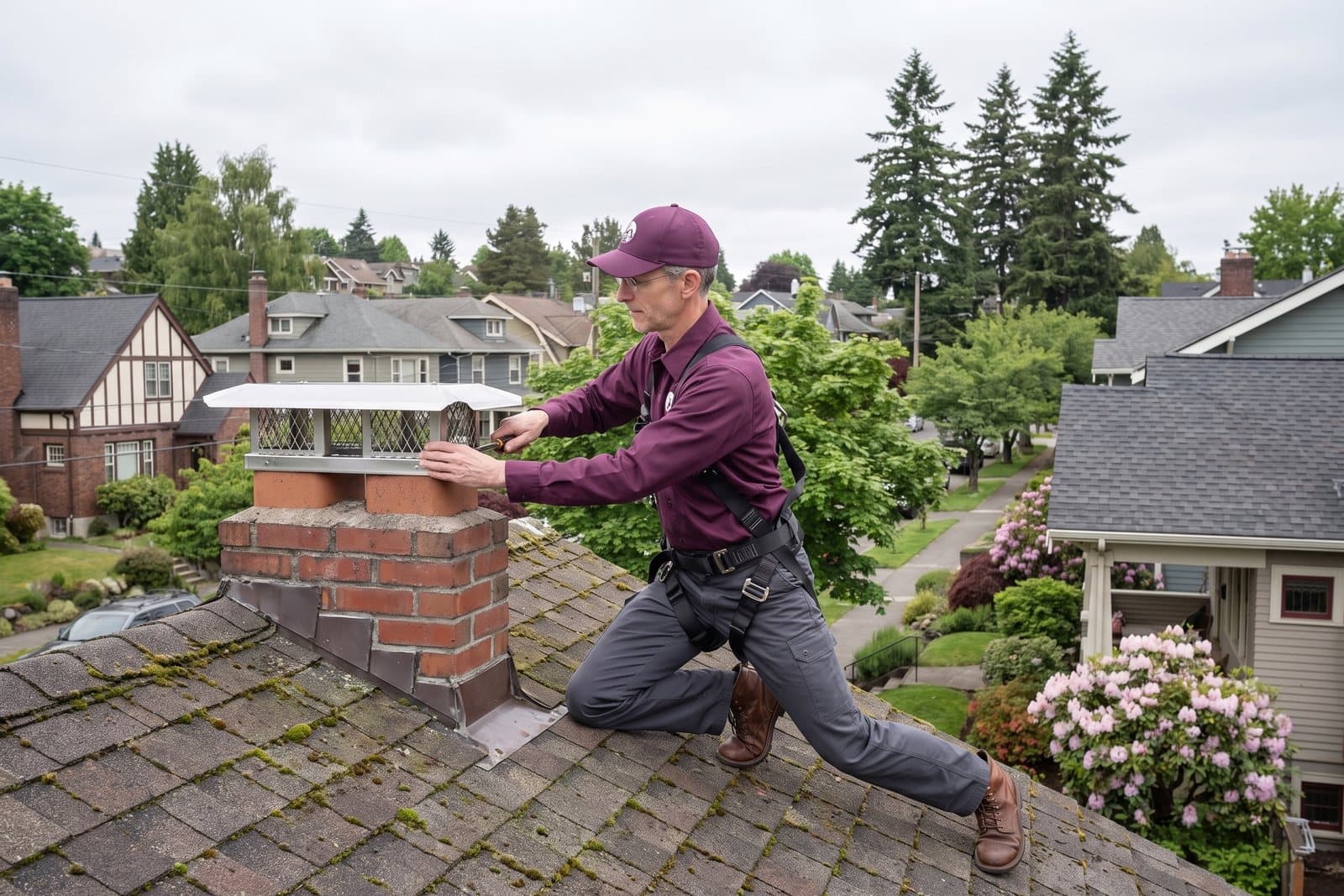
Measurement of each flue, or of the crown when a single cap will span several
Learn more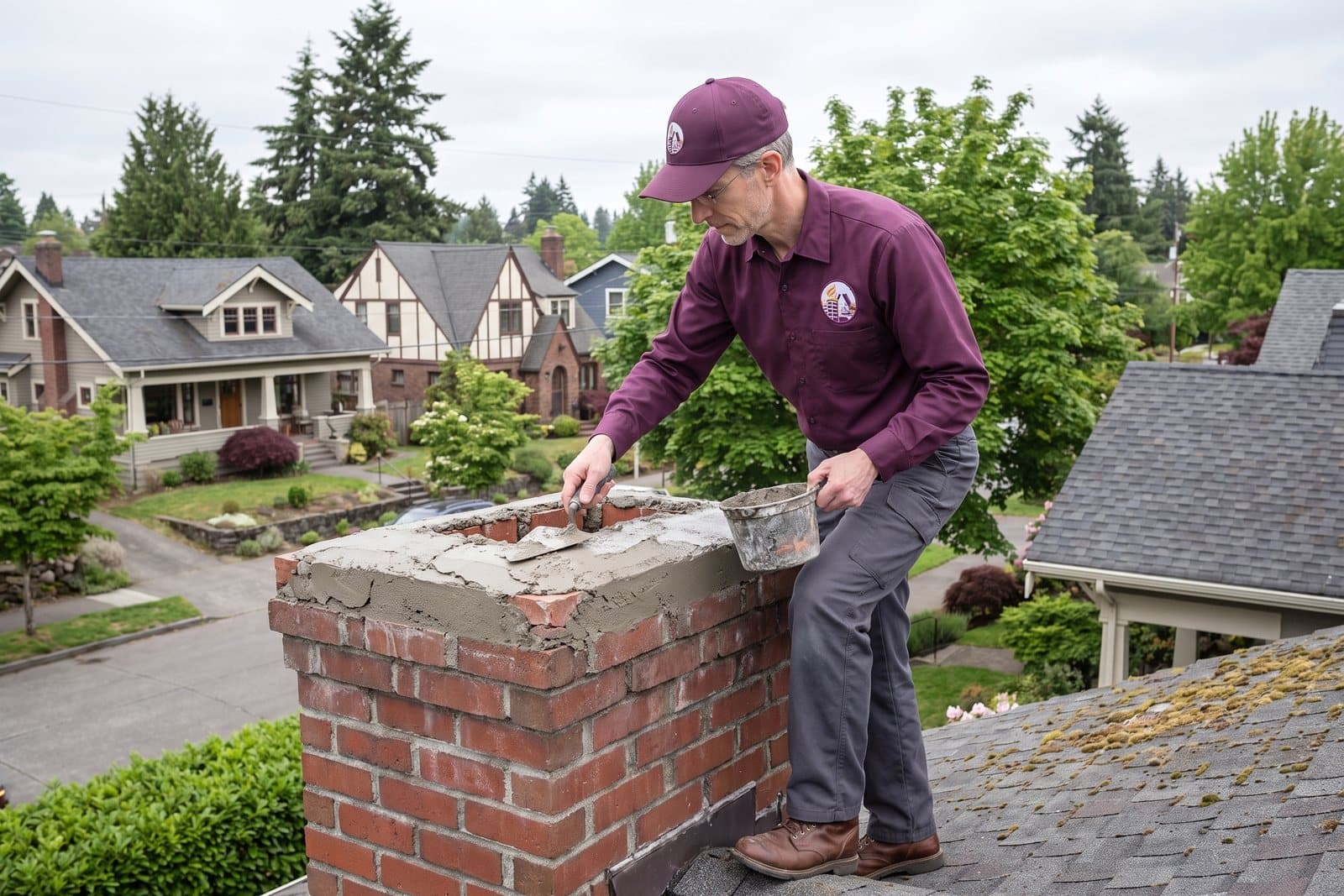
Crown and all four sides photographed before any work
Learn more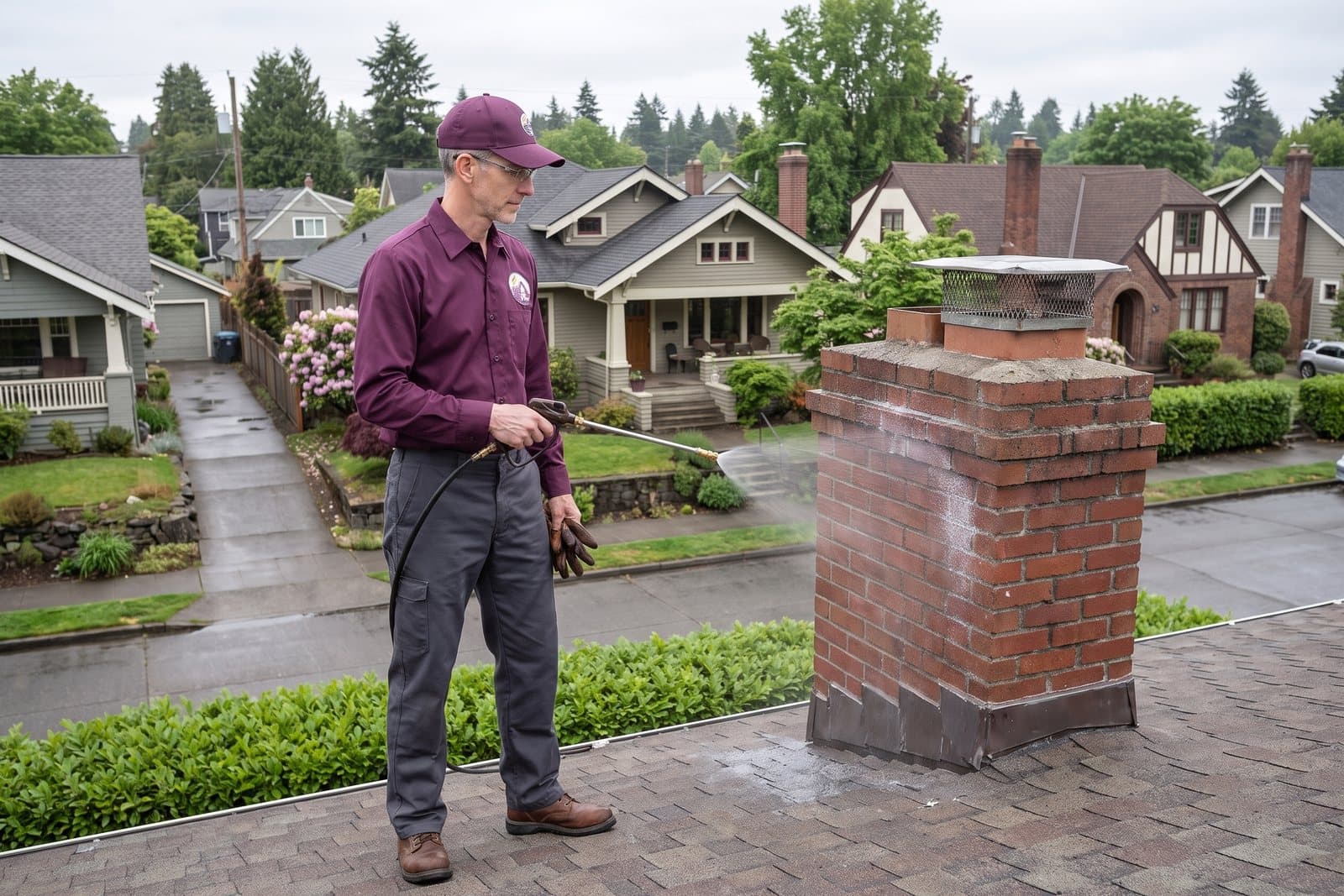
Inspection of crown, joints and flashing before anything is applied
Learn more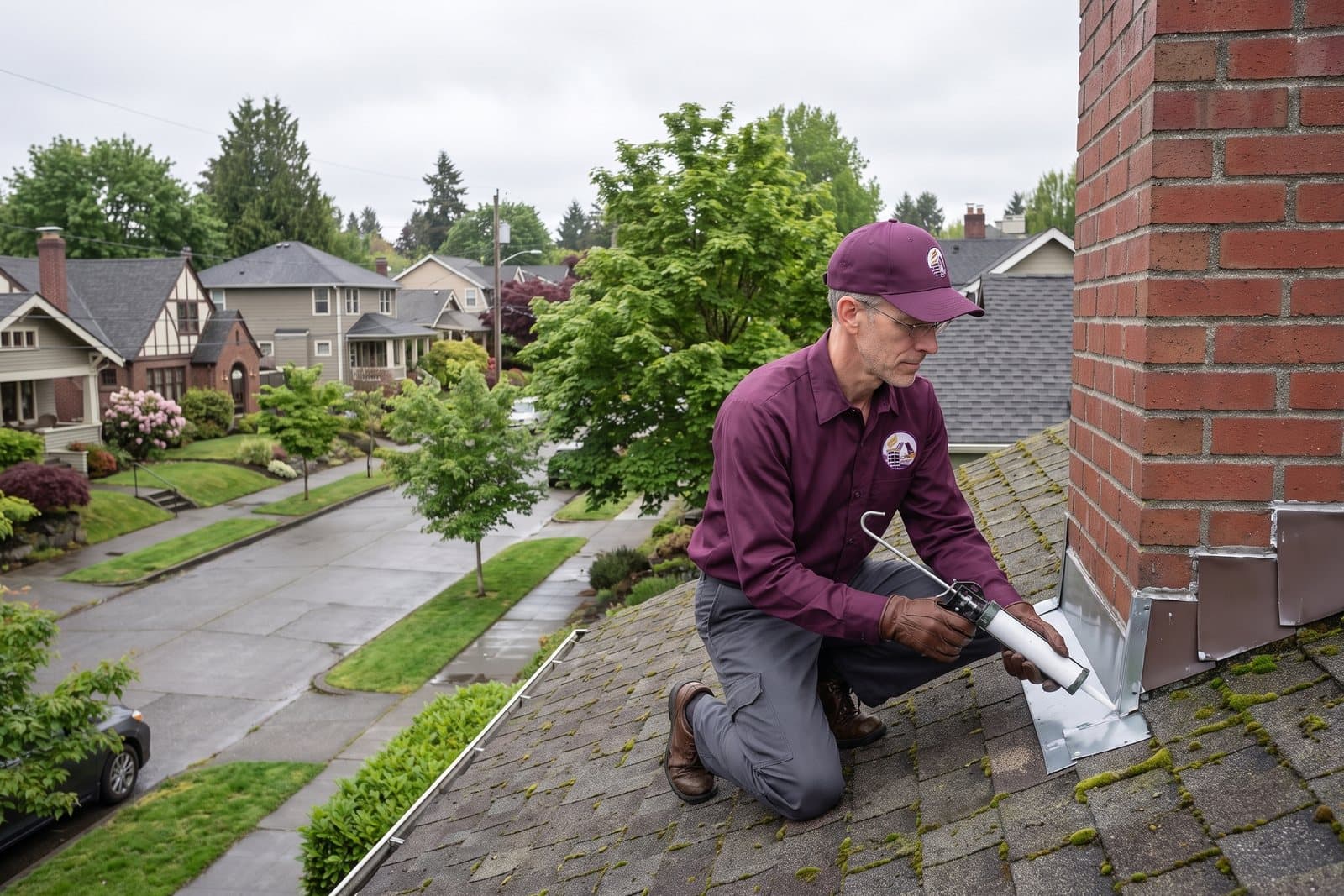
Leak tracing from the stain indoors to the entry point on the roof
Learn more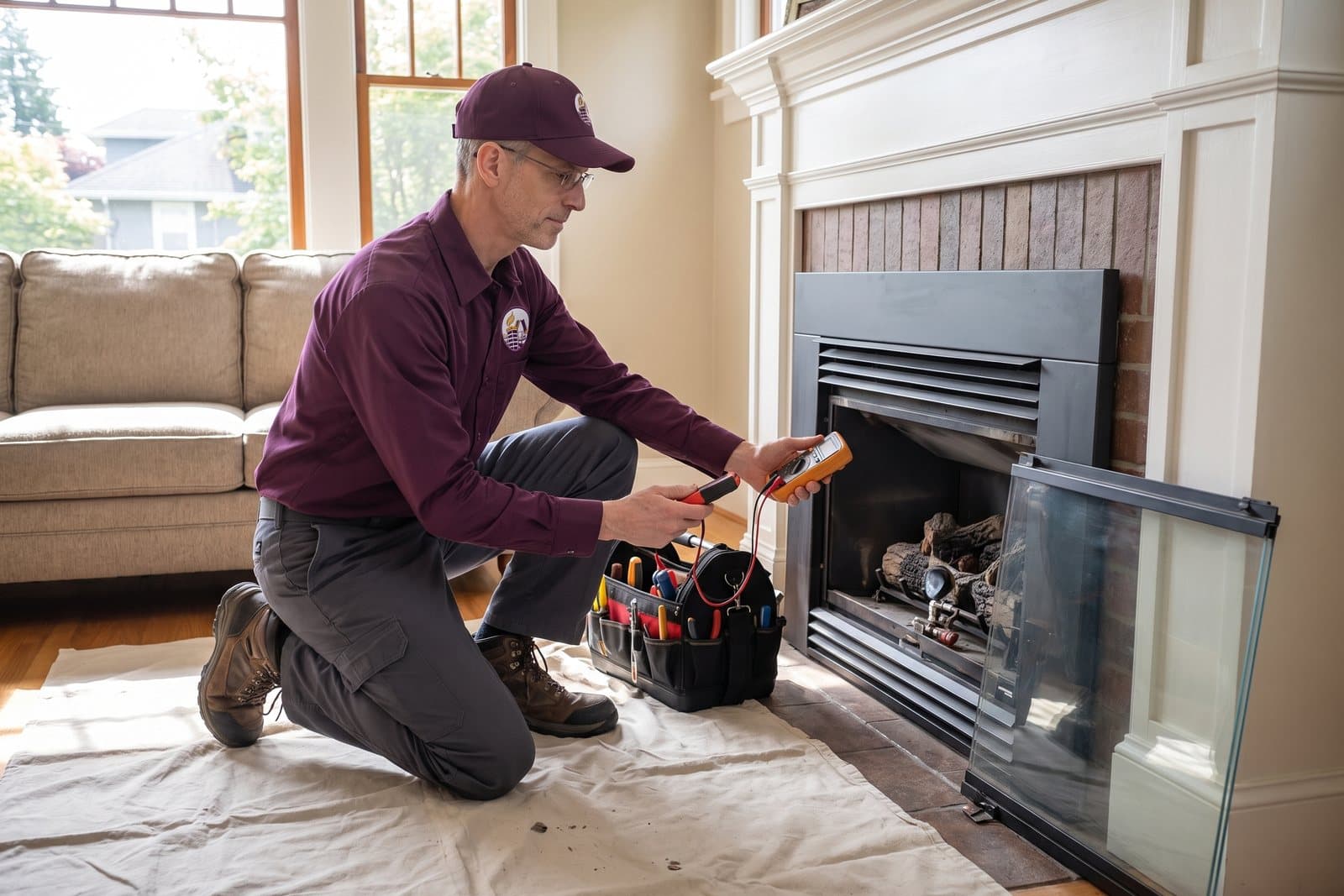
Glass removed, cleaned and checked for a sound gasket
Learn more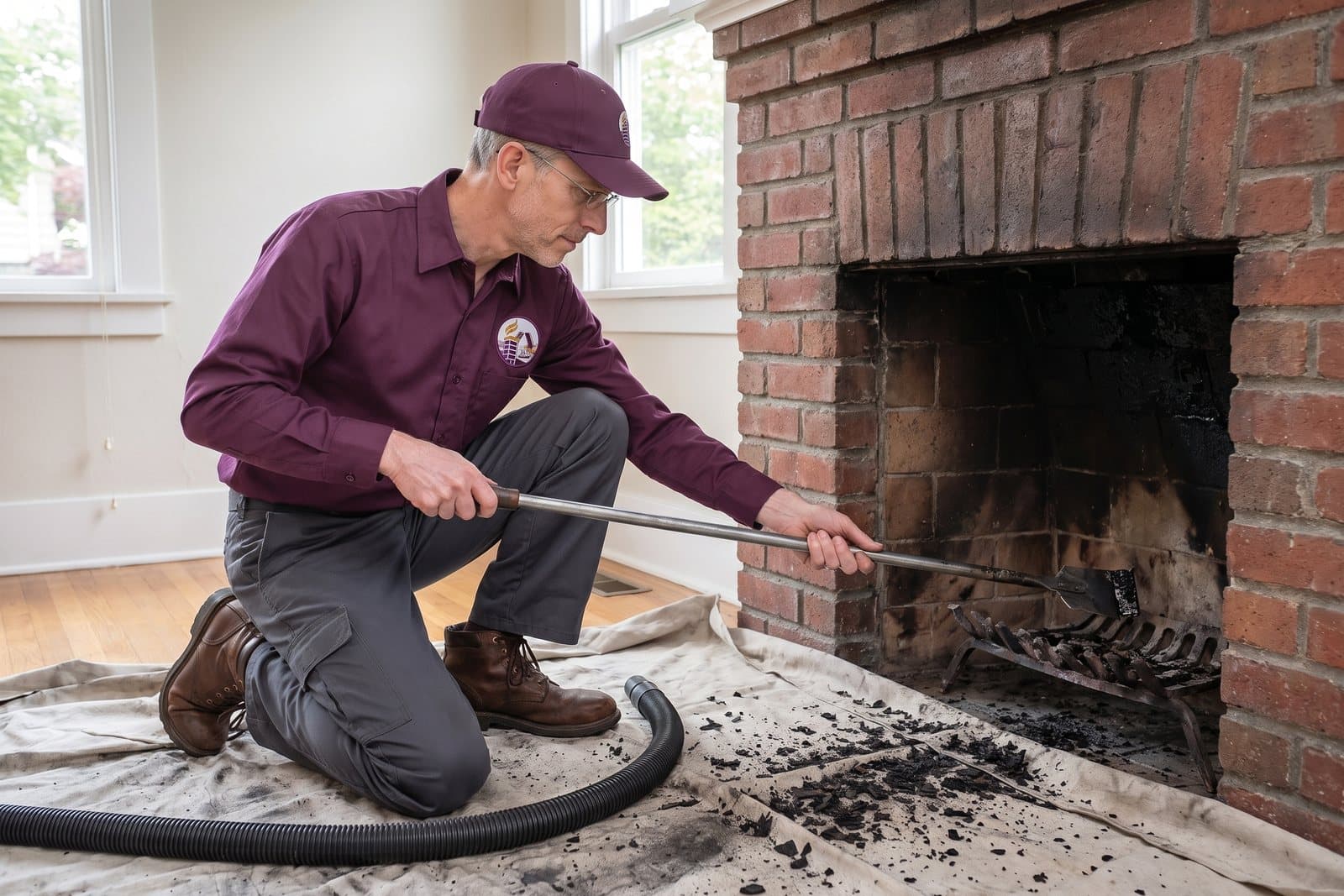
A camera scan to identify the type and extent of the deposit
Learn more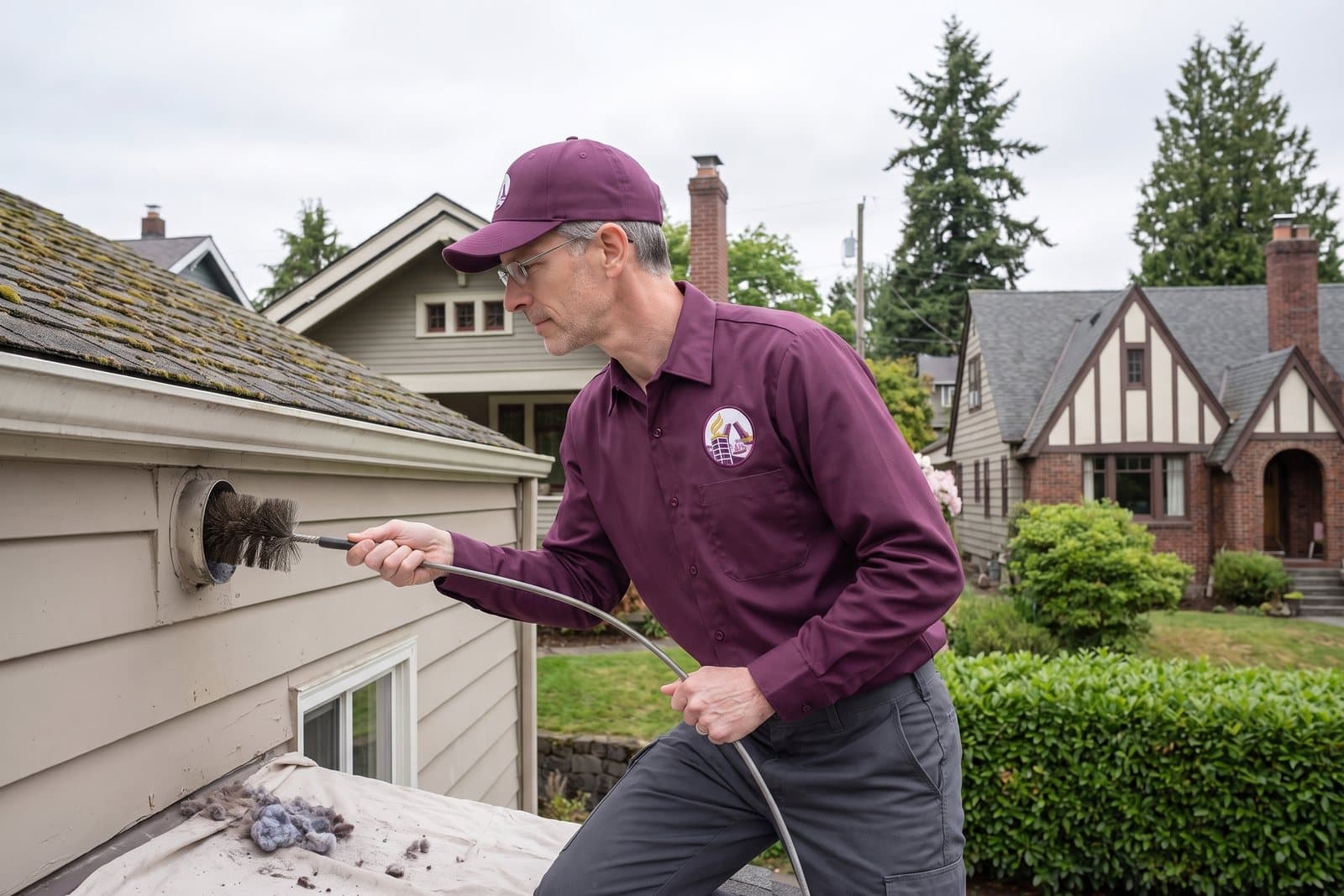
The duct brushed along its entire run, dryer end to outside hood
Learn more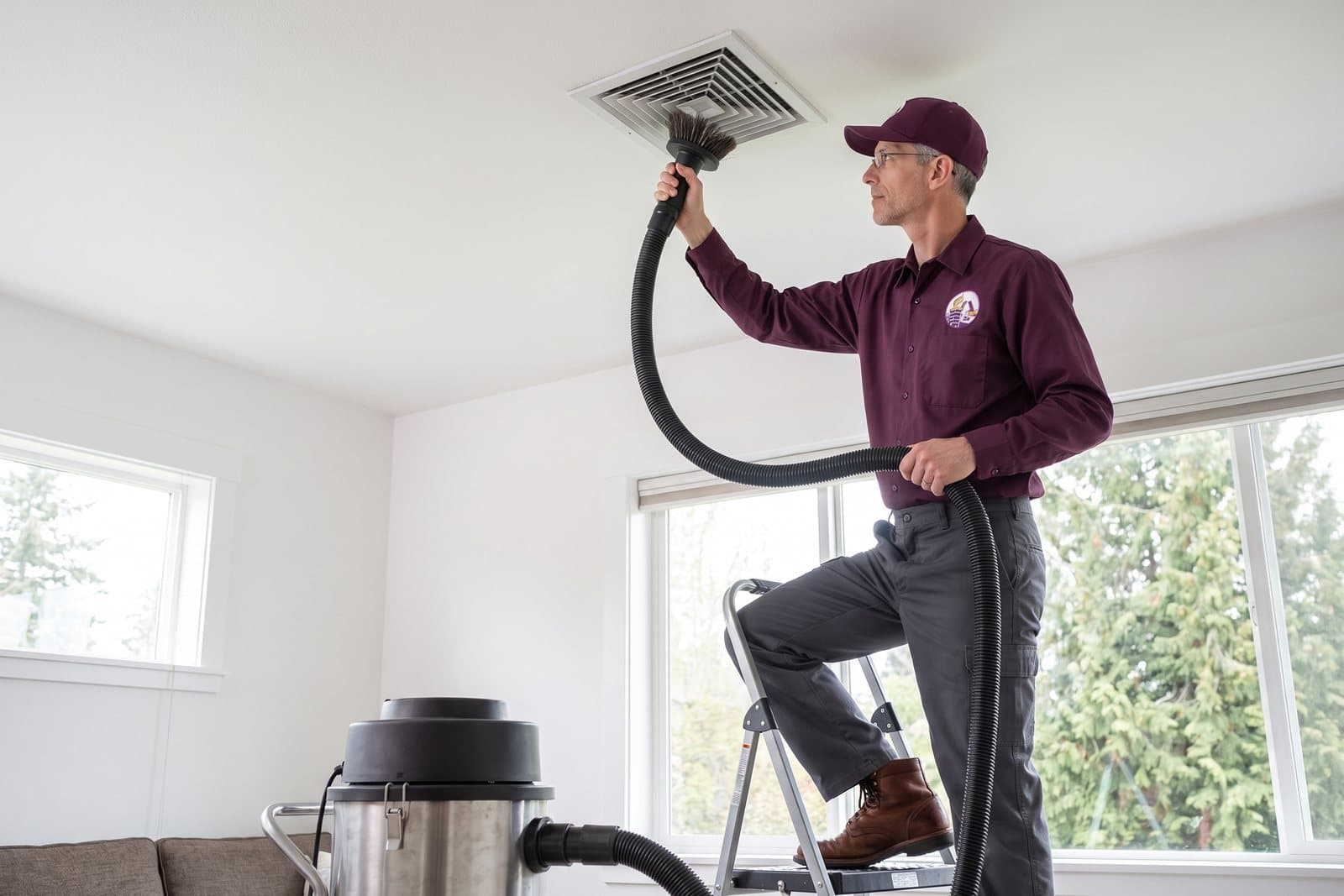
Interior photos of several duct runs before cleaning
Learn moreRanges shown for orientation — the exact figure is written up on-site, after the inspection.
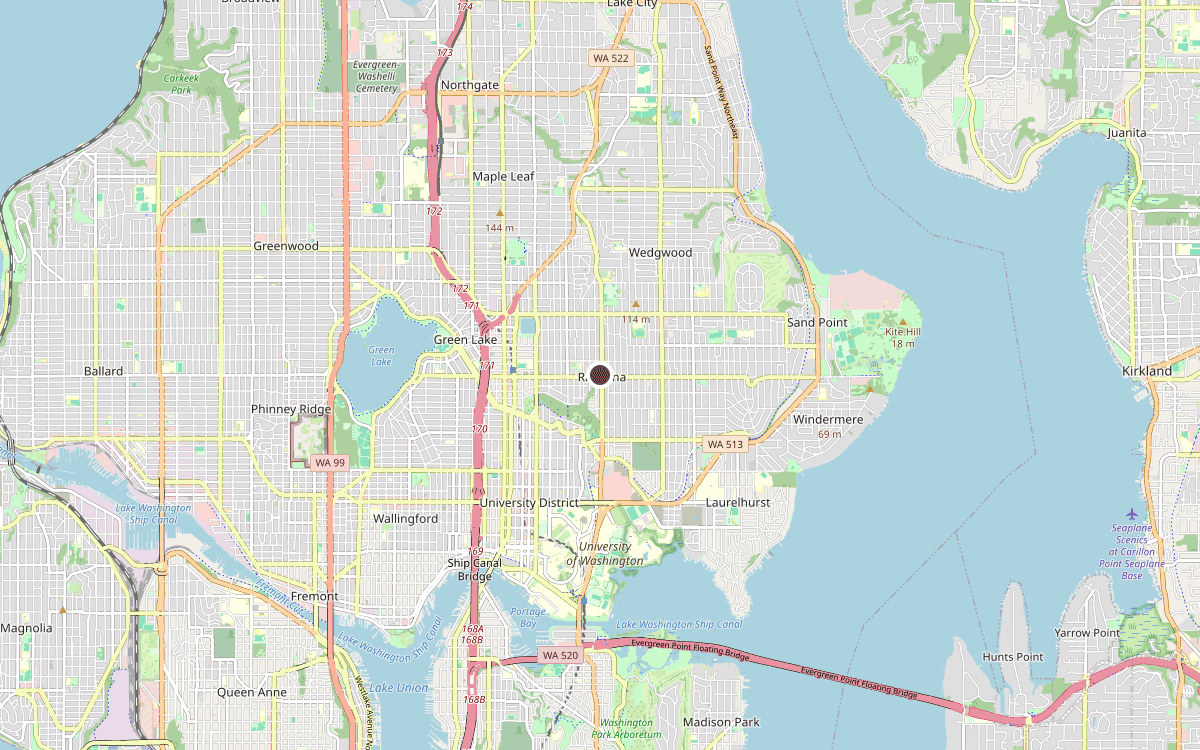
Service-area map — Ravenna, Seattle. Map data © OpenStreetMap contributors.
Wikipedia places Ravenna between 15th to 20th avenues NE on the west and 25th to 35th avenues NE on the east, running from NE Ravenna Boulevard north to between NE 75th and NE 85th streets. The combined Ravenna-Bryant area had 10,574 residents in 2023. Neighborhood lines in Seattle are informal, and sources draw this one differently. Ravenna Boulevard itself comes from the Olmsted plan of 1903, which recommended a parkway linking Green Lake with Ravenna Park, and it was built accordingly.
George and Oltilde Dorffel platted Ravenna Springs Park in 1887 and reserved the steep ravine and its creek as a park. A year later William and Louise Beck bought 400 acres and ran Ravenna Park as a paid attraction, with paths and picnic shelters; a Seattle Female College opened in 1888 too, with 40 students. In 1891 a streetcar line arrived by way of the Latona Bridge, a bridge David Denny's street railway company had built.
Charles Cowen acquired the upper ravine in 1906 and set it aside as Cowen Park. The city condemned Ravenna Park in 1911 to take it into public ownership. Public ownership did not save the park's giant old-growth trees: the Roosevelt Tree came down in 1913, and by 1926 the last of the giants had been cut.
Ravenna incorporated in 1906. Its limits lay to the north and east of where 15th Avenue NE meets NE 55th Street. Its independence was short. Seattle annexed it on January 15, 1907 under Ordinance 15228, as the Seattle Municipal Archives and the city's commercial district survey both record.
Growth did not stop at that boundary. The city's survey notes that several small areas nearby were annexed during the 1940s, filling in Seattle between Ravenna and the later Wedgwood annexations. To the south, the opening of the Montlake Cut in 1916 lowered Union Bay; the exposed mudflats were filled through the 1950s and a shopping center opened on them in 1956.
Housing statistics are published for ZIP area 98115, a Census tabulation area in which Ravenna is grouped with Wedgwood and Maple Leaf, and not for Ravenna alone. Its 25,486 housing units split across early decades with unusual evenness: one unit in five (20.2 percent) was built by 1939, and the 1940s and 1950s each add about one in seven (14.2 and 14.3 percent), for a median construction year of 1962. Put together, 48.7 percent predate 1960. Detached houses are 59.7 percent of the total.
Heating fuel follows the same mixed pattern. Electricity comes first (48.8 percent of homes), utility gas second (43.5 percent). Fuel oil holds on in about 1,390 homes, or 5.8 percent, and wood as a primary fuel is estimated at zero. The survey counts no fireplaces and describes no chimney, so these figures frame our expectations without replacing an inspection.
Two Western Regional Climate Center records sit close to Ravenna. The University of Washington station, just to the south, ran from 1909 to 1983; its yearly averages were 34.11 inches of precipitation and 33.1 freezing nights. The Sand Point station, in northeast Seattle, covers 1986 to 2016 and averaged 35.50 inches, with 24.0 days a year reaching 32°F or lower.
Both show the same shape of year: a wet November, December and January, and a July with less than an inch. Both also show that rain comes as many light days. Sand Point counted about 158 days a year with measurable precipitation and only about 4 with an inch or more. For brick and mortar, that is steady dampness with a few dozen frosts each winter.
The odds SDCI publishes for Seattle are 86 in 100 that a damaging earthquake strikes within 50 years. Its page also tallies the unreinforced masonry buildings considered a collapse hazard, 1,100 and more, buildings where 22,000-plus people live or work. A code adopted in fall 2024 leaves their retrofit voluntary; a mandatory ordinance is planned for when support resources exist. After the 2001 Nisqually earthquake, the Pacific Northwest Seismic Network notes, upward of a thousand such buildings around the region received red or yellow tags.
All of these numbers are about entire buildings. House chimneys are not counted, and nothing we read documents chimney damage in Ravenna. The connection is the material. A brick chimney on a house from the first third of the last century is unreinforced masonry in miniature, standing unbraced above the roof. Knowing the mortar's condition and whether the stack is tied to the framing is the useful first step, and both are things an inspection can establish.
Ravenna and Cowen parks run a band of trees through the neighborhood. According to the windstorm profile published by Seattle's emergency management office, falling trees and limbs are responsible for much of the damage storms do in the city. After a blow, the things to check on a chimney are the cap, the crown and the flashing, in that order, since each can be knocked loose by a branch that then slides off the roof and leaves no trace.
Moss is the quieter problem, and one remedy for it can harm a chimney. Oregon State University Extension warns that copper is attacked by moss treatments containing zinc sulfate; keep them away from any roof that has copper in its flashing, gutters or downspouts. If your Ravenna chimney is flashed in copper, tell whoever treats the roof. The same source cautions against careless pressure washing, which damages shingles; around a chimney it also strips mortar.
The grid we quote from for Ravenna homes — the $99 inspection comes first, the written quote before any work.
| Service | Price in Ravenna | What that covers |
|---|---|---|
| Chimney Sweep | $209–$459 | Full flue swept, Level 1 inspection included |
| Chimney Inspection | $99 plus tax | Level 1 visual; Level 2 adds a full camera scan |
| Chimney Relining | From $1,900 | Full-length stainless liner, sized to the appliance |
| Chimney Repair | From $425 | Masonry repair — brick and mortar, scoped after diagnosis |
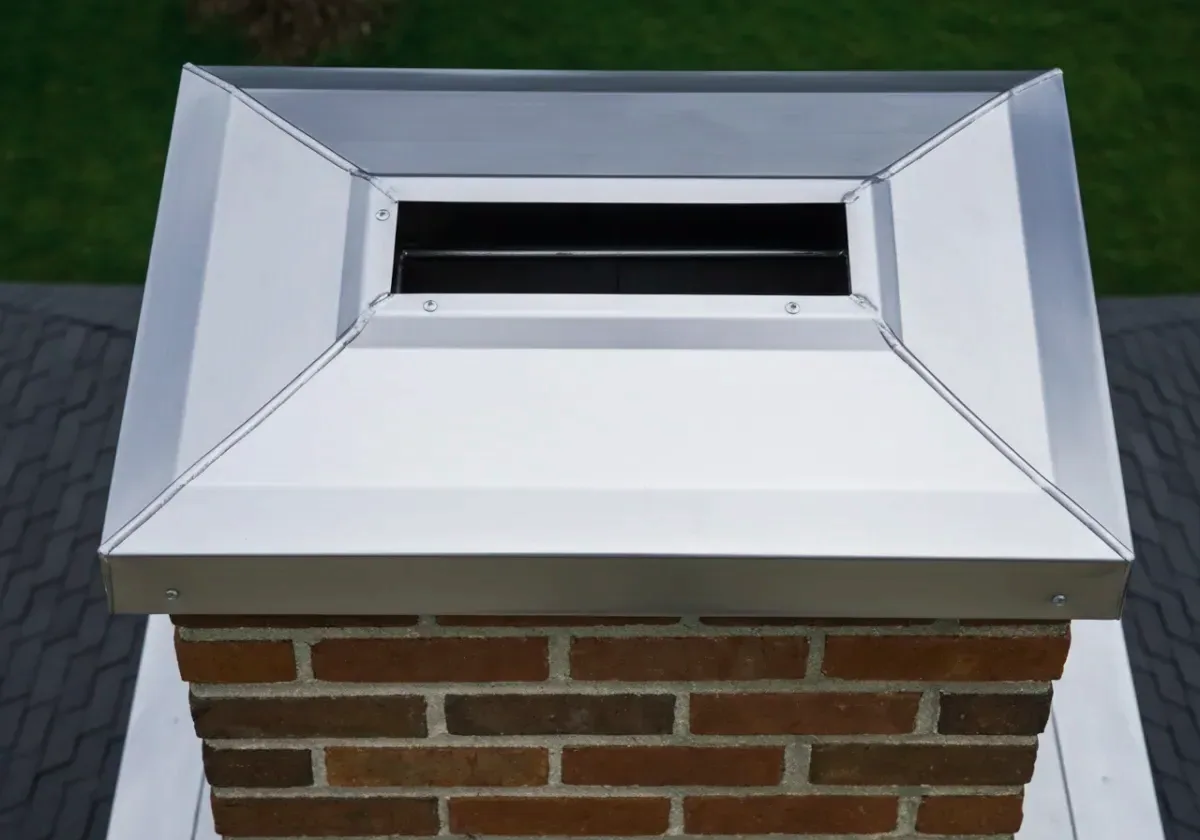
| Chimney Cap Installation | $265–$850 | Stainless cap fitted; multi-flue and custom at the top |
| Masonry Repair (Crown / Repointing) | From $475 | Crown work, repointing and tuckpointing by surface area |
| Chimney Waterproofing | $320–$795 | Breathable sealer — reapplied every 3–5 years in this climate |
| Chimney Flashing Repair | $375–$1,495 | Reseal at the low end, full flashing replacement at the high |
| Gas Fireplace Service | $189–$479 | Annual service and tune-up; repairs quoted after diagnosis |
| Creosote Removal | From $245 | Priced by creosote stage — glazed stage 3 is the heavy end |
| Dryer Vent Cleaning | $105–$295 | Full run cleaned; roof or upper-floor terminations at the top |
| Air Duct Cleaning | From $525 | Whole HVAC system — trunks, branches and every register |
Ranges are what these jobs are quoted at in Ravenna. The exact figure is set on site after a $99 inspection (credited toward the job if you go ahead), and you approve it before any work starts.
Before and after
Illustrations of what each repair changes on a typical chimney — not photos of a specific job.
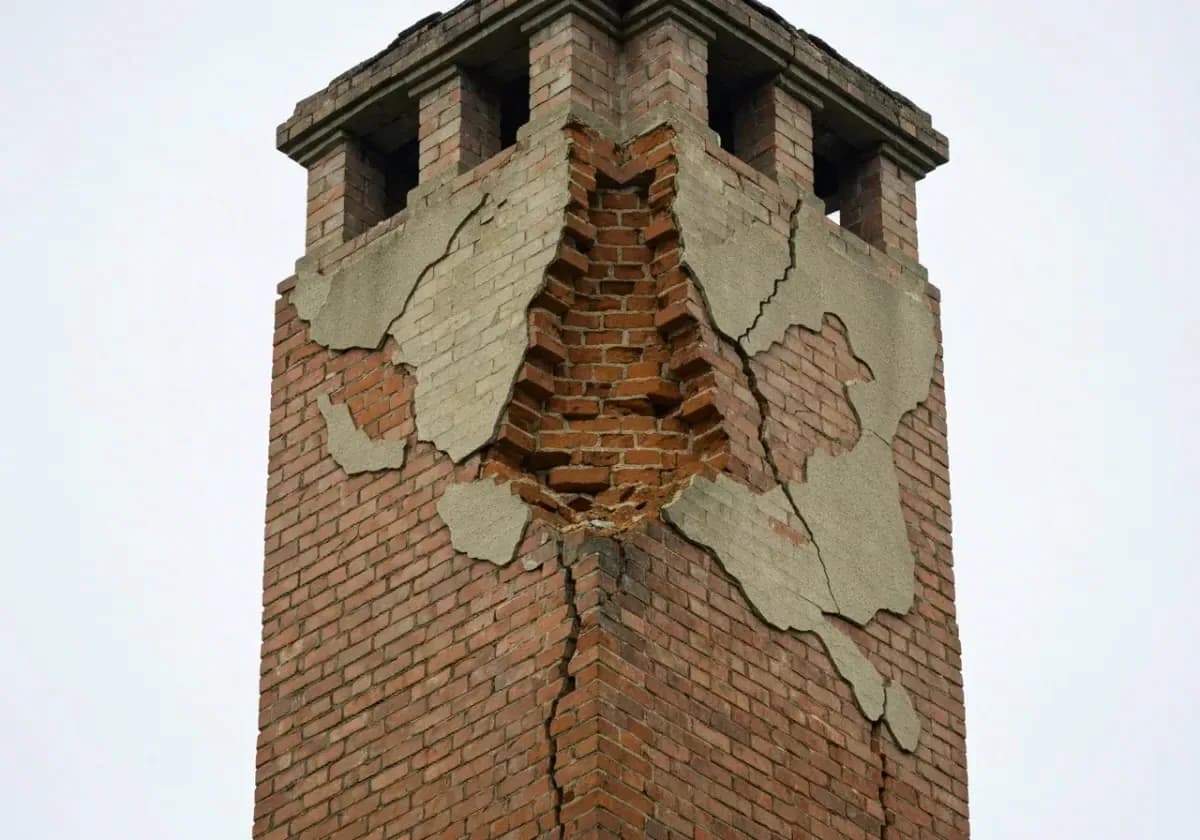 Before
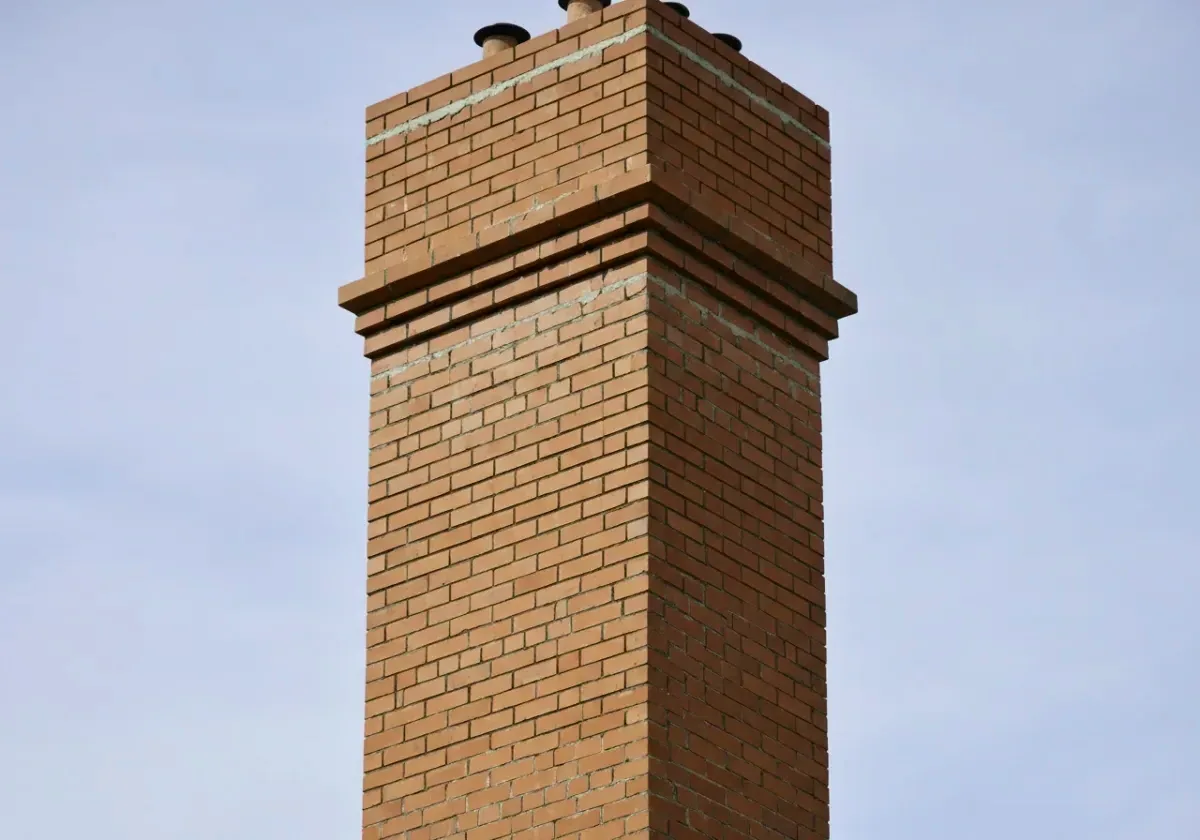 After
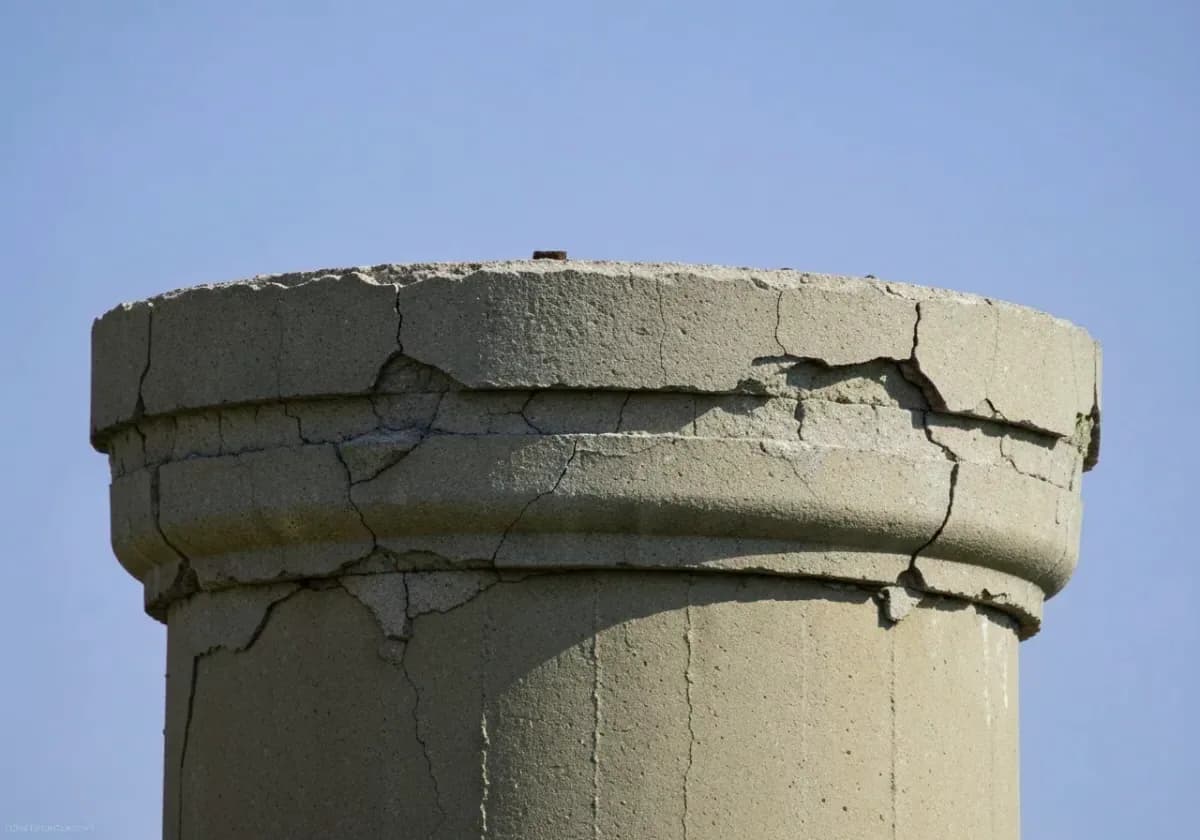 Before
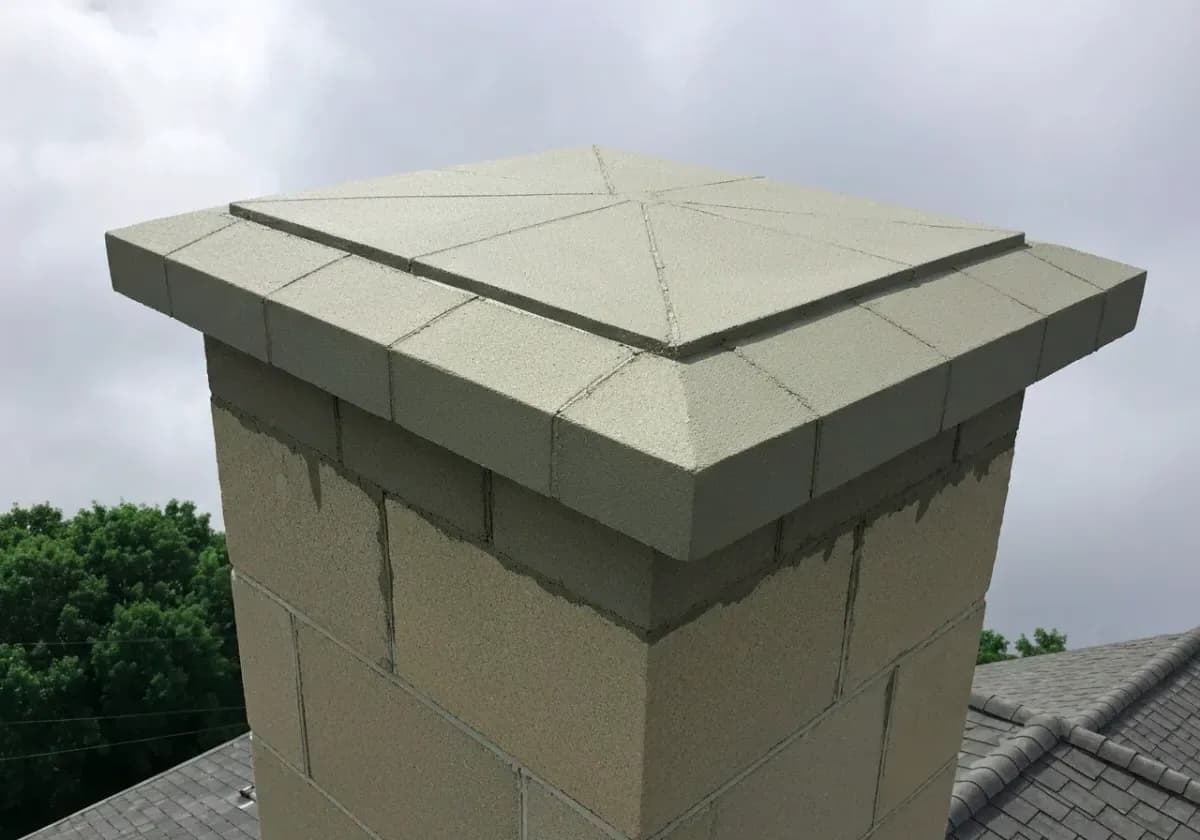 After
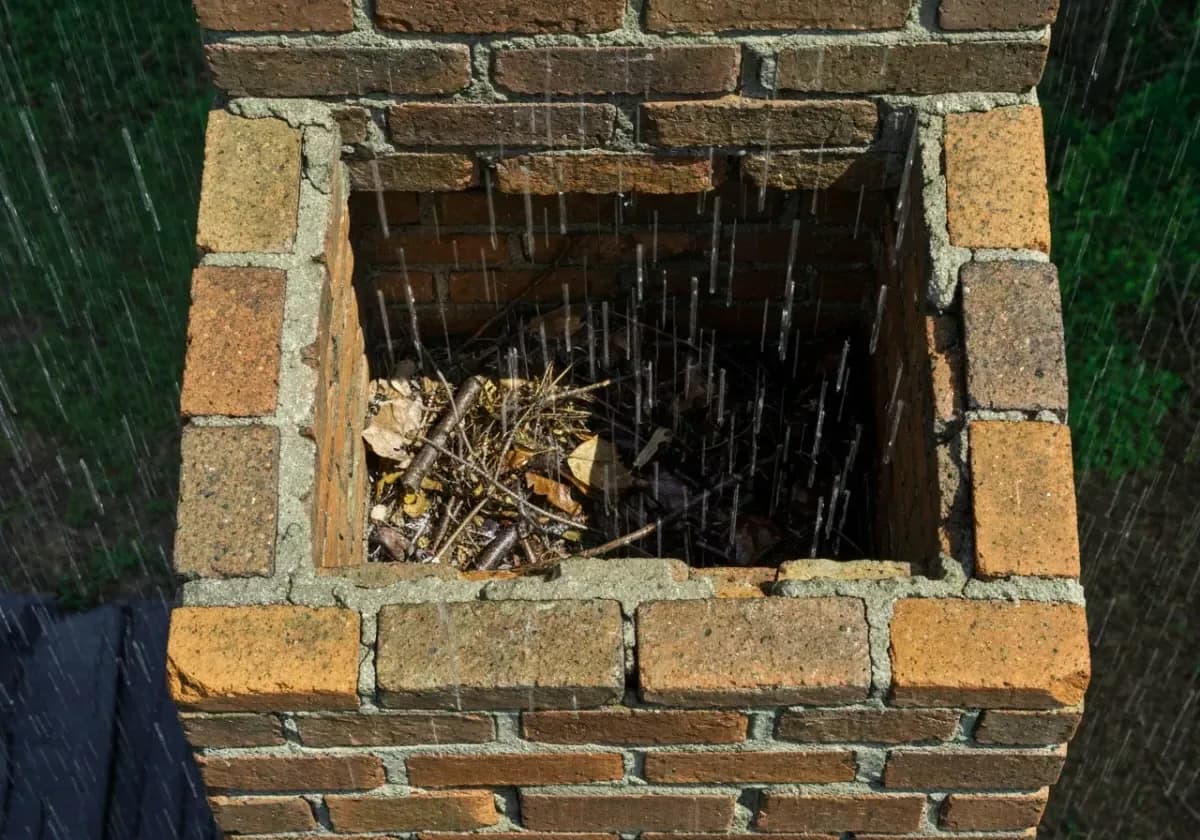 Before
 After
Four steps, each one on paper — so you always know what happens next.
Choose a genuine opening on the crew's calendar. Confirmation is immediate.
Liner, crown, cap, flashing and masonry examined in order — each finding photographed.
One document, plain numbers, covering only the work your chimney genuinely needs.
The repair is completed, then handed over with before-and-after photos of every item.
Yes. Neighborhood lines are informal here, and we serve the streets on both sides of them across North Seattle.
Seattle exempts repointing a chimney by name. For other work, SDCI's guide says most projects outside the exemption list require a permit, so we confirm with SDCI before starting.
Yes. A flue serving an oil or gas appliance is inspected the same way as a fireplace flue, and the residential code requires its lining to suit the appliance.
$99 plus tax for each chimney inspected. The amount is credited against any work you approve from our quote.
Choose a genuine opening on the crew's calendar. We inspect, quote in writing, and hand over a photo record of every repair.