Phinney Ridge, King County
Chimney work on Phinney Ridge comes down to old brick on high ground. Much of the housing went up as the streetcar climbed the ridge between 1906 and 1909, and the neighborhood sits where the wind reaches first. We begin every job the same way: a visit to the house, $99 plus tax for each chimney inspected, with the fee coming off the written quote when you accept it.
Book an inspection
Book your $99 inspection
$99 plus tax, deducted when you approve the repair
Not sure where to start
Pick what you're seeing at your Phinney Ridge home — we'll point you to the right fix.
What we do
The same crew, the same written quote — for Phinney Ridge homes.
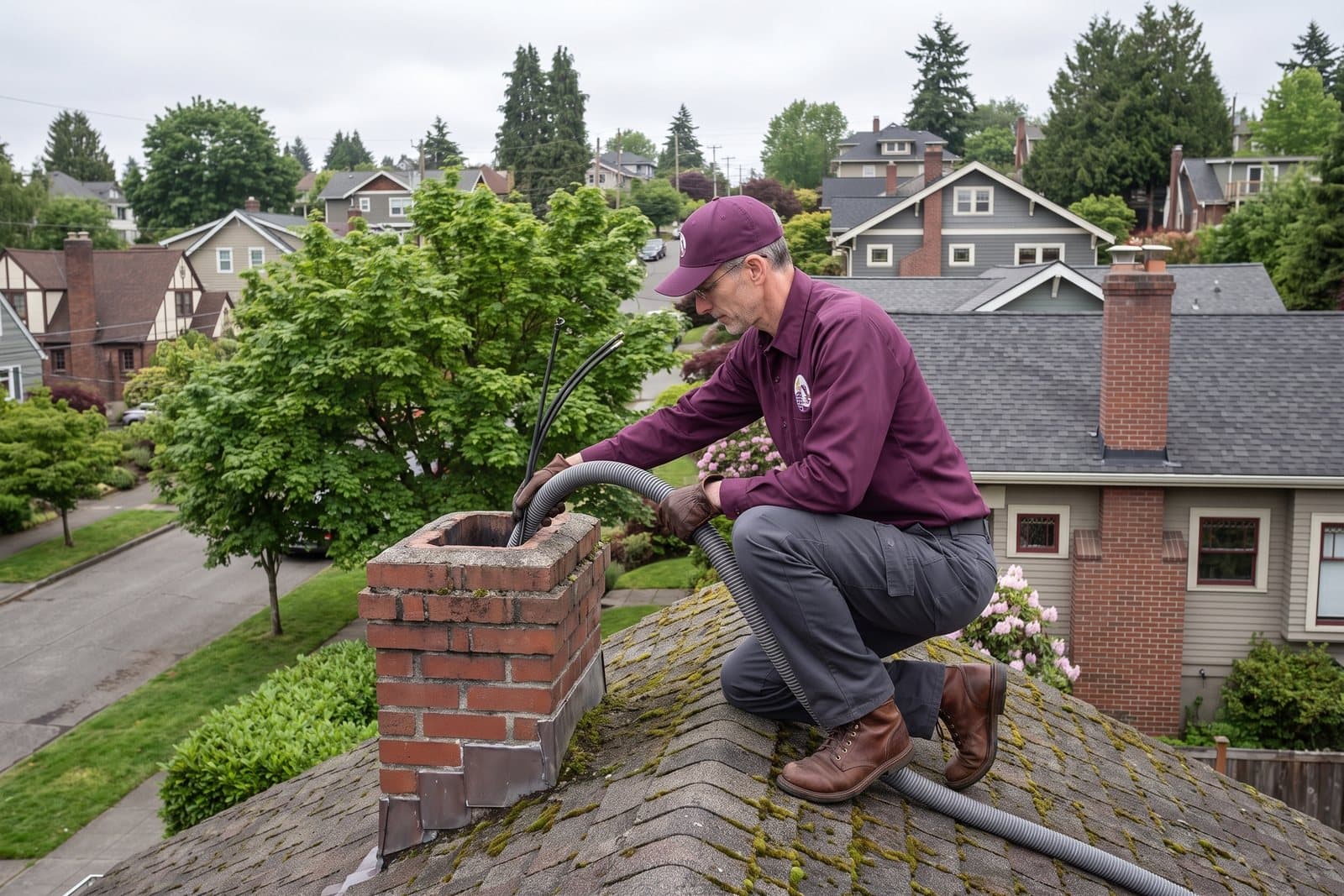
The whole flue brushed, using heads picked for the liner's size and shape
Learn more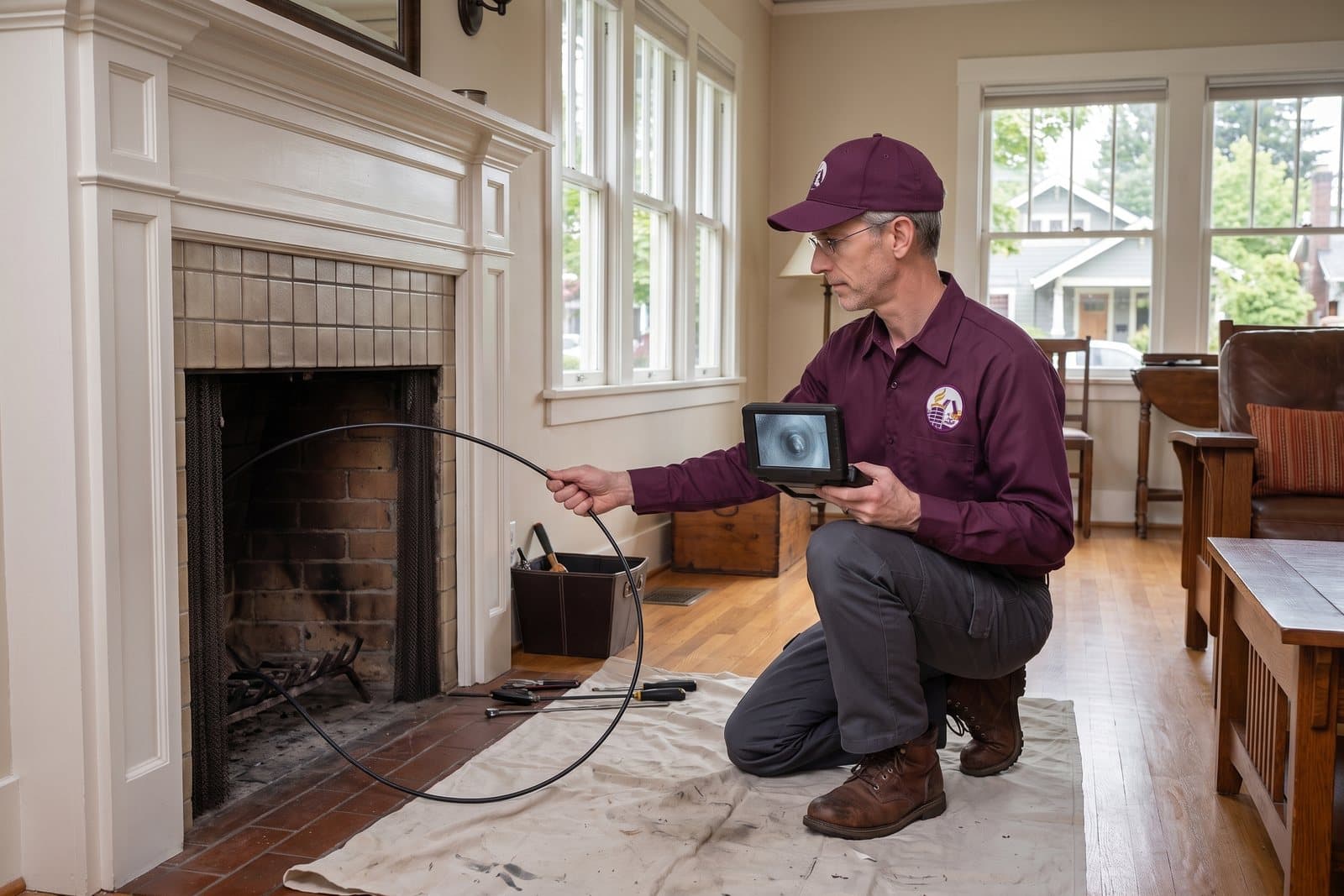
A Level 1 review of everything reachable, raised to a Level 2 camera scan when a question stays open
Learn more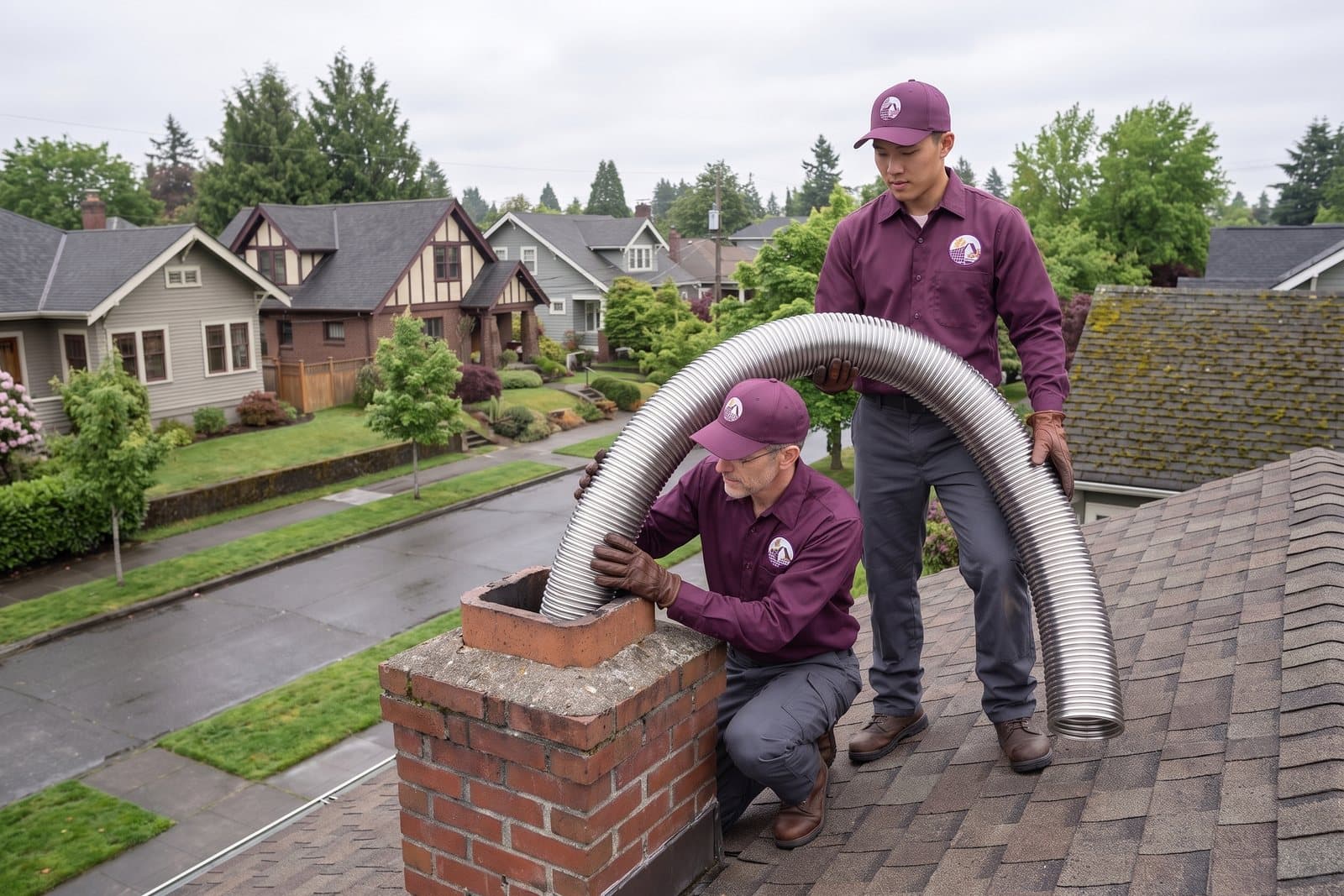
Camera survey and measurements taken before any liner is chosen
Learn more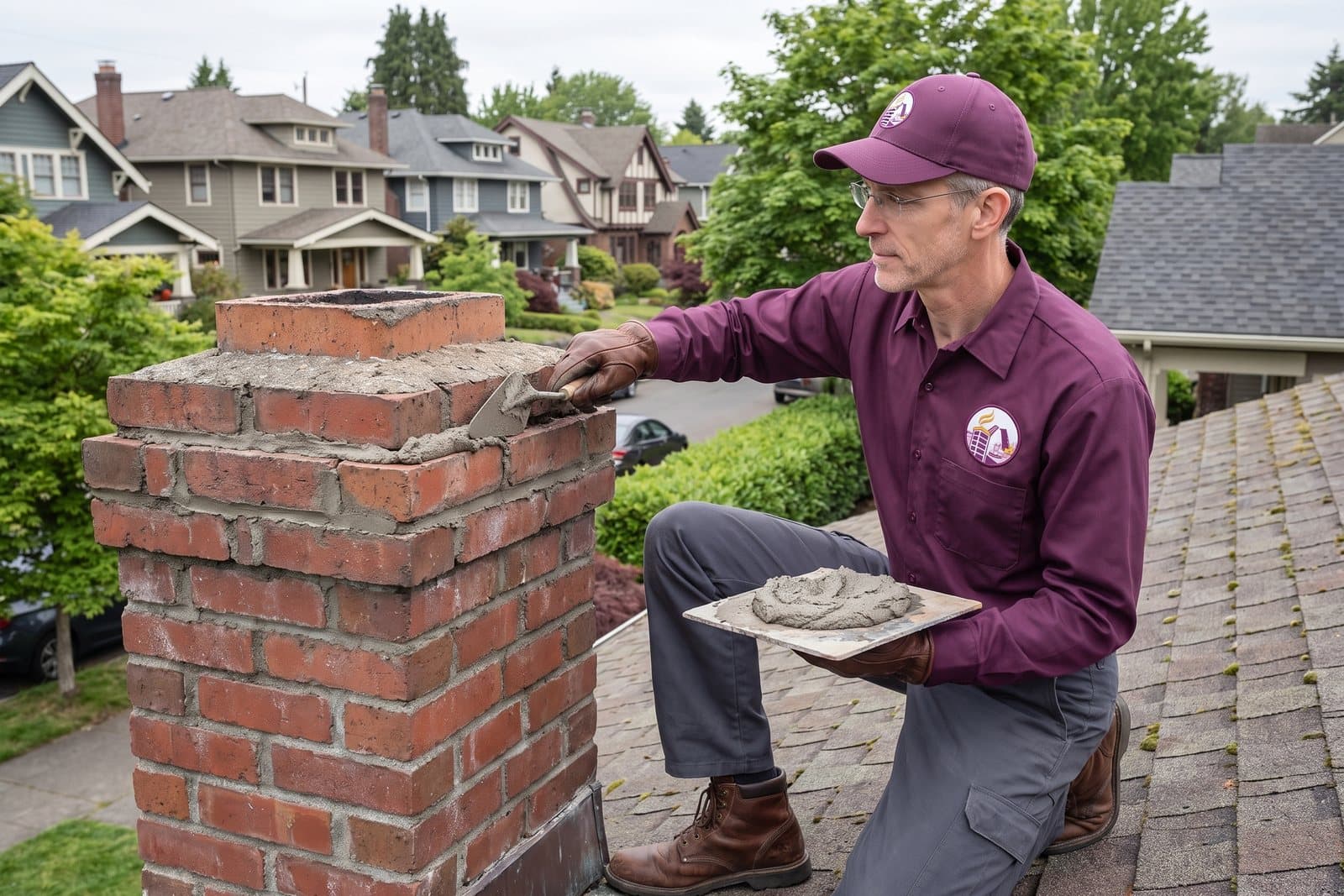
A photo assessment that distinguishes surface wear from structural damage
Learn more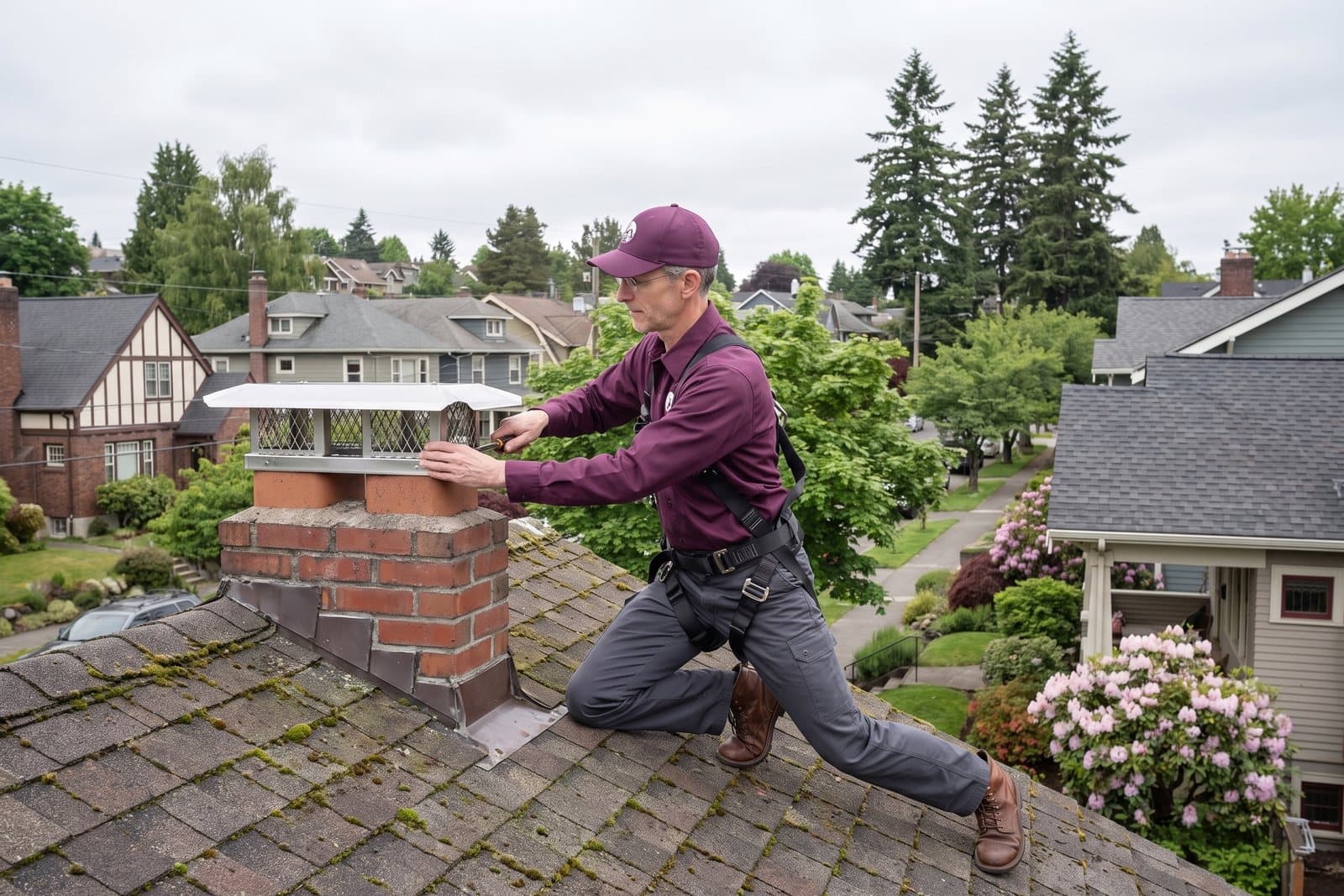
Measurement of each flue, or of the crown when a single cap will span several
Learn more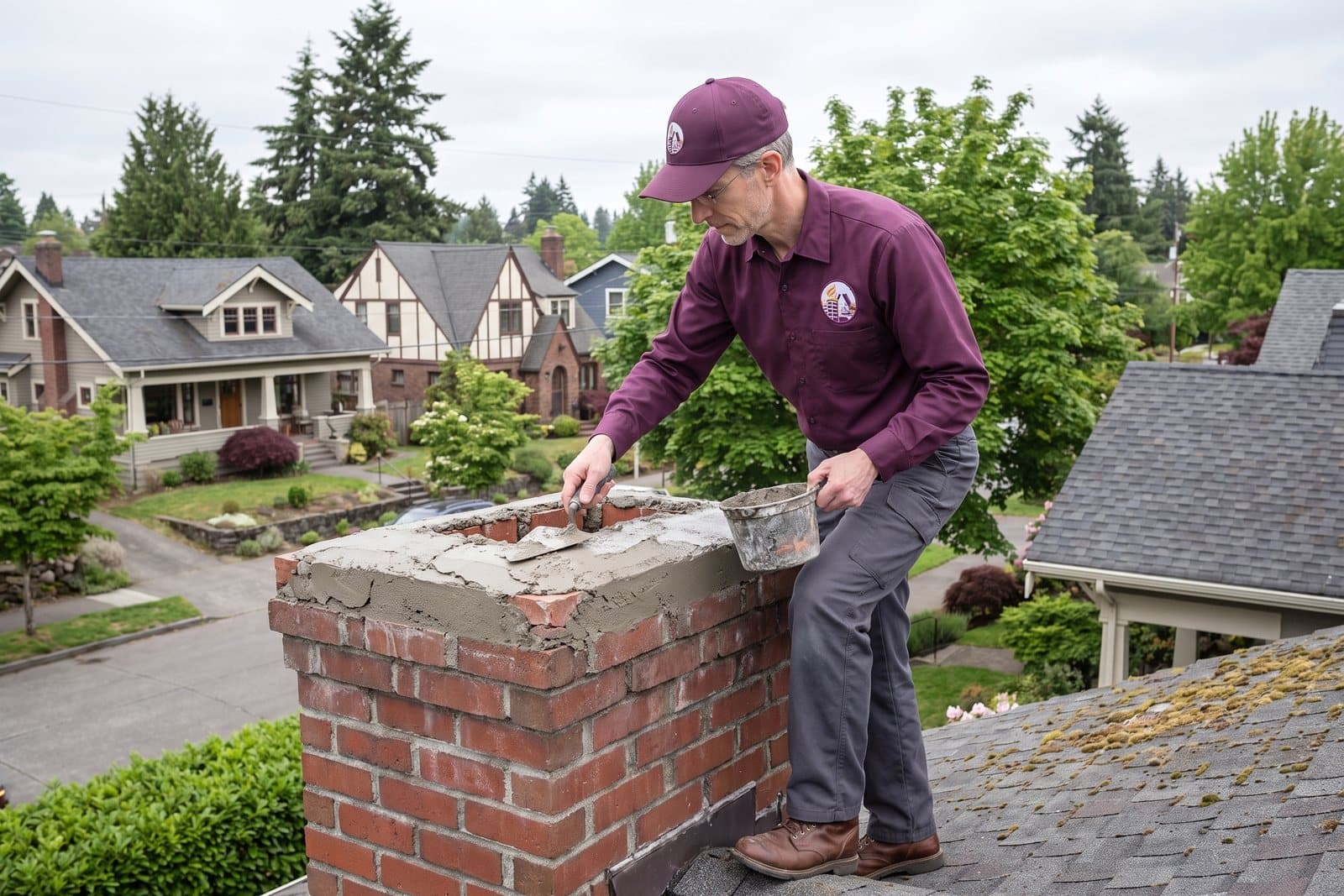
Crown and all four sides photographed before any work
Learn more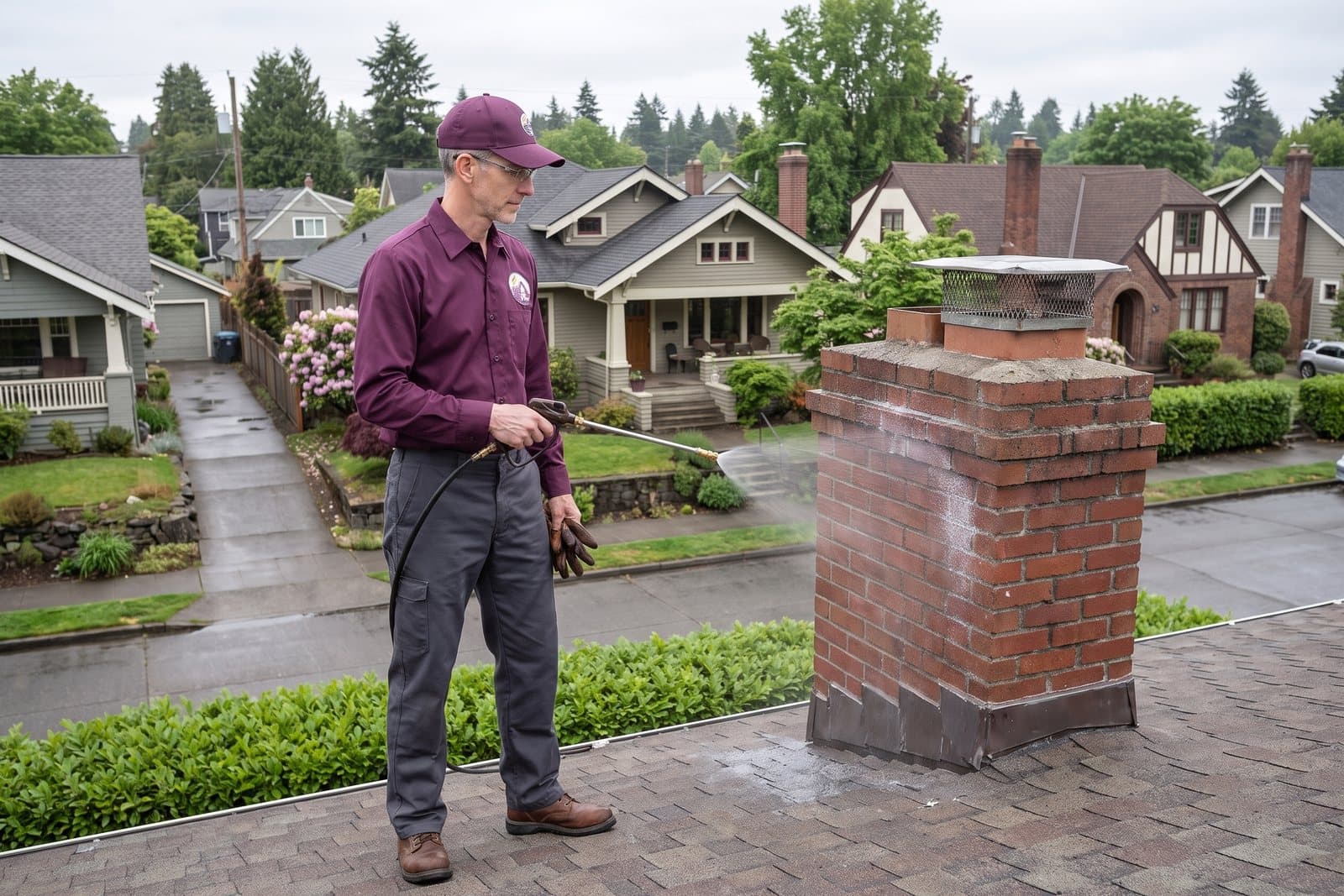
Inspection of crown, joints and flashing before anything is applied
Learn more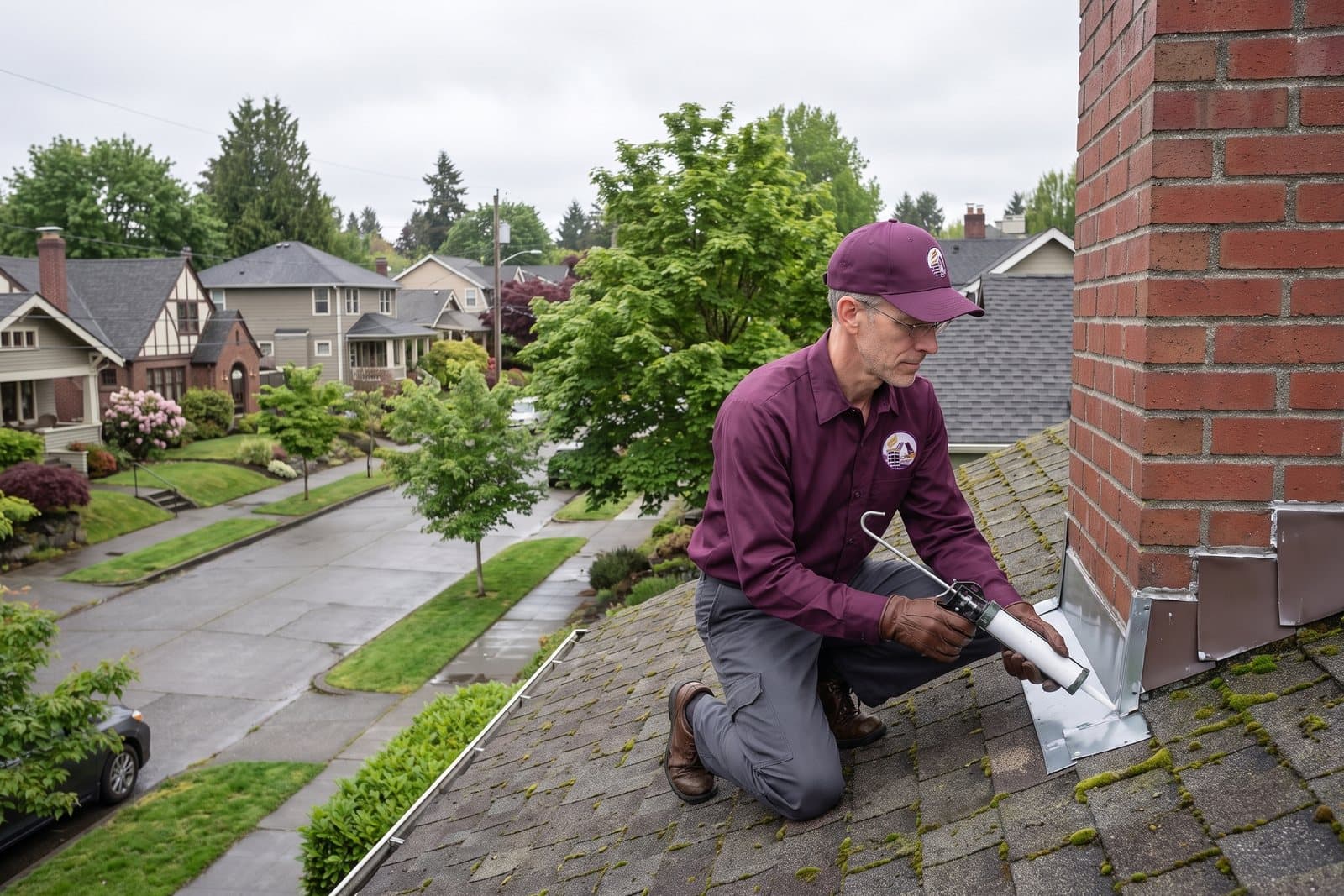
Leak tracing from the stain indoors to the entry point on the roof
Learn more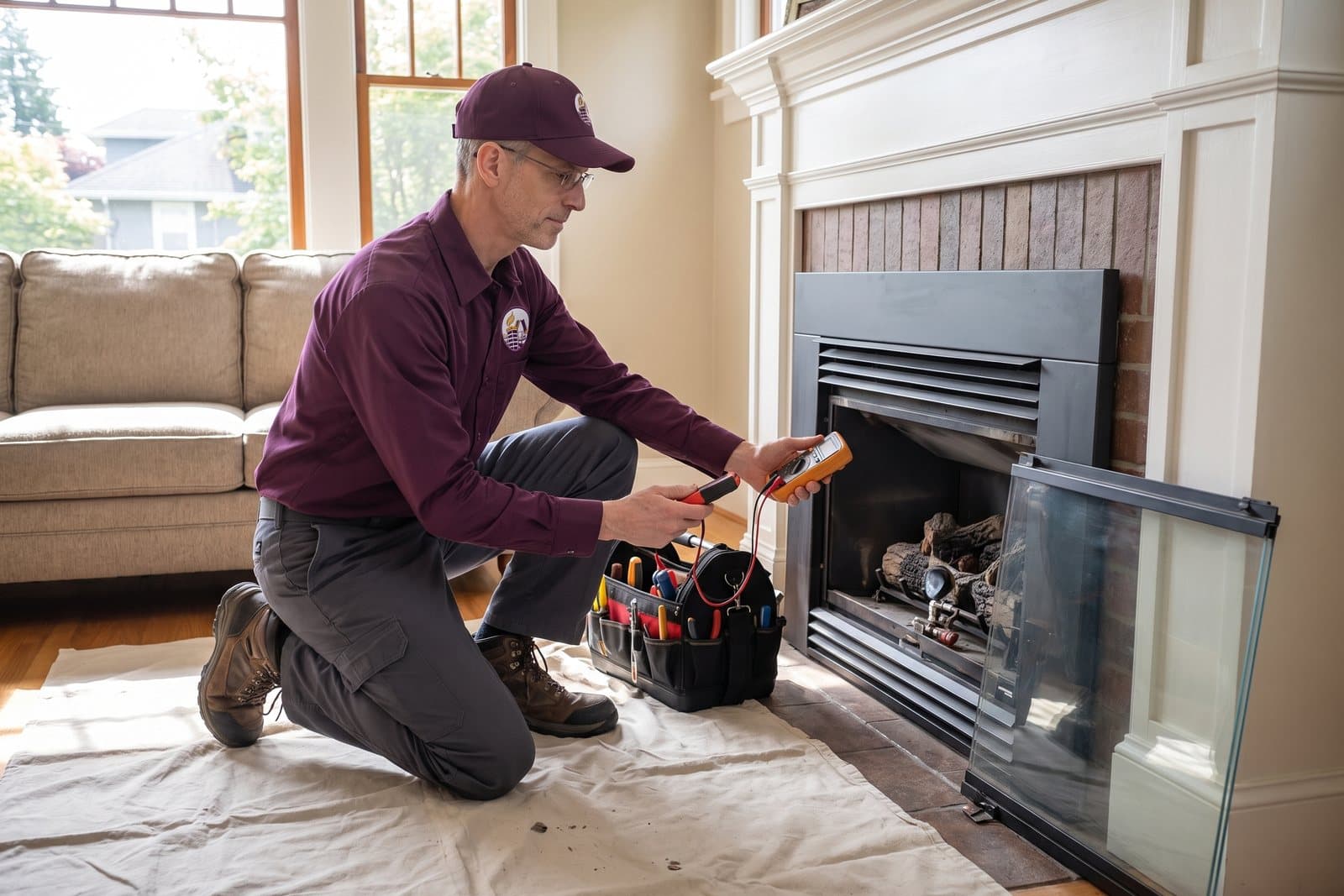
Glass removed, cleaned and checked for a sound gasket
Learn more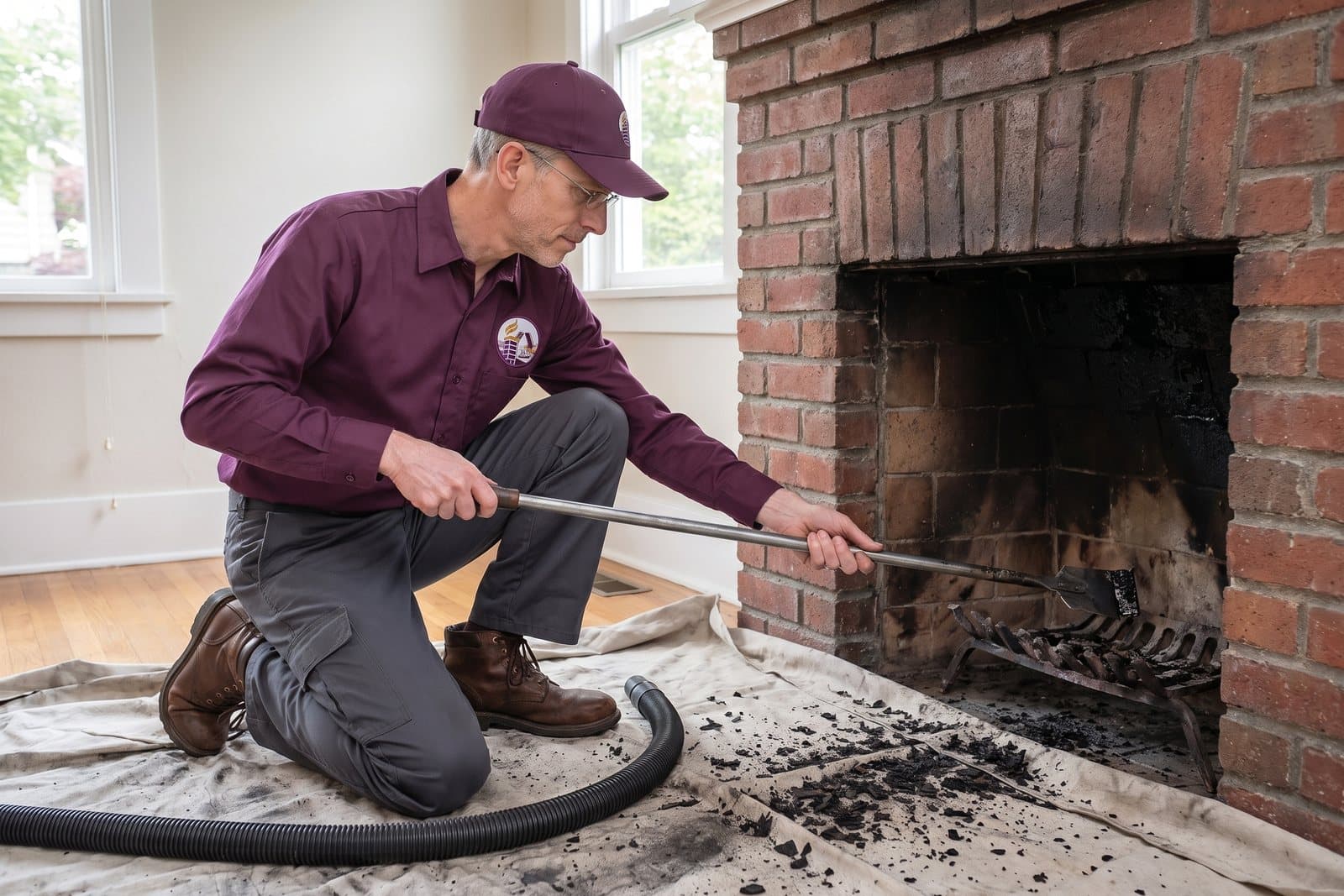
A camera scan to identify the type and extent of the deposit
Learn more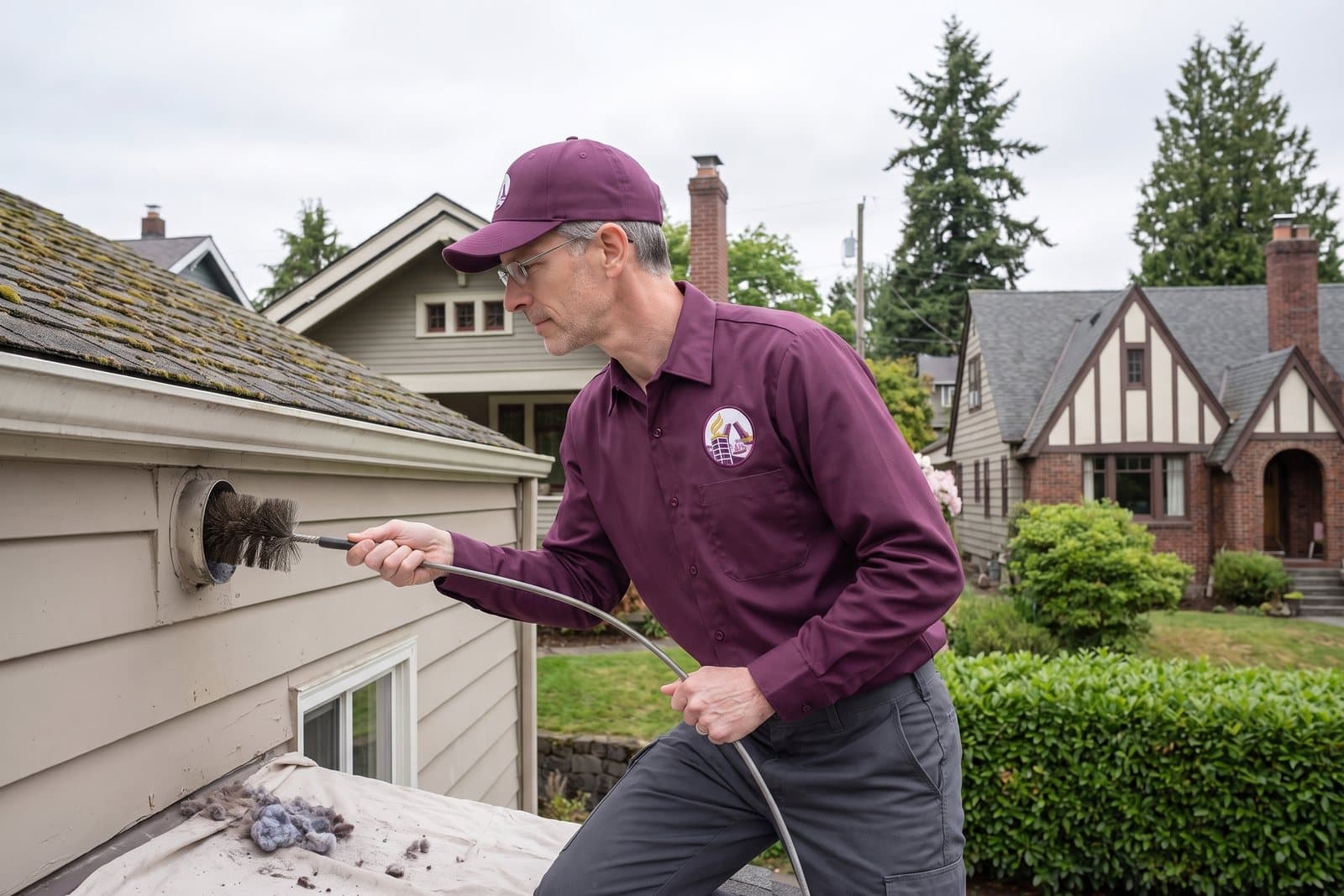
The duct brushed along its entire run, dryer end to outside hood
Learn more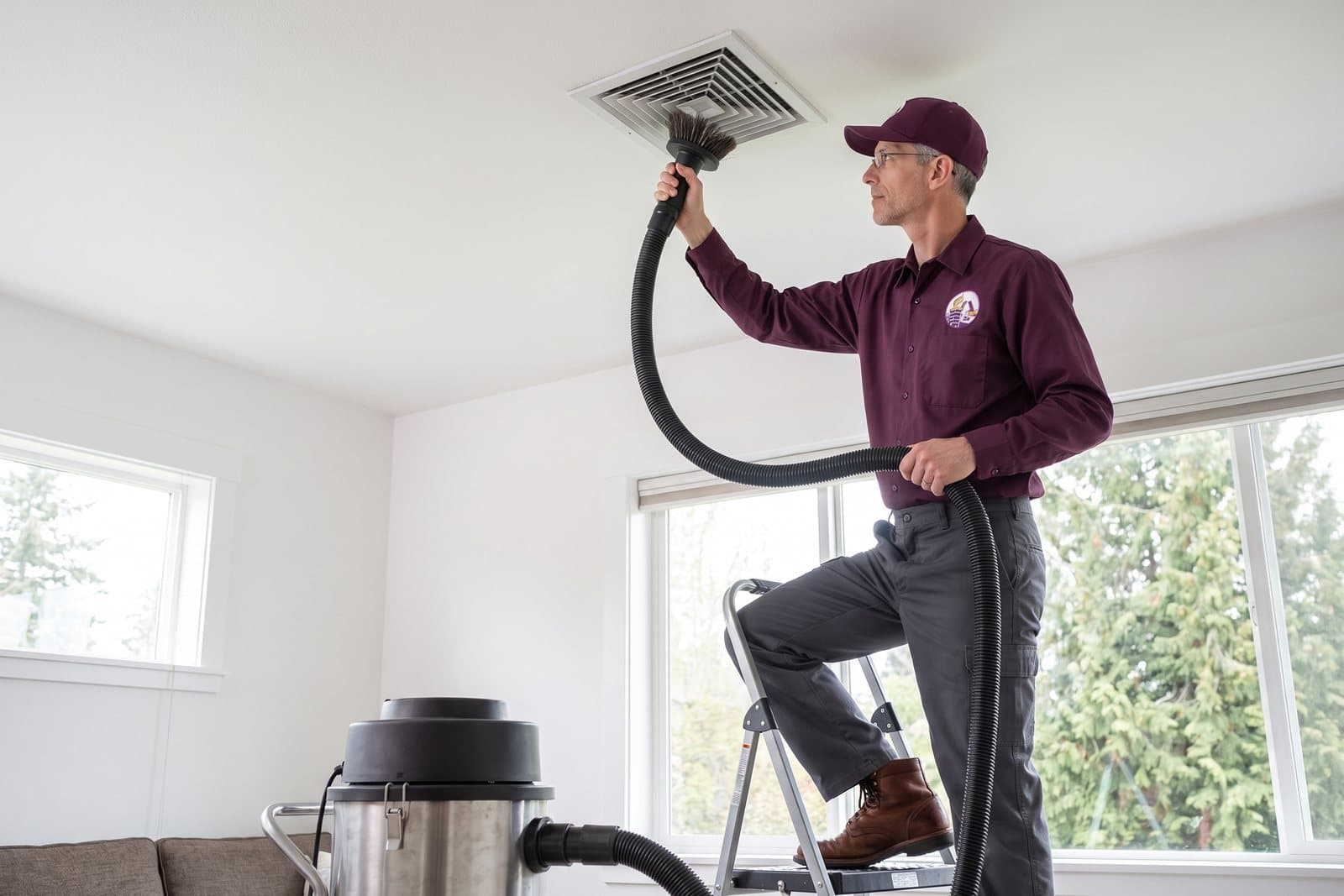
Interior photos of several duct runs before cleaning
Learn moreRanges shown for orientation — the exact figure is written up on-site, after the inspection.
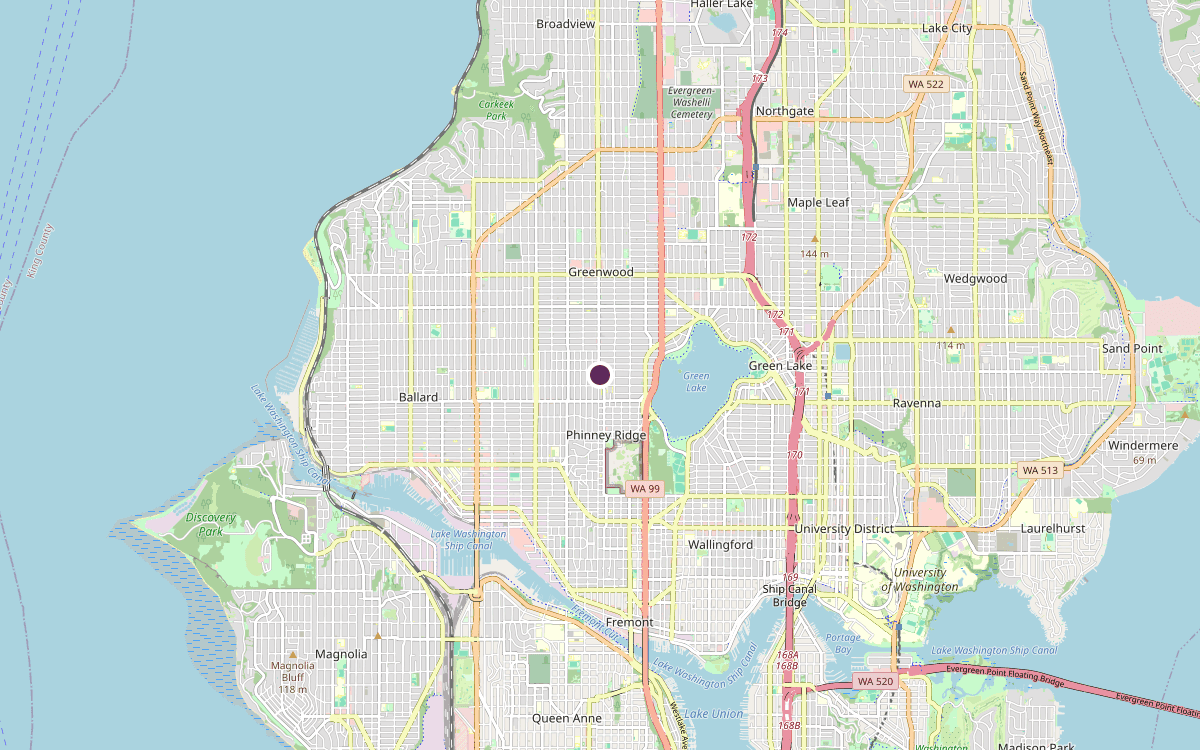
Service-area map — Phinney Ridge, Seattle. Map data © OpenStreetMap contributors.
Phinney Ridge is a Seattle neighborhood on the long north-south rise west of Green Lake. Wikipedia gives it 8th Avenue NW as a western edge and Aurora Avenue N as an eastern one, with N 50th and Market streets to the south and N 75th Street to the north; boundaries in Seattle are informal and other sources draw them a little differently. Woodland Park and its zoo occupy the southeast corner. For census purposes the neighborhood falls within ZIP area 98103, which it shares with Fremont, Wallingford, Green Lake and the southern part of Greenwood, so the housing figures on this page describe that larger area and not Phinney Ridge alone.
The ridge carries the name of Guy Phinney, who lived from 1852 to 1893. HistoryLink records that in 1889 he acquired a 179-acre tract of standing timber by the lake's southwest corner and developed it as an estate. To bring visitors he operated his own trolley from Fremont up to the property between 1890 and 1897.
Seattle bought the estate from Phinney's widow in 1899. It became Woodland Park, and the animal collection he had started grew into Woodland Park Zoo, which today receives more than a million visitors a year. The rest of the ridge was slower to change: in 1900 most of it was still forest and about 1,500 people lived there, although nearly all of the land had already been divided into lots on paper.
Houses followed transit. A Seattle historic survey report notes that more than 29 streetcar lines were operating in the city by 1900, many of them built by people with land to sell. On Phinney Avenue the line advanced a few blocks at a time: N 50th Street in 1906, N 68th in 1907, N 75th in 1908, and in 1909 the city limits of the day at N 85th Street. From 1910 the interurban electric railway heading north from Seattle also ran along Phinney and Greenwood avenues before being moved west to 8th Avenue NW.
Schools mark how quickly families arrived. John B. Allen School opened on the ridge top in 1905, and West Woodland School followed in 1910 on the west side; by 1930 West Woodland was the largest elementary school in Seattle. The southern part of the ridge had been inside the city since the 1891 annexation, decades ahead of the land north of 85th Street.
ZIP area 98103 holds 28,631 housing units in the Census Bureau's five-year survey for 2020 to 2024. Of these, 34.7% predate 1940. The figure for all of Seattle is 22.8%, and King County's, at 10.9%, is under a third of the ZIP area's. Construction then nearly stopped: the 1940s account for 3.2% and the 1950s for 5.9%. A newer layer sits on top, with 13.8% of units dating from the 2010s, which pulls the median year built up to 1970.
Detached houses are 37.8% of the units and attached single-family homes 10.0%. None of these tables counts fireplaces or says what kind of chimney a house has. The city's survey of neighboring Fremont describes brick or stone chimneys as a defining feature of the Craftsman style built from 1900 to 1930, but that is a description of a style. We find out what a given Phinney Ridge house has by looking at it.
All of Phinney Ridge is under the Seattle Department of Construction and Inspections, which currently enforces the 2021 Seattle Residential Code. The department's exemption list is short and specific. Repointing a chimney appears on it, as do painting and cleaning, and re-roofing a house or duplex is exempt when the building envelope stays the same. Exempt work still has to meet the code.
Anything not on the list is presumed by SDCI's guide to need a permit in most cases; it cites furnace, gas, mechanical and fireplace jobs. We found no city page that addresses each type of chimney job one by one, so we do not state a rule from memory. Before work that changes an appliance or rebuilds part of a chimney, we ask SDCI and give you the answer.
No weather station reports from Phinney Ridge, and we will not invent a local figure. For Seattle as a whole, WeatherSpark describes a wetter season of roughly 6.6 months and a windy one some 6.3 months long that overlap almost exactly, from mid-October to late April. December is the windiest month, with a mean hourly wind speed of 5.1 mph. Annual precipitation, in the Western Regional Climate Center's narrative, comes to 32 to 35 inches on the lowlands up to Seattle, which lie just inside the Olympics' rain shadow on its eastern side.
What sets the ridge apart is elevation. The Seattle Office of Emergency Management states that terrain shapes wind and that speeds increase over hills and ridges. It also observes how old the housing is: close to 90,000 Seattle homes went up before 1939, when the present wind-load rules for new buildings did not exist. A chimney is the tallest masonry on such a house and stands above the roof that shelters everything else.
In practice that exposure shows at the top of the stack first: cap first, then crown, then the top few rows of brick. Those are the parts we photograph on every visit to the ridge, whatever the reason for the call.
The grid we quote from for Phinney Ridge homes — the $99 inspection comes first, the written quote before any work.
| Service | Price in Phinney Ridge | What that covers |
|---|---|---|
| Chimney Sweep | $209–$459 | Full flue swept, Level 1 inspection included |
| Chimney Inspection | $99 plus tax | Level 1 visual; Level 2 adds a full camera scan |
| Chimney Relining | From $1,900 | Full-length stainless liner, sized to the appliance |
| Chimney Repair | From $425 | Masonry repair — brick and mortar, scoped after diagnosis |
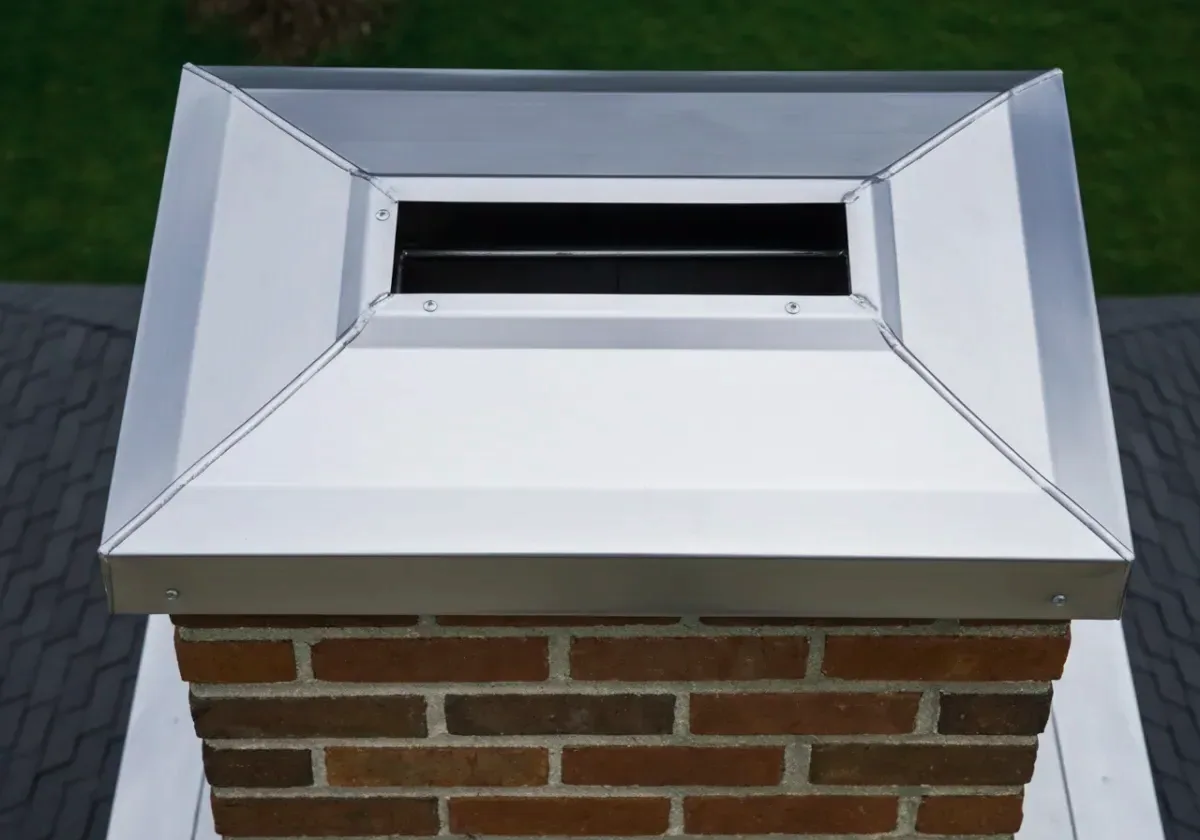
| Chimney Cap Installation | $265–$850 | Stainless cap fitted; multi-flue and custom at the top |
| Masonry Repair (Crown / Repointing) | From $475 | Crown work, repointing and tuckpointing by surface area |
| Chimney Waterproofing | $320–$795 | Breathable sealer — reapplied every 3–5 years in this climate |
| Chimney Flashing Repair | $375–$1,495 | Reseal at the low end, full flashing replacement at the high |
| Gas Fireplace Service | $189–$479 | Annual service and tune-up; repairs quoted after diagnosis |
| Creosote Removal | From $245 | Priced by creosote stage — glazed stage 3 is the heavy end |
| Dryer Vent Cleaning | $105–$295 | Full run cleaned; roof or upper-floor terminations at the top |
| Air Duct Cleaning | From $525 | Whole HVAC system — trunks, branches and every register |
Ranges are what these jobs are quoted at in Phinney Ridge. The exact figure is set on site after a $99 inspection (credited toward the job if you go ahead), and you approve it before any work starts.
Three sources of earthquakes threaten the region, in the Washington Geological Survey's classification: deep events more than 45 km down, shallow crustal faults capable of magnitudes up to 7.5, and, third, the megathrust of the Cascadia zone, good for a magnitude 9 and quiet for some 300 years. The Seattle Fault belongs to the crustal group. Its trace cuts across central Seattle on an east-west line, and its last rupture is dated by the city to roughly 1,100 years back.
No published source we could read counts chimney damage on Phinney Ridge in any past earthquake, so this page claims none. What applies everywhere is FEMA's general advice on masonry chimneys. Where a chimney cannot be retrofitted, the agency suggests interim precautions: spend as little time as possible next to it, inside or outside, and above all do not sleep beside it. For a household with a bedroom against the chimney wall, that is a concrete thing to act on while deciding about repairs.
Before and after
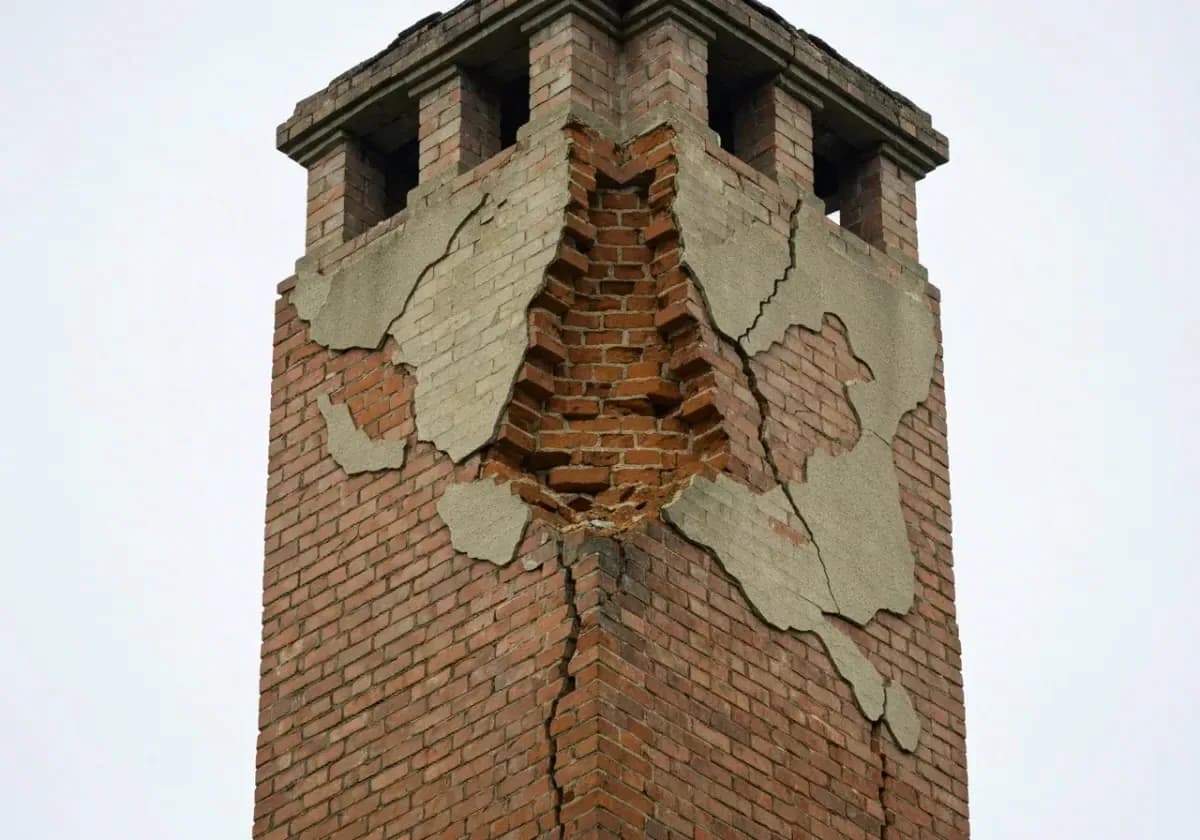
Illustrations of what each repair changes on a typical chimney — not photos of a specific job.
 Before
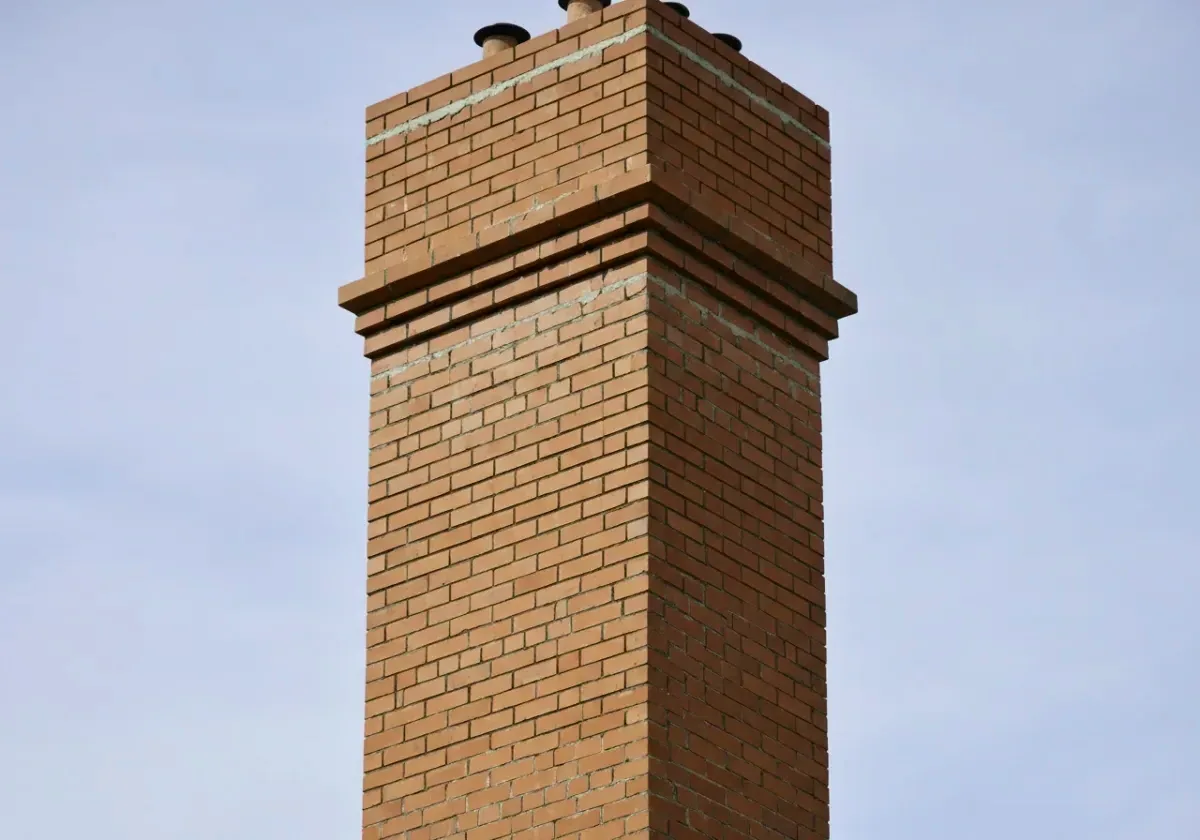 After
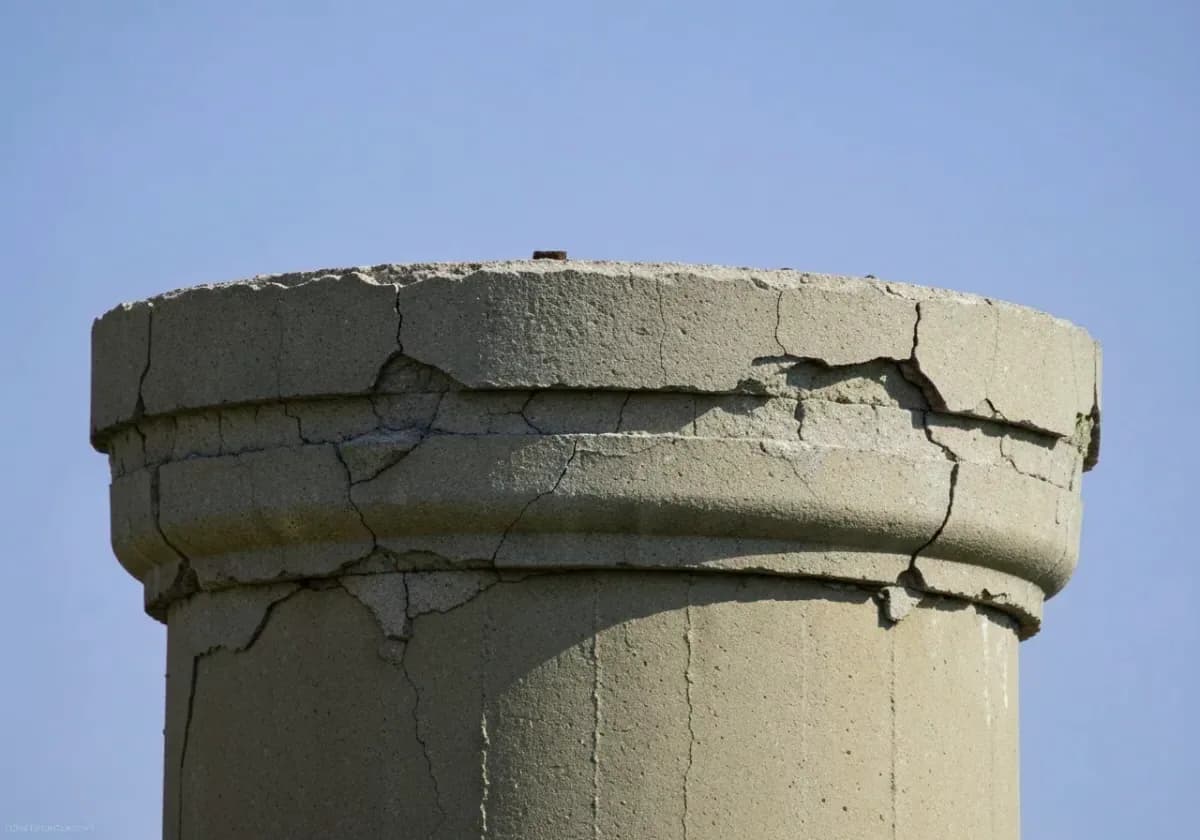 Before
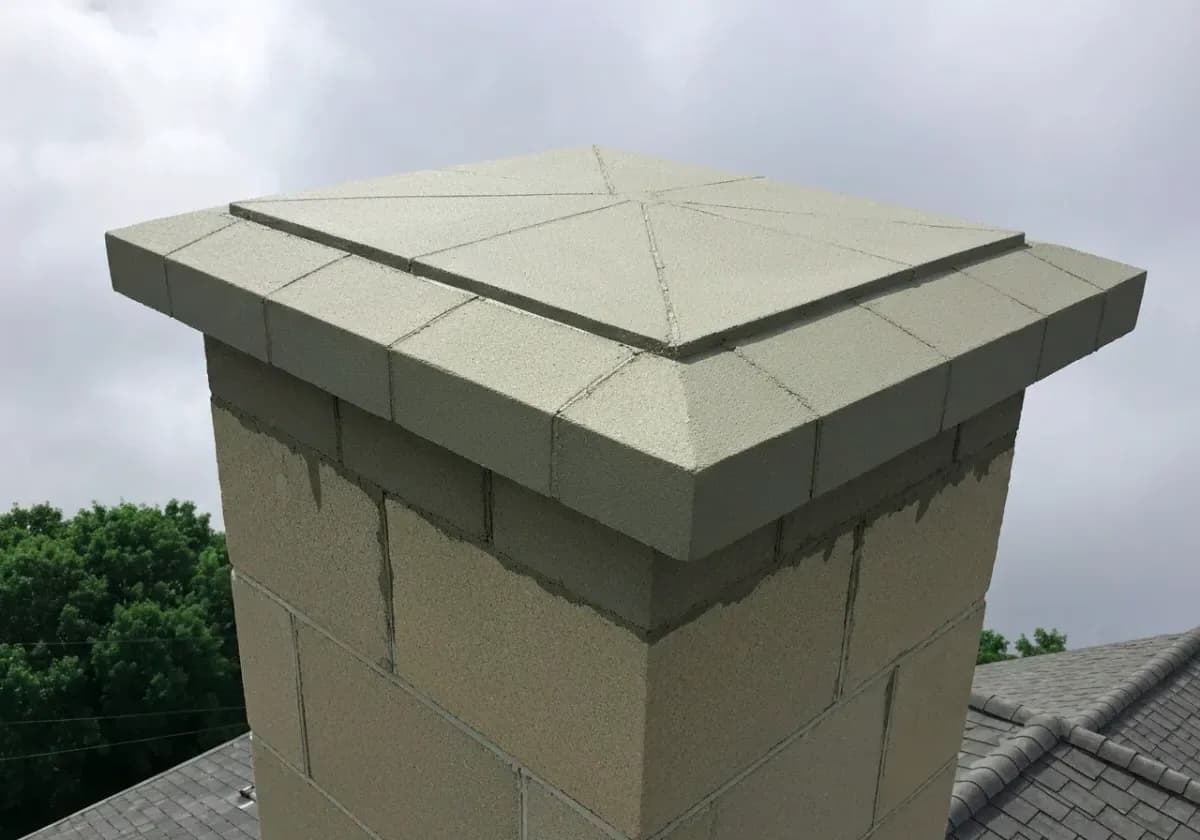 After
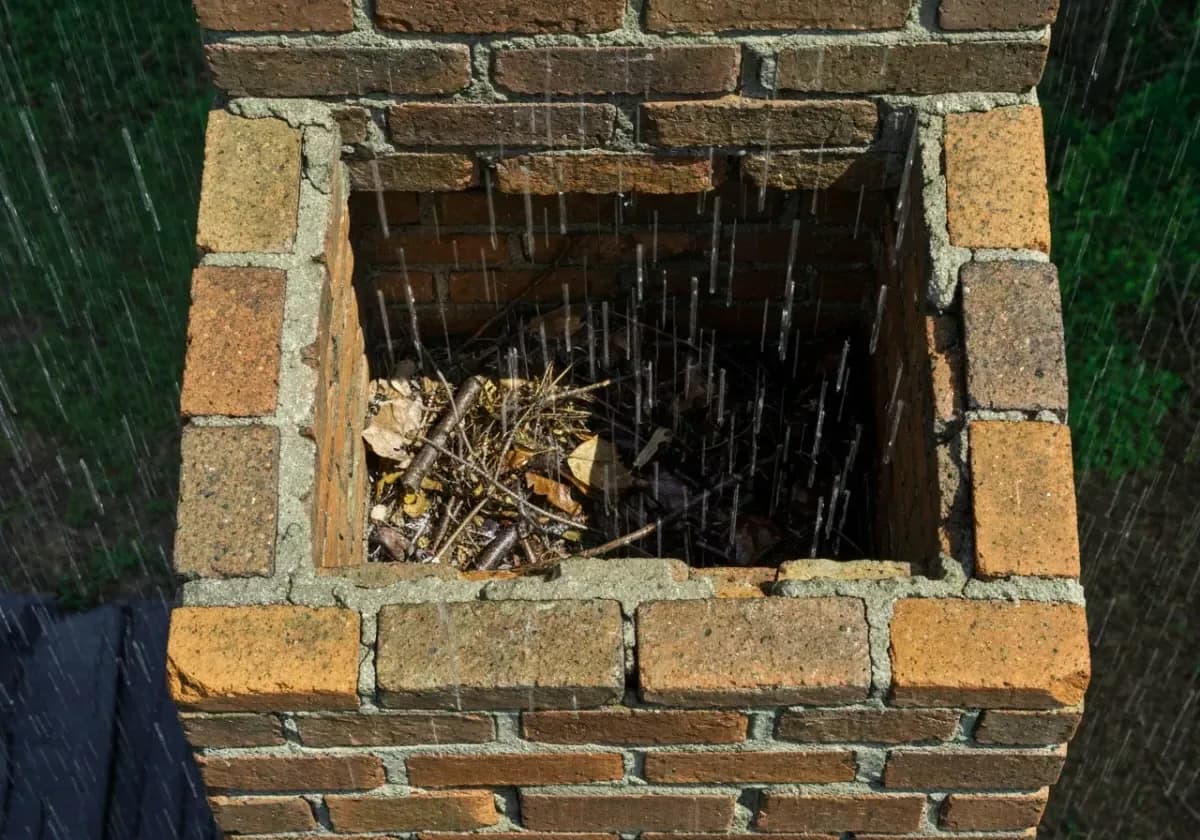 Before
 After

Four steps, each one on paper — so you always know what happens next.
Choose a genuine opening on the crew's calendar. Confirmation is immediate.
Liner, crown, cap, flashing and masonry examined in order — each finding photographed.
One document, plain numbers, covering only the work your chimney genuinely needs.
The repair is completed, then handed over with before-and-after photos of every item.
Yes, on both slopes and along the top, from the Woodland Park end to the Greenwood line. Steep lots are routine for us; they only change how we set up.
Per chimney, $99 plus tax. Photos and a quote in writing come with it. The $99 is then deducted from the job price, provided you approve the quote.
Age alone tells us little. Some century-old chimneys have been rebuilt or lined and are in good order; some younger ones are not. The condition of the mortar, the flue lining and the top is what matters, and those can only be judged on site.
As a main heat source, no. In ZIP area 98103 the census survey finds wood as the primary fuel in about 130 households, 0.5%. Electricity leads at 56.7% and utility gas follows at 39.6%. Fireplaces are mostly used for occasional fires.
Choose a genuine opening on the crew's calendar. We inspect, quote in writing, and hand over a photo record of every repair.