Once a year. That is the interval the Chimney Safety Institute of America gives, citing the NFPA 211 standard, and it holds for a fireplace lit twice a winter as much as for a stove that burns daily. The calendar is only half the answer, though. Certain events call for a look whatever the date, and in Seattle two of them, earthquakes and windstorms, come with the address. This guide covers the yearly rule, the events that override it, and the months when a visit is easiest to act on.
The yearly inspection rule and who states it
CSIA's homeowner guidance quotes NFPA 211: a check at least once a year of each chimney, fireplace and vent, for soundness, for deposits and for correct clearances. The rule does not scale with use. A flue that sat idle can still hide a cracked tile, a nest above the damper or a crown that has let water in.
Washington's State Fire Marshal says much the same. A heating-safety notice dated September 21, 2026 asks that chimneys and fireplaces be professionally inspected and cleaned on a yearly basis, and it counts six deaths across the state in the previous year linked to home heating sources.
Why a rarely lit Seattle fireplace is still on the list
Few Seattle homes depend on wood. Census estimates for 2020-2024 show 727 households in the entire city, 0.2 percent, naming wood as their main heating fuel. That table records the primary fuel and nothing else. It does not count fireplaces, so it is silent about the hearths lit on a few cold weekends, and those are the ones that tend to go unchecked for years.
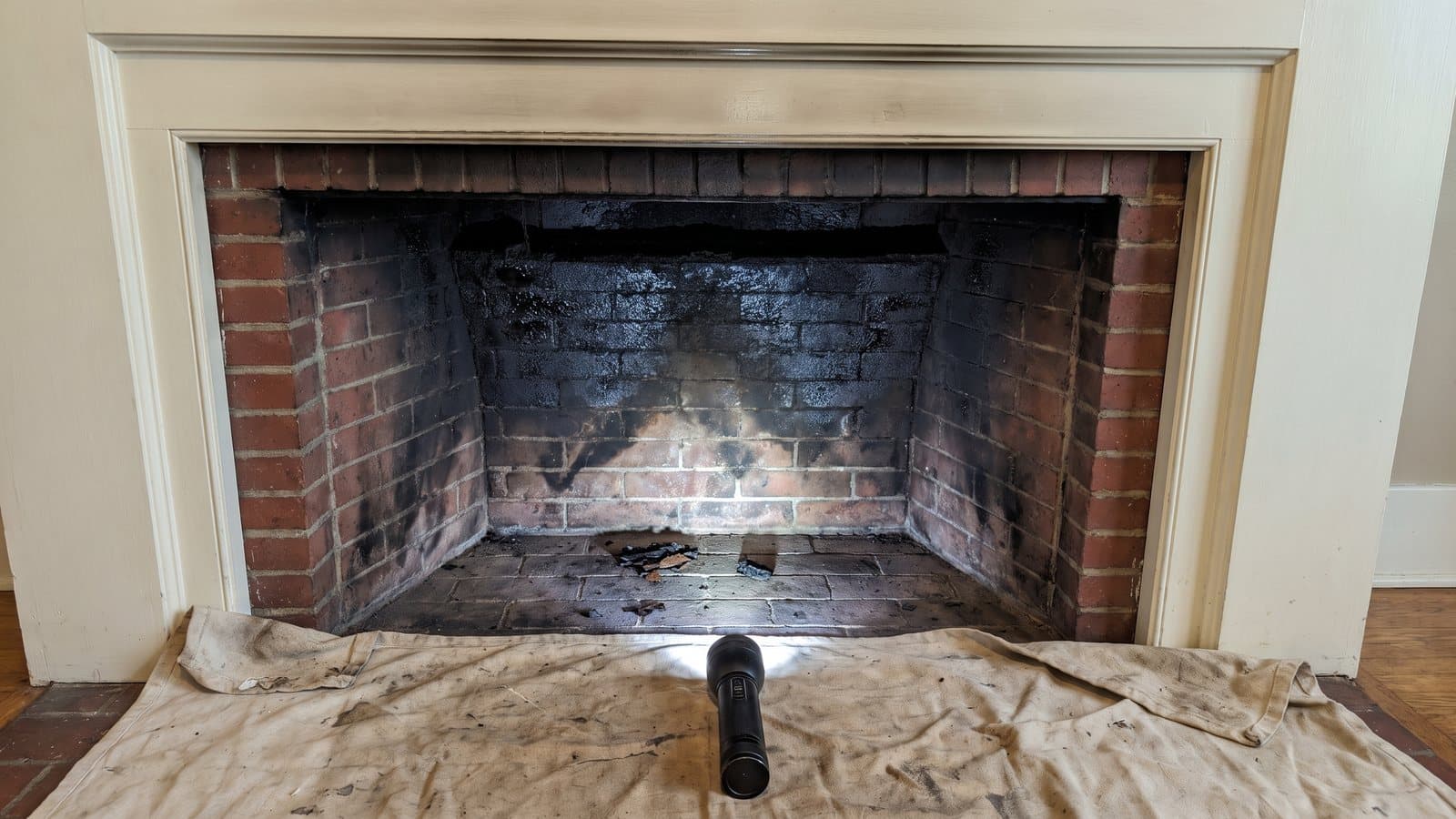
Sweeping is a separate decision from inspecting. For a masonry fireplace, CSIA draws the line at soot 1/8 inch deep, or at any glazed deposit whatever its depth. An inspection is how that depth gets measured, and in a lightly used flue the finding is often that no sweep is due this year.
Six events that call for an inspection off the calendar
Any event in the table is a reason to book without waiting for the anniversary of the last visit.
The first two are the local ones. By the reckoning of Seattle's emergency management office, a deep quake reaching magnitude 6.0 or more arrives every 30 to 50 years or so, and the last three came in 1949, 1965 and 2001. On wind, the same office describes the big Puget Sound storms this way: 60 to 70 mph sustained, gusting as high as 90, blames falling trees for much of the structural damage, and notes that wind picks up speed over hills and ridges.
| Event | Why it matters | What gets looked at |
|---|---|---|
| An earthquake you felt | Brick and flue tile can crack with no visible lean | Stack, crown and the full flue by camera |
| A major windstorm | Gusts and falling limbs reach the top of the stack | Cap, crown, flashing, upper courses |
| A new insert, stove or furnace | The flue has to suit what is now connected | Liner size, material and connection |
| Buying or selling the house | Neither side knows the flue's history | Whole system, with a recorded scan |
| A chimney fire, known or suspected | Heat can split flue tiles | Every tile and joint before the next fire |
| A stain, a smell, water in the firebox | Water is getting in somewhere | Cap, crown, flashing and brick |
Old North Seattle housing, long chimney service
The city's windstorm profile points out that almost 90,000 Seattle homes predate 1939 and, with that, the wind-load rules now applied to new buildings. North Seattle holds a large part of them. In ZIP area 98103, which Green Lake shares with Fremont, Wallingford, Phinney Ridge and south Greenwood, 9,936 of 28,631 housing units date from 1939 or earlier, by the American Community Survey's 2020-2024 count. Toward the northeast the stock is younger: in 98115, a ZIP area covering Maple Leaf, Wedgwood and Ravenna, the median year built is 1962.
An older house is not a worse house. It is one whose chimney has seen more winters, more owners and more appliance changes, and a yearly look is how small defects are caught while they are still small.
Booking the inspection in the dry months
WeatherSpark's climate summary for Seattle puts the wetter season at about 6.6 months, October 10 to April 30, and the clearer part of the year at about 3.8 months, from the middle of June to around October 8. Roof work, crown repair and anything involving mortar or sealant go better inside that clearer window. An inspection in late spring or summer leaves time to fix what it finds before the first fire.
If you are reading this in October, book anyway. An inspection can be carried out in the rain; only some of the repairs have to wait for a dry day.
What our inspection visit includes, and its flat fee
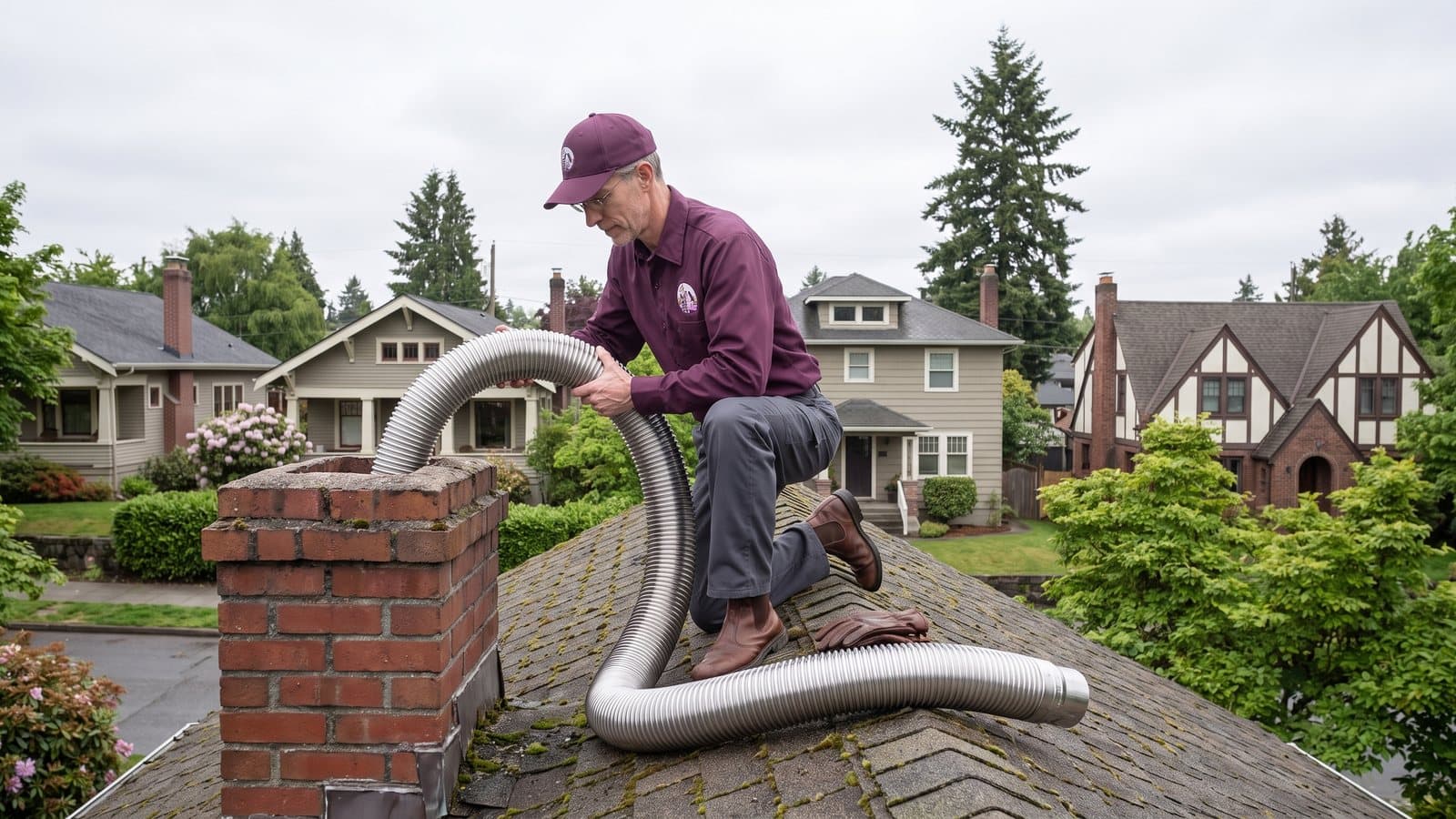
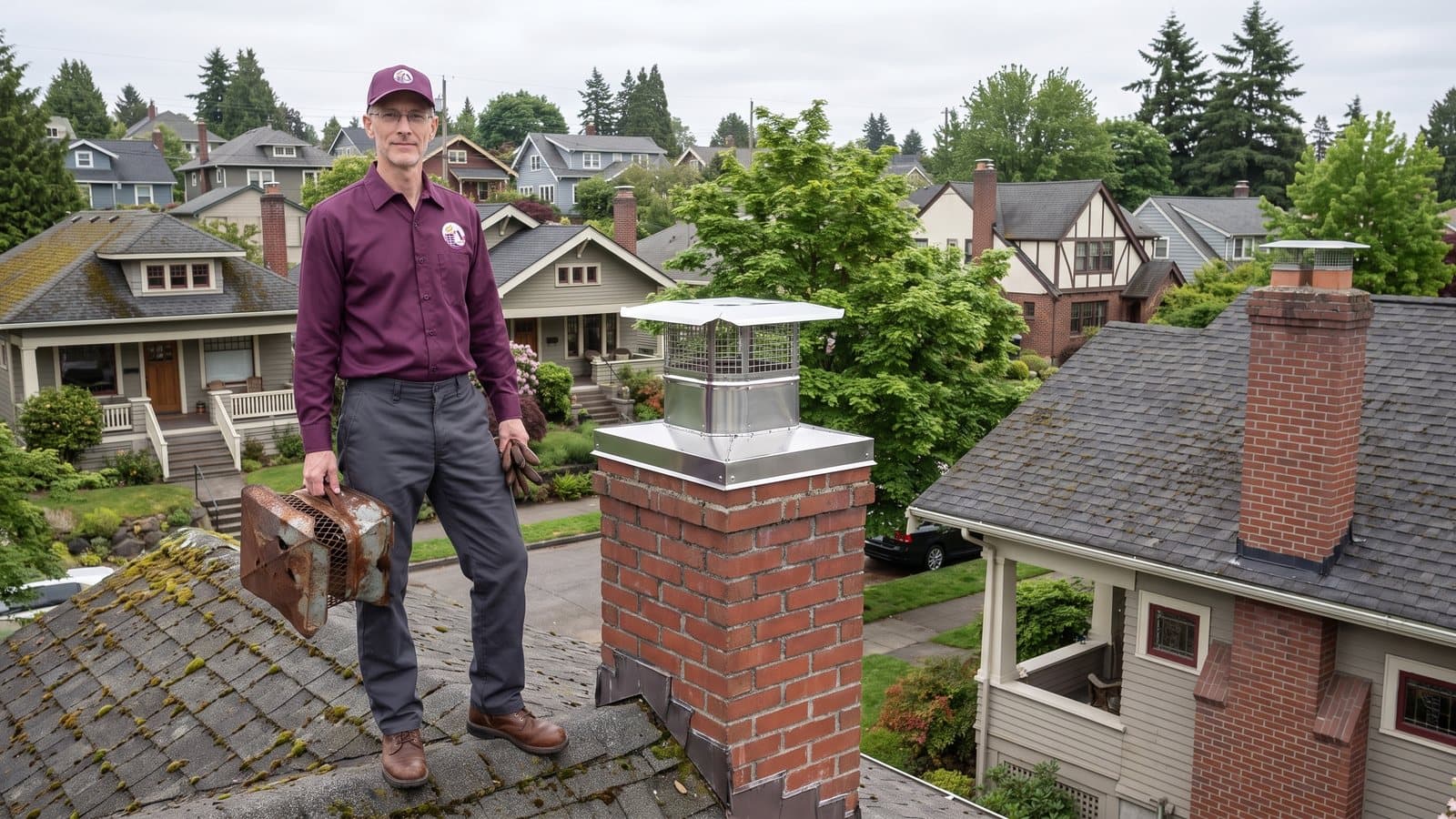
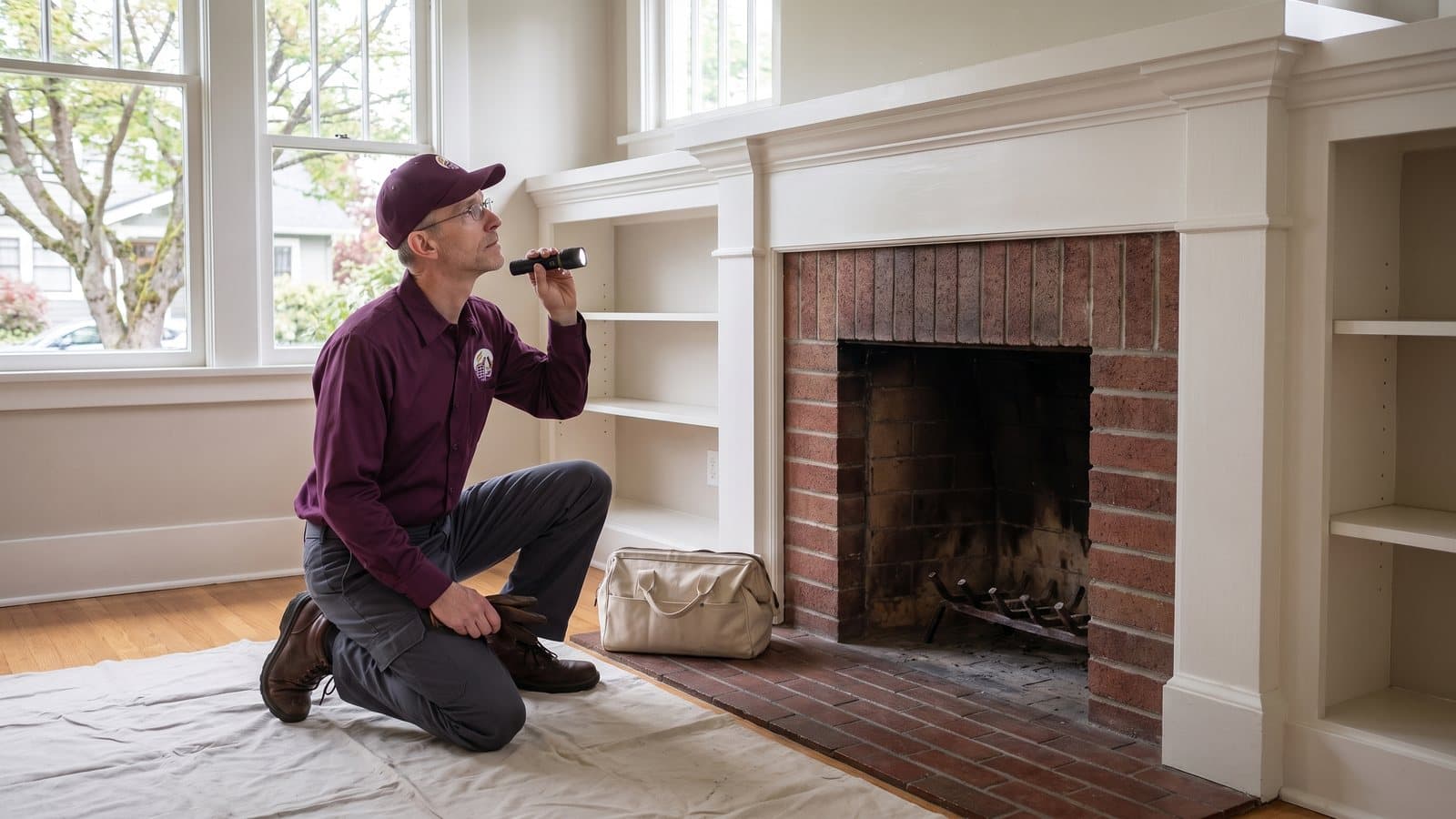
Our inspection has one flat fee: $99 plus tax for each chimney. The technician checks the firebox, the damper, the smoke chamber and the flue, goes up to the roof for the cap, crown, flashing and brick, and runs a camera through the flue when its condition or the reason for the visit calls for one. The findings reach you as a written report illustrated with photos, and a written quote comes with it whenever work is called for. Should you approve that quote, the job is reduced by the $99.
For comparison, two Seattle-area companies print figures of their own. Emerald City Chimney lists a look with no cleaning at $99.95 plus tax. The Mad Hatter Chimney Sweep puts $299 to $450 on a sweep paired with a Level 2 camera scan and recommends the combination for home sales or after an appliance change. Those are their published numbers as they stood on October 4, 2026. Not our quote.
Frequently asked questions
I only run a gas fireplace. Is a yearly check still needed?
Yes. The NFPA 211 rule CSIA quotes covers vents along with chimneys. A gas flame leaves far less soot than a wood fire, yet the vent, the burner, the glass seal and the termination all age, and debris can block a vent. Our gas fireplace service runs $189 to $479 and includes those checks.
The fireplace has sat unused for years. Can I just light it?
Have it looked at first. The yearly check applies however seldom the system is used, and a long idle stretch is exactly when a cap rusts through, a nest appears or water damage goes unnoticed. The visit tells you if the flue is clear and sound, or what it needs before a fire.
What can I check myself after an earthquake?
From the yard, look for new cracks, a lean, fallen brick or a cap that has shifted, and keep your distance from the stack while you do. Indoors, look for fresh debris in the firebox. For a masonry chimney that cannot be retrofitted, FEMA's interim advice is to spend as little time as possible beside it and above all not to sleep next to it; the same caution suits a stack you suspect is damaged. Light nothing until the flue has been scanned.
Does one $99 visit cover two chimneys on the same house?
The charge is per chimney, so a house with two separate stacks is two inspections. Each amount is deducted from the work on that chimney when you approve its quote.
Sources
- CSIA: homeowner resources (NFPA 211) — accessed October 4, 2026
- State Fire Marshal: heating safety notice — accessed October 4, 2026
- Census Reporter: ACS table B25040 — accessed October 4, 2026
- Census Reporter: ACS tables B25034, B25035 — accessed October 4, 2026
- Seattle Emergency Management: earthquake — accessed October 4, 2026
- Seattle Emergency Management: windstorms — accessed October 4, 2026
- WeatherSpark: Seattle year-round climate — accessed October 4, 2026
- FEMA P-1024 RA1 chimney advisory — accessed October 4, 2026
- Emerald City Chimney: published list — accessed October 4, 2026
- The Mad Hatter Chimney Sweep: Seattle guide — accessed October 4, 2026
Related services