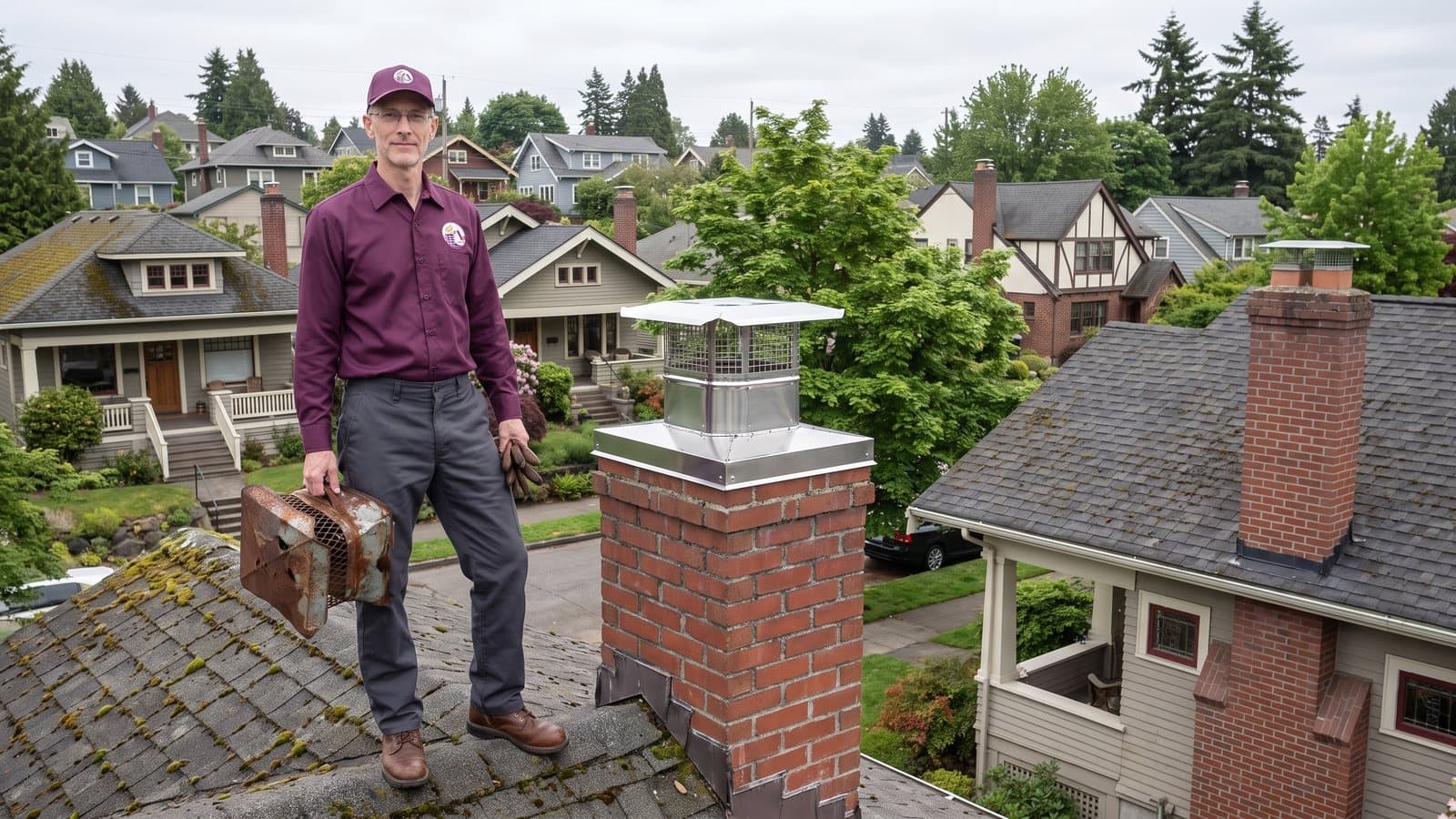
Seattle's rain is not heavy. It is frequent, and that is harder on brick. At the Sand Point weather station in northeast Seattle, about 158 days a year brought measurable precipitation over 1986-2012, yet only about 20 of them reached half an inch. A chimney here spends months damp without ever meeting a downpour. A water repellent helps with exactly that kind of exposure, on one condition: the places where water enters in quantity have to be closed first. This guide explains what the treatment does, what it cannot do, and the order the work should follow.
Frequent rain on a Seattle stack, mostly from one side
The Western Regional Climate Center puts yearly precipitation at 32 to 35 inches for the lowlands running north to Seattle, close to the edge of the rain shadow cast by the Olympics. Local gauges agree. Sand Point averaged 35.50 inches a year from 1986 to 2016, and the Portage Bay station, on the Lake Union side, averaged 37.92 inches across roughly 151 days a year between 1972 and 1998. Both gauges sit toward the east and southeast of our area; we found no station record for Ballard, Phinney Ridge or Greenwood and do not quote one.
Direction counts as much as quantity. The same climate narrative has wet-season winds over the Puget Sound lowlands blowing from the south or southwest. That points to the south and southwest faces of a stack as the ones rain is pushed against, and they are where we look first for dark, saturated brick.
What chimney brick does with that water
Brick and mortar are porous. They draw water in during a wet spell and give it back when the air dries. Trouble starts when the masonry never gets its chance to dry: mortar softens and washes out of the joints, white salts bloom on the surface, and water that freezes inside a soaked brick can break off its face. Sand Point logged an average of 24 days a year with a low of 32°F or colder, most of them in December, January and February, so the cold arrives in the same months as the rain.
Shade slows the drying further. Oregon State University Extension, writing about roofs in the Pacific Northwest, ties moss to moisture plus shade and notes that moss holds soil and debris, which keep a surface wet longer. A stack under a tall conifer, or on the north slope of a steep roof, lives in those conditions.
A breathable repellent, not a paint
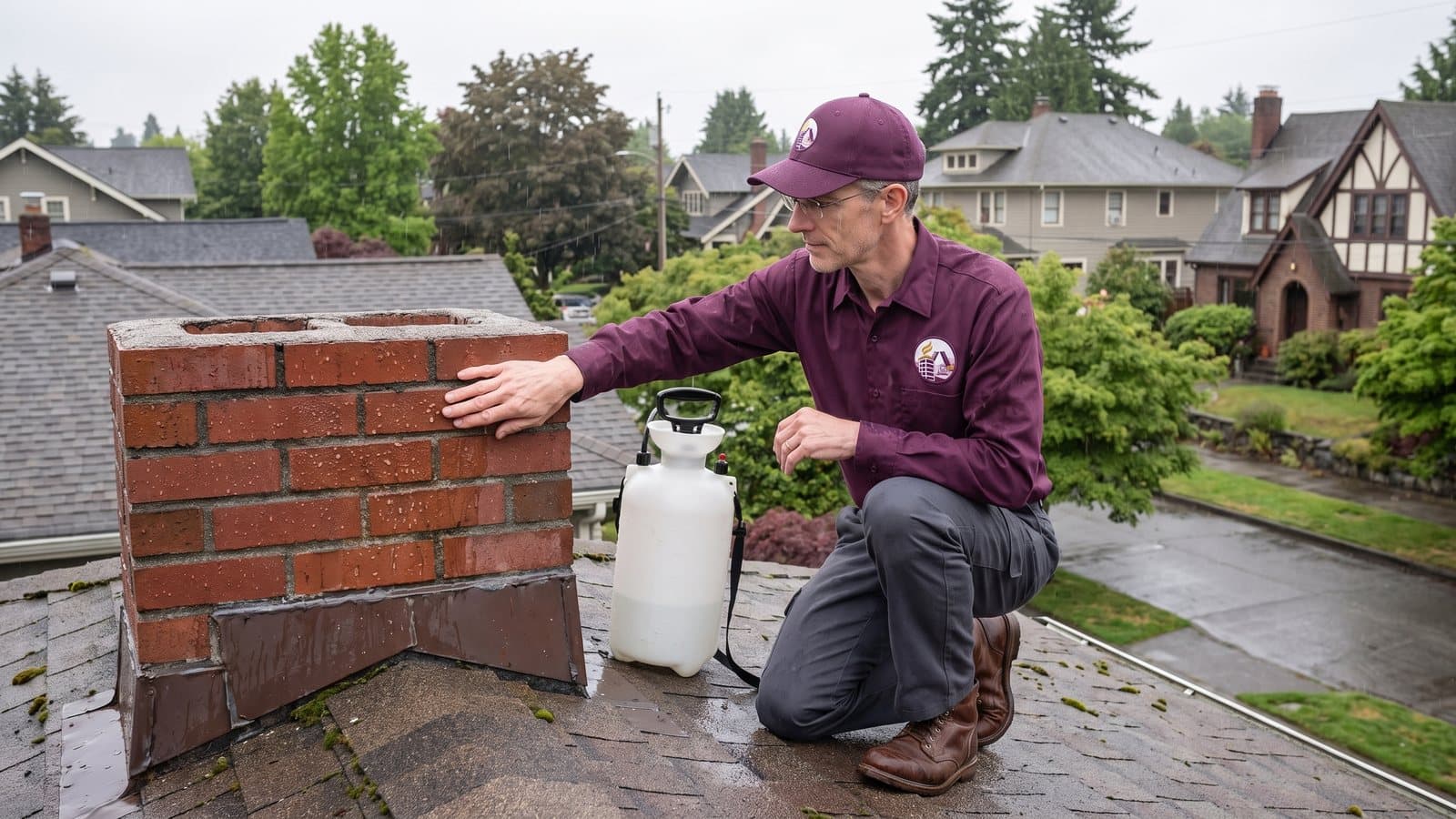
The product we apply is a breathable water repellent made for masonry. It soaks into the outer layer of brick and mortar and lines the pores, so rain forms beads and sheds from the face, yet vapor inside the wall keeps a way out. That second property is why paint and film-forming sealers are the wrong choice on a chimney: they hold moisture behind them.
A repellent is a maintenance coat with a limited life. One Seattle chimney company states on its site that the treatment lasts 5 to 10 years and suggests renewing it every 5 to 7 years on chimneys in this area. Read that as one company's published guidance. Exposure and the state of the brick set the real interval for a given stack.
Repairs that come before the waterproofing coat
A repellent sheds rain from sound masonry. It does not bridge a crack, refill a joint or seal metal to brick. Sprayed over those defects, it hides them for a season while water keeps coming in.
Two code points are worth knowing. Seattle's list of permit-exempt work names chimney repointing, although the work still has to meet code. And section R1003.20 of the Seattle Residential Code requires a cricket once a chimney measures more than 30 inches across, taken parallel with the ridge. A cricket is a little peaked saddle built on the uphill side. A wide stack lacking one collects water and debris behind it.
If the flashing, gutters or downspouts near the chimney are copper, tell whoever treats your roof for moss. OSU Extension warns that zinc sulfate moss treatments attack copper.
| Where water gets in | What you notice | What is done first |
|---|---|---|
| Cracked crown | Stains under the top courses; water in the firebox | Crown repair or a new crown |
| Open mortar joints | Recessed, sandy or missing mortar | Repointing |
| Flashing at the roofline | Ceiling stain beside the chimney; damp attic framing | Flashing repair or replacement |
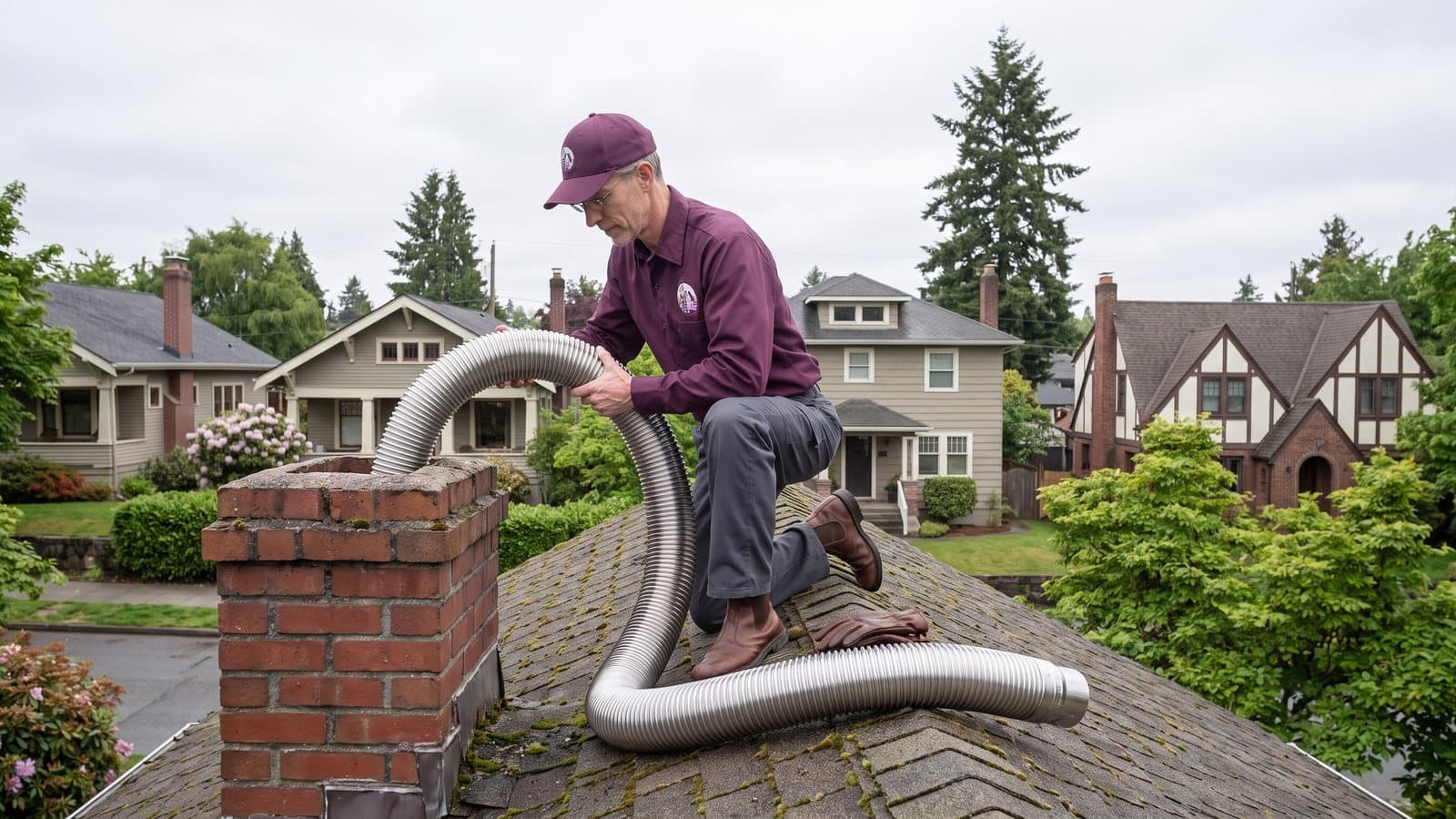
| Open flue top | Rust on the damper; drips after rain | Chimney cap |
| Wide stack with no cricket | Water and debris pooling behind the chimney | A cricket, per R1003.20 |
The dry window for sealing masonry
The masonry has to be dry before a repellent is applied, and the weather has to stay dry until it has cured. WeatherSpark's figures for Seattle give July about 0.7 inch of rain against roughly 7.5 inches in November, and they place the clearer part of the year between mid-June and about October 8. Summer and early fall are when this work is done well. Mortar repairs come first and need curing time of their own, so a stack repointed in June can be treated later the same summer.
Our waterproofing figures next to the published ones
We charge $320 to $795 to waterproof a chimney. Height, the amount of brick, roof access and the cleaning needed beforehand place a job inside that span. Repairs found during the inspection are quoted separately, line by line.
In print elsewhere: a Seattle company, The Mad Hatter Chimney Sweep, posts $200 to $500 per chimney, and Fixr's national guide gives $150 to $500. We opened both pages on October 4, 2026. Not our quote.
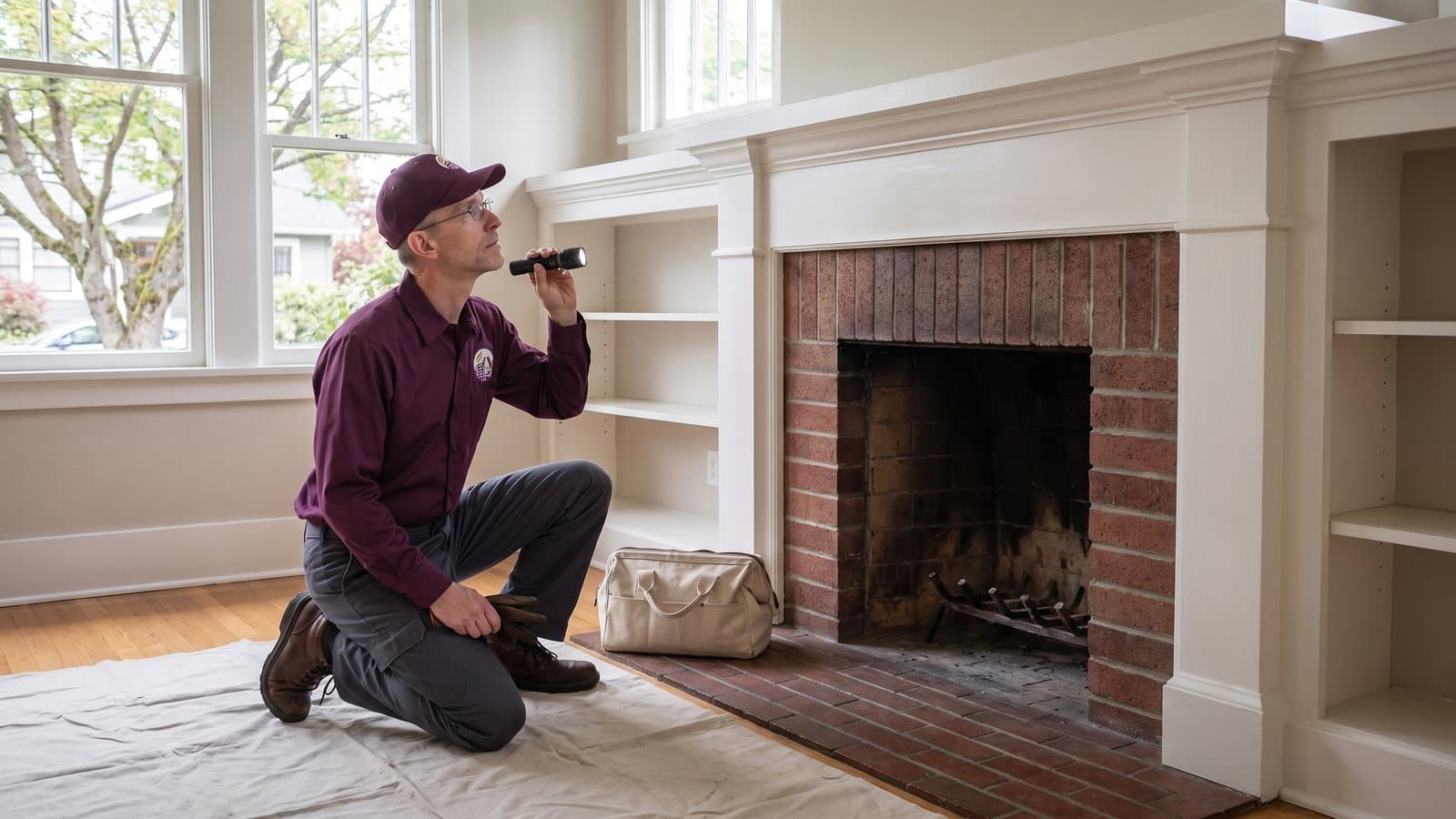
The starting point is the inspection, billed per chimney at $99 plus tax. Approval of the quoted work takes that amount off the invoice.
Frequently asked questions
Will waterproofing stop a chimney leak?
Only when porous brick is the source. Most active leaks trace to the crown, the flashing, open joints or a missing cap, and a repellent mends none of those. Find and repair the entry point, then treat the masonry so that it stays dry.
Can I brush on a hardware-store sealer myself?
The danger is picking a product that forms a film. A film locks in the moisture already inside the wall and can speed up the damage it was bought to prevent. The other danger is the roof. If you do the job yourself, use a vapor-permeable repellent labeled for chimneys and stay off a wet or mossy roof.
Should moss on the chimney come off before treatment?
Yes, gently. Oregon State University Extension cautions that careless pressure washing damages shingles, and old brick with soft mortar deserves the same care. It also notes that moss regrows once cleaned off if the surface gets no more sun than before, so cutting back overhanging branches does more than any wash.
Does a fairly new chimney need a water repellent?
Exposure decides, more than age. A stack that faces the wet-season wind with no roof overhang above it takes on more water than a sheltered one of any age. The inspection shows if the brick is absorbing water. If it is not, we say so and you keep your money.
Sources
- WRCC: Climate of Washington — accessed October 4, 2026
- WRCC: Sand Point precipitation summary — accessed October 4, 2026
- WRCC: Sand Point monthly record — accessed October 4, 2026
- WRCC: Sand Point temperature summary — accessed October 4, 2026
- WRCC: Portage Bay monthly record — accessed October 4, 2026
- WRCC: Portage Bay precipitation summary — accessed October 4, 2026
- OSU Extension: controlling roof moss — accessed October 4, 2026
- The Mad Hatter Chimney Sweep: waterproofing — accessed October 4, 2026
- Seattle permit guide (SDCI) — accessed October 4, 2026
- Seattle Residential Code ch. 10 (UpCodes) — accessed October 4, 2026
- WeatherSpark: Seattle climate — accessed October 4, 2026
- Fixr: chimney repair guide (national) — accessed October 4, 2026
Related services